Recover your password
Enter your email that you login with, for the instructions to be sent to your registered email.
Sign in
Reset Password

You can also sign in using your account in one of the social networks.


Create account for free and enjoy unlimited access to exclusive industry insights and reports

Create a New Account
  • News
  • Insights
  • Companies
    Companies Database Companies Ranking
  • Market Reports
  • Tools & Resources
    Infographics Announcements
  • Pricing
Logo
  • Halal Industry
  • Islamic Finance
  • Islamic Lifestyle
  • OIC Economies
Sign In Create Account

Sign In Create Account

  • Halal Industry
  • Islamic Finance
  • Islamic Lifestyle
  • OIC Economies

  • PREMIUM REPORTS
  • News
  • Insights
  • Companies
    Companies Database Companies Ranking
  • Market Reports
  • Tools & Resources
    • Infographics
    • Events and Courses
    • Announcements


Home / Insights

Featured Insights

OIC Economies

The Gulf’s green hydrogen wager

29 Jul 2026
Insight

OIC Economies
Top 10 largest OIC capitals by population in 2025
21 Jul 2026
Insight

OIC Economies
How a Türkiye–Saudi rail corridor could redraw the Islamic world’s economic map 
15 Jul 2026
Insight

OIC Economies
How Gazans are navigating the tech shortage crisis with creative solutions
07 Jul 2026
Insight

OIC Economies
China's 15th Five-Year Plan: What it means for OIC countries
05 Jul 2026
Insight

OIC Economies
Gulf nations bet big on post-Assad Syria  
15 Jun 2026
Insight


All Other Insights
OIC Economies
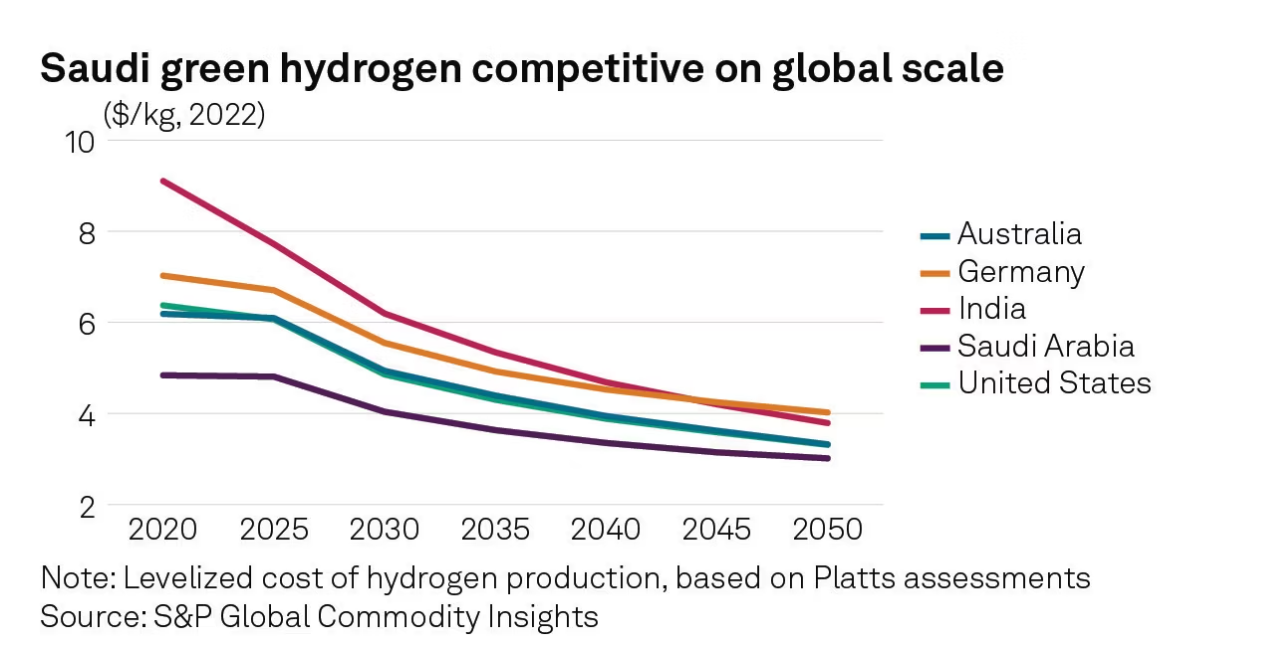
The Gulf’s green hydrogen wager

Oil-producing economies of the Gulf are rapidly emerging as global centres for green hydrogen production, propelled by pioneering decarbonization strategies, abundant solar energy and substantial capital reserves. The momentum is encouraging regional governments to successfully transition from hydrocarbon dominance to a post-oil era with long-term sustainability and comparable financial returns. 

The GCC nations are positioning themselves as key players in the global hydrogen economy, said Atif Rehman, Director Energy Infrastructure Solutions, EMEA at Enerflex Ltd said in a LinkedIn post. 

With abundant renewable energy resources and ambitious sustainability goals, these countries are investing heavily in hydrogen production, particularly green hydrogen derived from renewable energy sources, he added. 

Saudi Arabia granted local utility giant ACWA Power the exclusive right to export green hydrogen and its derivatives to global markets, confirming its ambition to establish an intercontinental renewable energy export value chain. 

Dr. Samir J Serhan, ACWA CEO, said that the mandate defines the next architecture of Saudi Arabia’s energy export strategy.

"Green hydrogen and renewable electricity exports represent the next chapter in the kingdom's energy leadership, creating new opportunities for economic growth while contributing to global energy security and the energy transition."

The under-construction NEOM Green Hydrogen Project, billed as the world’s largest, is another strong indicator of the kingdom’s clean energy ambition.

The initiative which will produce 600 tonnes per day of clean hydrogen and up to 1.2 million tonnes per year of green ammonia upon completion next year, will help mitigate the impact of five million metric tonnes of carbon emissions annually.

Green hydrogen is generated through the process of electrolysis using electricity from renewable sources. Ammonia is an efficient way to transport hydrogen and after reaching its destination, it can be used as is or converted back to hydrogen. 

The kingdom is simultaneously developing a multi-billion-dollar green hydrogen and ammonia production facility at the Red Sea port city of Yanbu, which will produce 400,000 tonnes of green hydrogen or up to 2.2 million tonnes of green ammonia annually. Its developer ACWA Power signed a MoU with several German counterparts to create a green ammonia corridor, stretching from its origin to the German port of Rostock. 

Neighbouring UAE’s green hydrogen strategy targets producing 1.4 and 15 million tonnes per annum by 2031 and 2050, respectively. The country mirrors Saudi Arabia’s ambition to segue from a conventional oil giant to a dominant supplier of clean fuel to Europe and Asia, looking to targeting 25% market share of low-carbon hydrogen key export markets by 2030.

The country’s first solar-driven green hydrogen facility at the Mohammed bin Rashid Al Maktoum Solar Park was commissioned in 2021. Meanwhile, Abu Dhabi’s ADNOC is developing large-scale green hydrogen projects in partnership with Mubadala Investment Company, and formed the Abu Dhabi Hydrogen Alliance along with sovereign wealth fund ADQ back in 2021 to construct a substantial green hydrogen economy in the country.

However, multiple countries are vying for a slice of the global export landscape amid rising demand for low-carbon fuels.  

S&P Global analysts Brian Murphy, Matthew Hodgkinson and Katherine Leydon said in a November 2024 report that with the Middle East region having become a large producer of low-carbon fuels, there was a possibility of a competition between the US and Middle East for export markets in Japan and South Korea. 

Meanwhile, Oman is looking to plough $50 billion in total investments to establish itself as a pre-eminent hotspot for green hydrogen and ammonia. The sultanate established Hydrom in 2022 as the main entity tasked with developing its green hydrogen sector – two years later, Hydrom signed two new green hydrogen projects for Dhofar worth $11 billion. Indian renewables developer Acme has also committed $4.2 billion to Oman’s hydrogen and ammonia project in the Special Economic Zone at Duqm this year.   

Qatar and Kuwait have taken a more measured approach to green hydrogen – state-owned Kuwait Oil Company contracted engineering firm KBR in 2024 to develop a strategy for building out 25GW of green hydrogen production capacity, as well as 17GW of renewables, by 2050.

The Qatari government has committed over $1.5 billion to develop green hydrogen projects in future, while a pilot hosted at the Qatar Science and Technology Park successfully produced green hydrogen directly from wastewater and sunlight. 

29 Jul 2026
Insight
OIC Economies
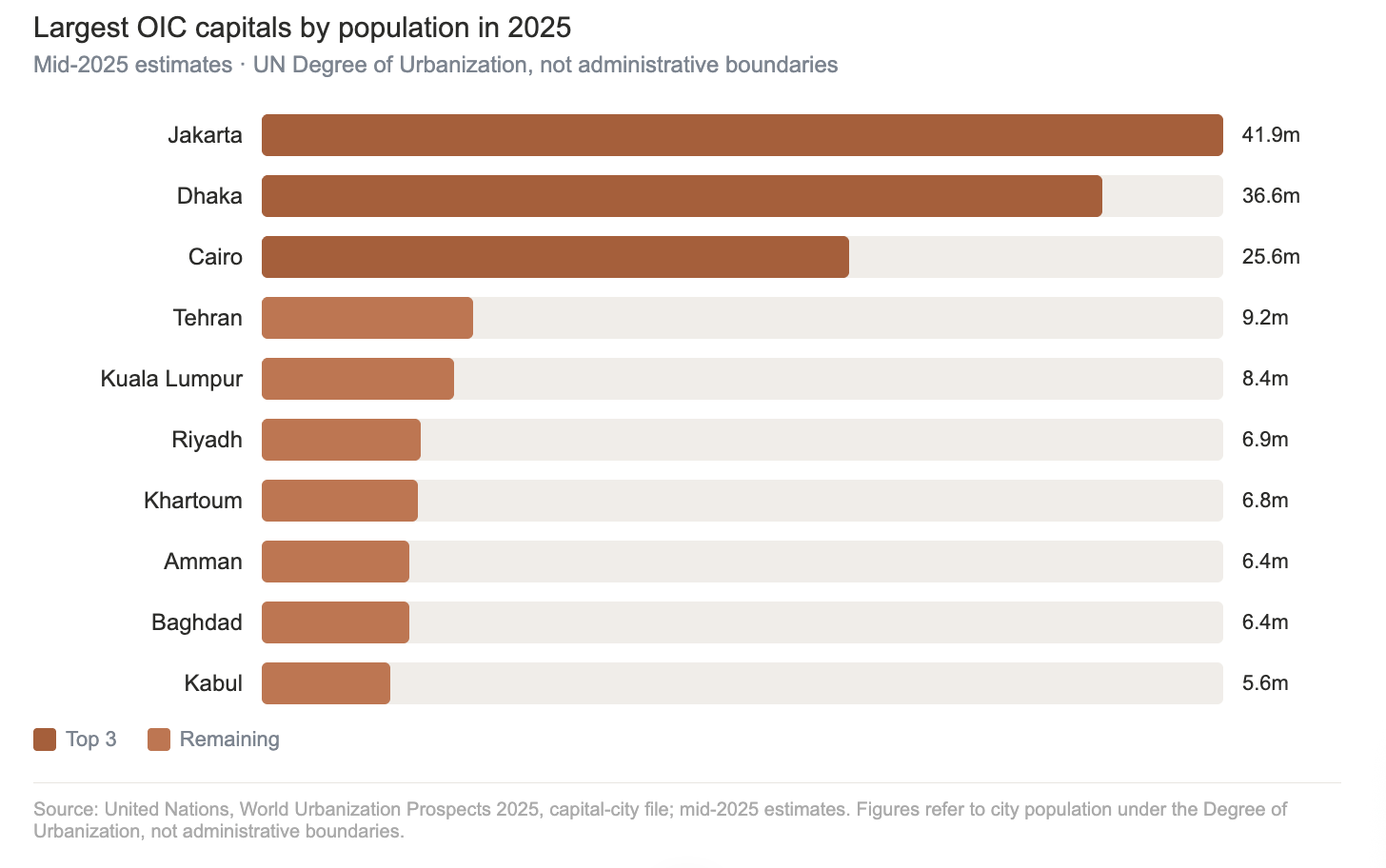
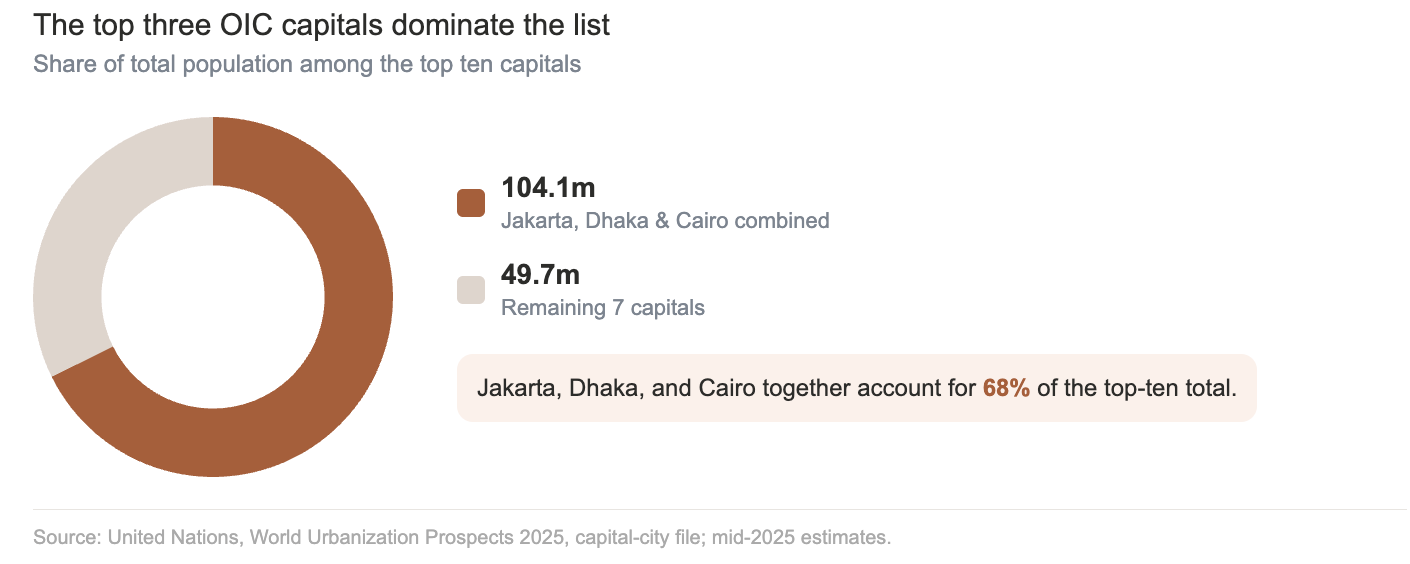
Top 10 largest OIC capitals by population in 2025

The Organisation of Islamic Cooperation’s 57 member states are home to some of the world’s fastest-growing urban centers, and their capitals capture much of the demographic weight of the Muslim world.

From South Asian megacities absorbing millions of rural migrants to Gulf capitals transformed by labour migration and petrostate investment, these cities illustrate how population and power are increasingly concentrated in large urban agglomerations. Taken together, the ten largest OIC capitals account for well over 100 million people in their contiguous built‑up areas.
 

1. Jakarta, Indonesia — 41.9 million


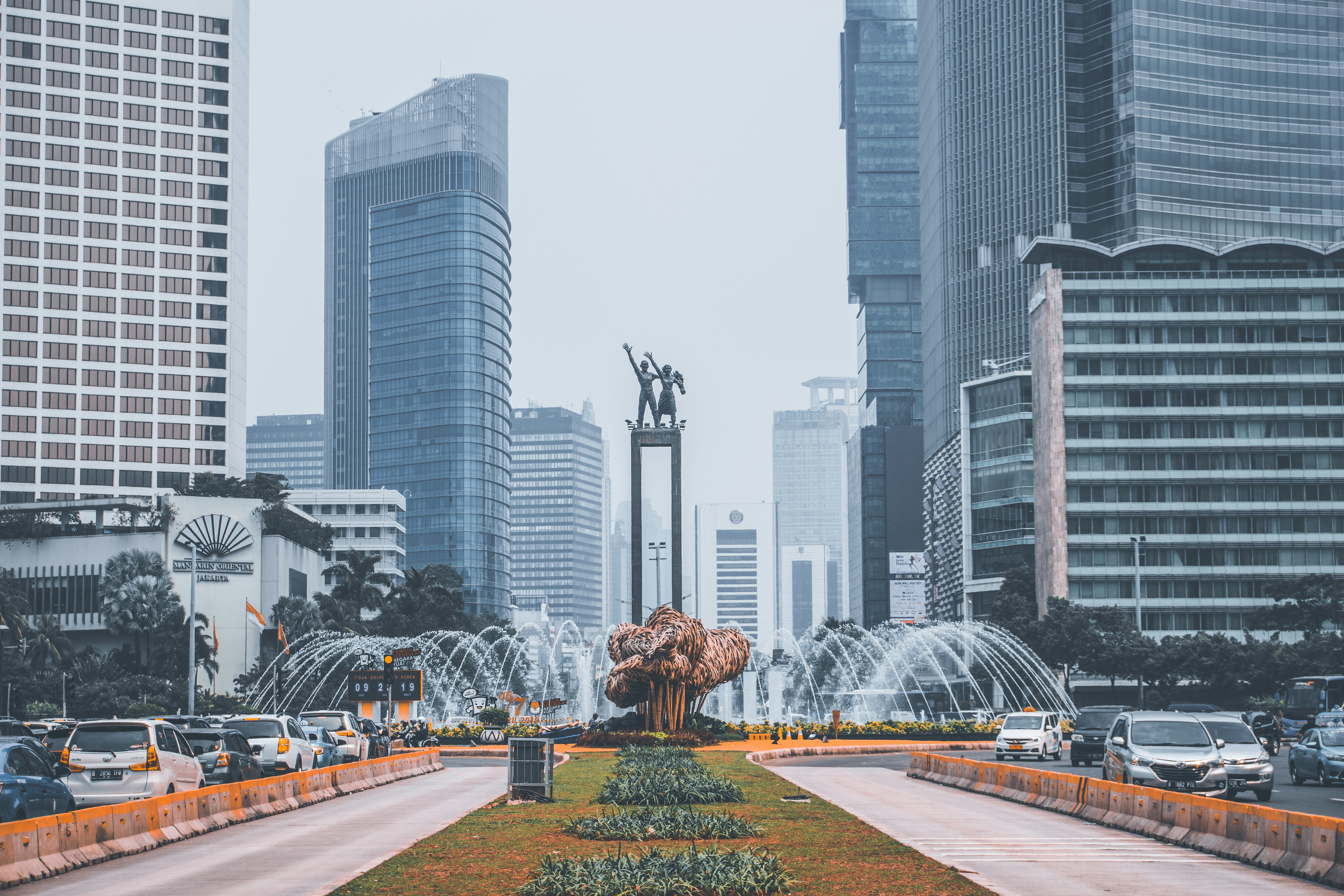
Jakarta ranks as the largest capital city in the OIC and the most populous city in the world in the UN’s 2025 dataset. Its huge urban footprint reflects the long-term concentration of population, investment, and government activity on Java, as well as the growth of the wider Jabodetabek metropolitan region.

2. Dhaka, Bangladesh — 36.6 million


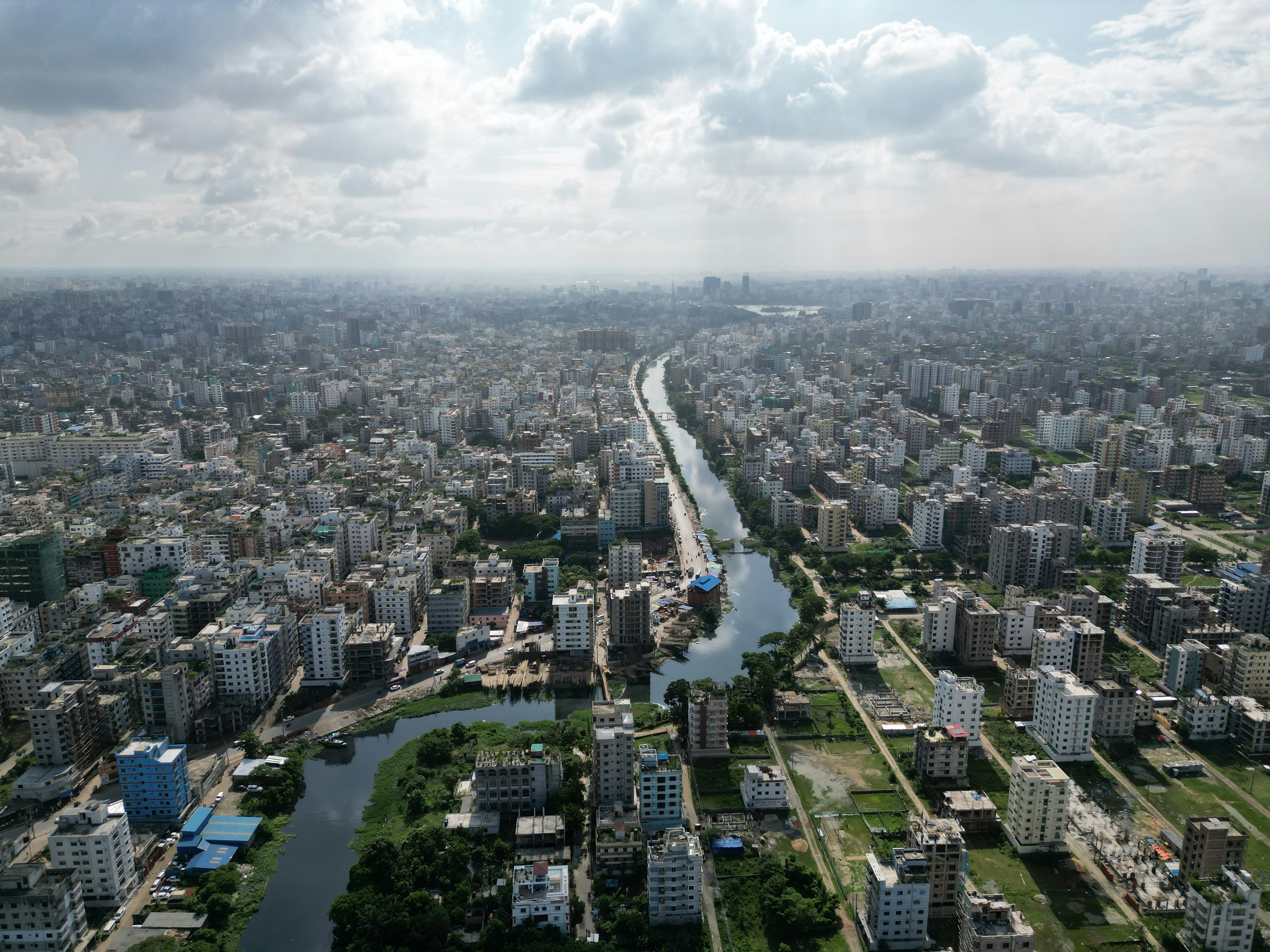
Dhaka is the second-largest OIC capital and one of the fastest-growing large cities in the world. Its expansion has been driven by rural-to-urban migration, garment-sector employment, and the city’s role as Bangladesh’s political and economic core.

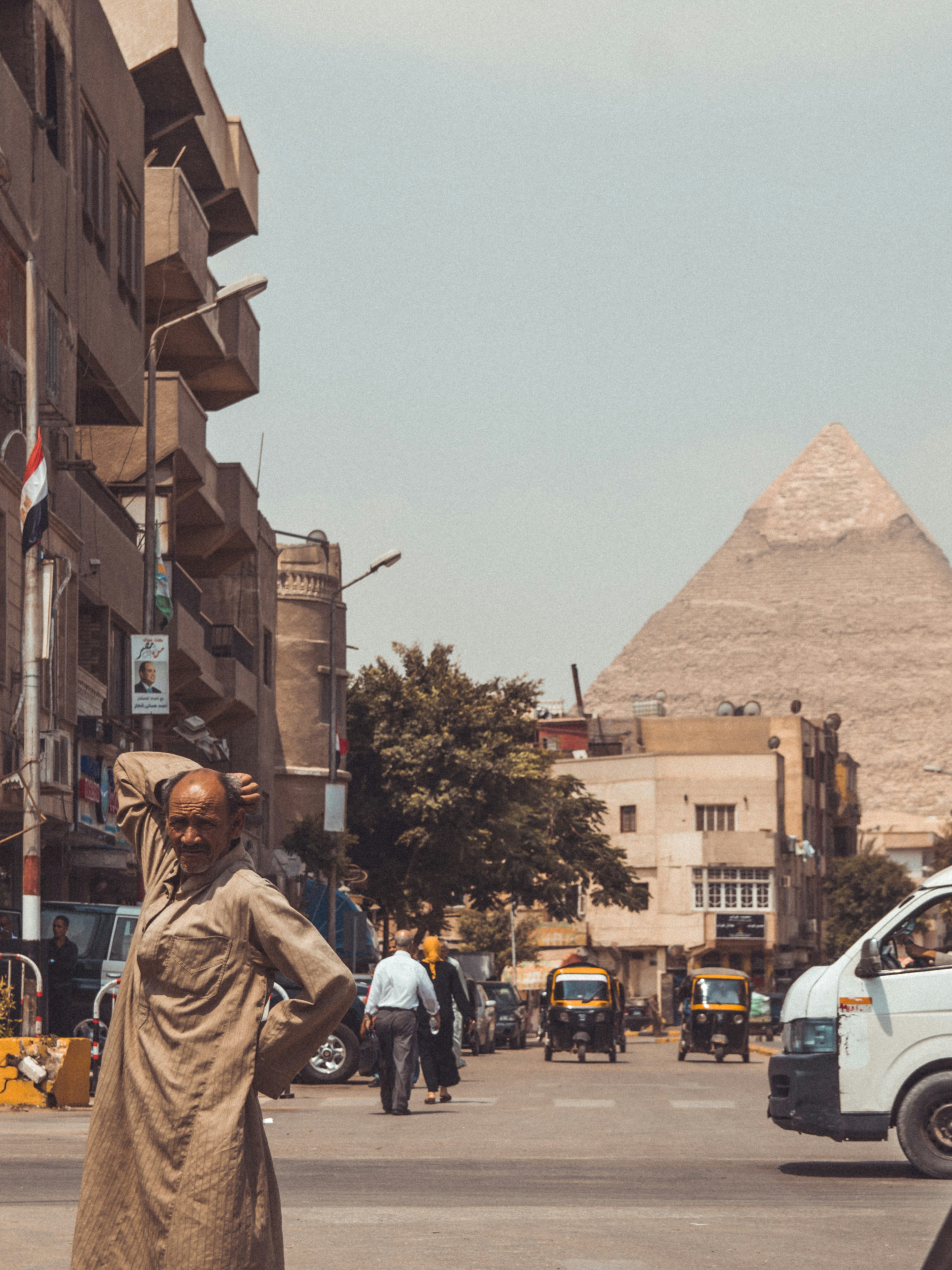
3. Cairo, Egypt — 25.6 million


Cairo is the largest city in Africa and the only non-Asian city among the world’s top ten urban areas in the UN’s 2025 release. Its scale reflects long-running demographic concentration along the Nile corridor and persistent migration from other parts of Egypt into the capital region.

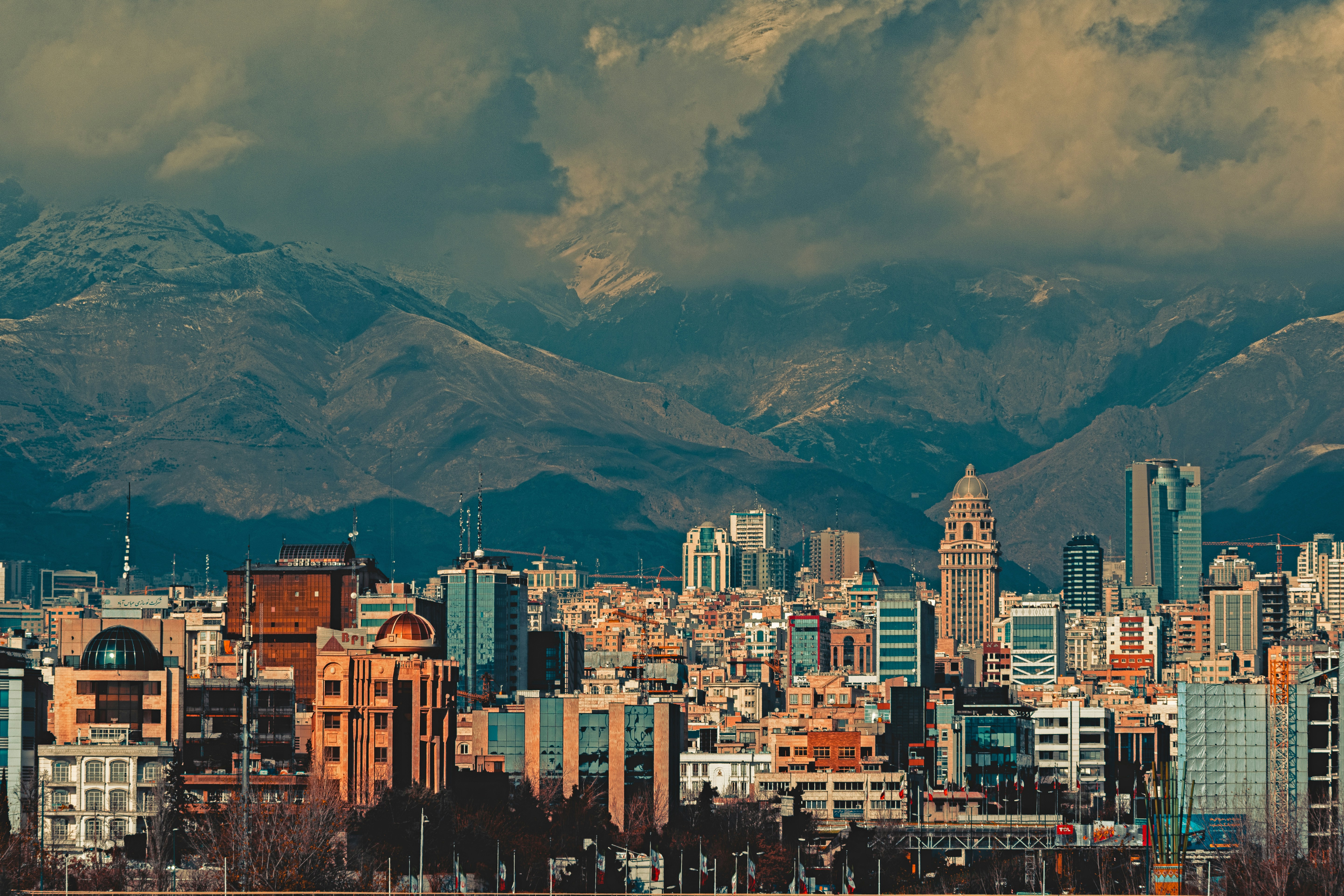
4. Tehran, Iran — 9.2 million


Tehran remains one of the largest capitals in Western Asia and a major administrative, financial, and cultural center. The city’s growth has been shaped by internal migration, centralization of state functions, and the pull of the national capital on surrounding regions.

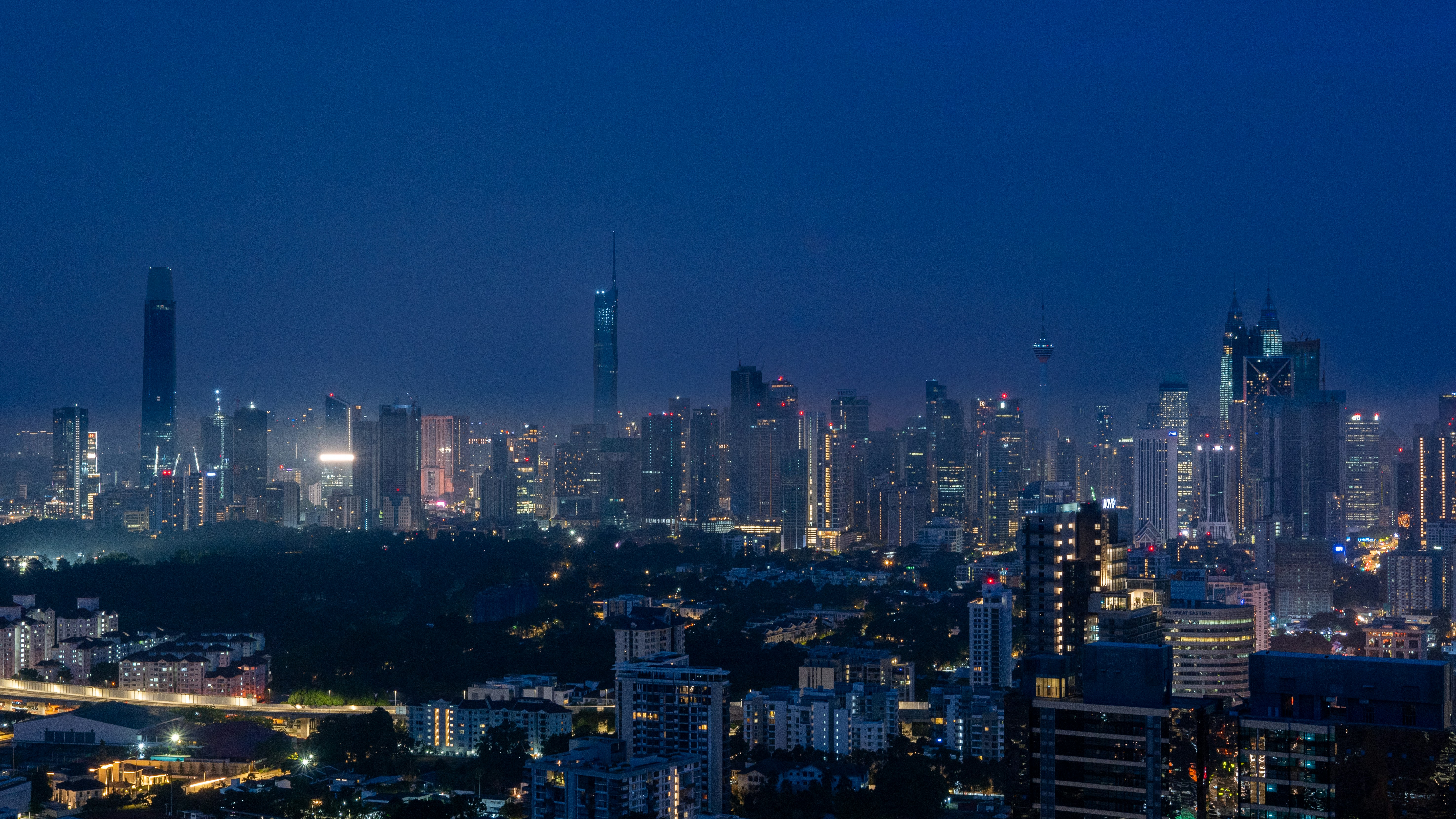
5. Kuala Lumpur, Malaysia — 8.4 million


Kuala Lumpur is one of the most economically significant capitals in the OIC and a major hub for trade, finance, and the Islamic economy. Its urban growth reflects Malaysia’s sustained urbanization and the wider expansion of the Klang Valley metropolitan region.

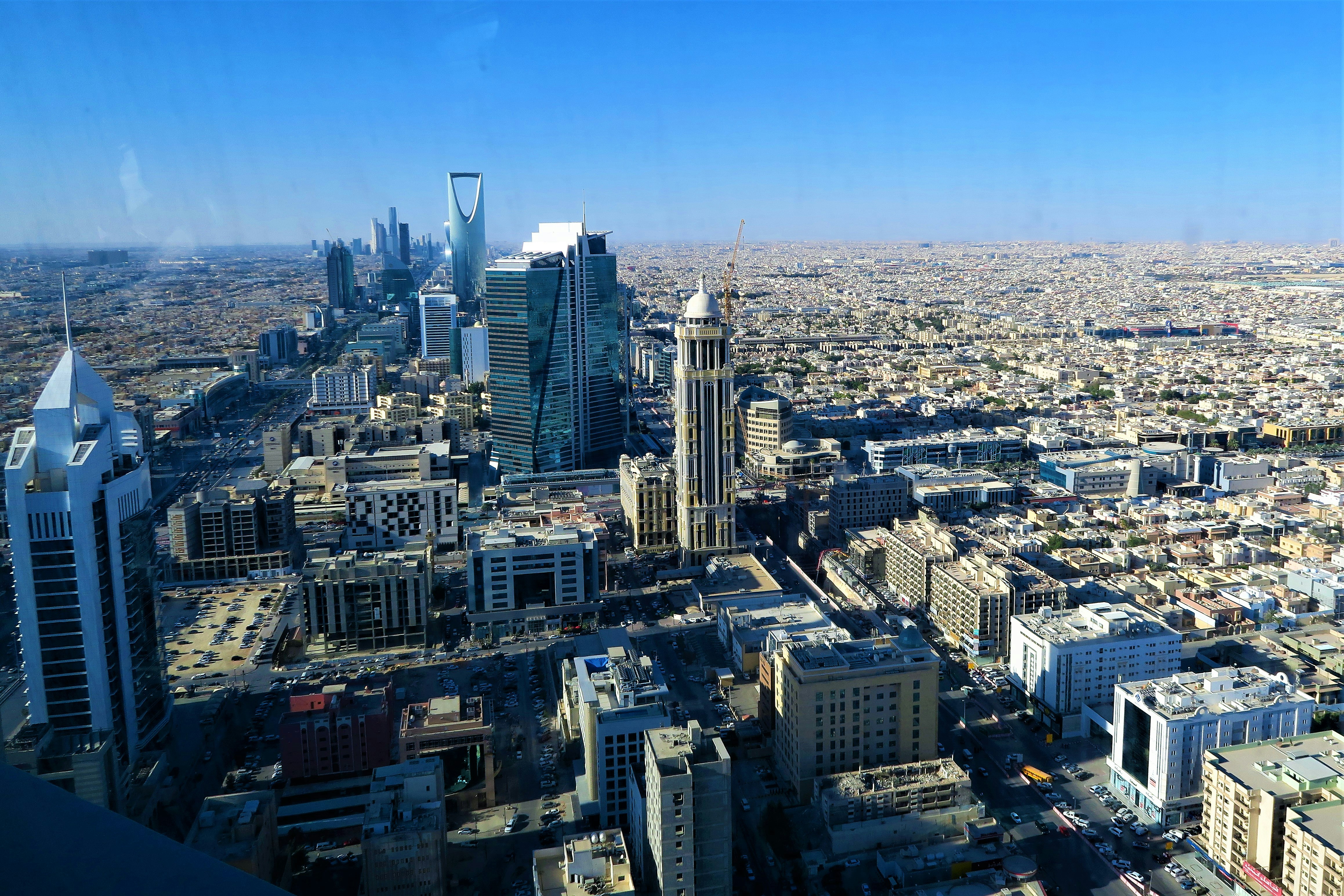
6. Riyadh, Saudi Arabia — 6.9 million


Riyadh has grown rapidly from a small desert settlement into a major metropolitan capital. Oil-driven development, labor migration, and large-scale state investment have transformed the city into one of the fastest-expanding capitals in the OIC.

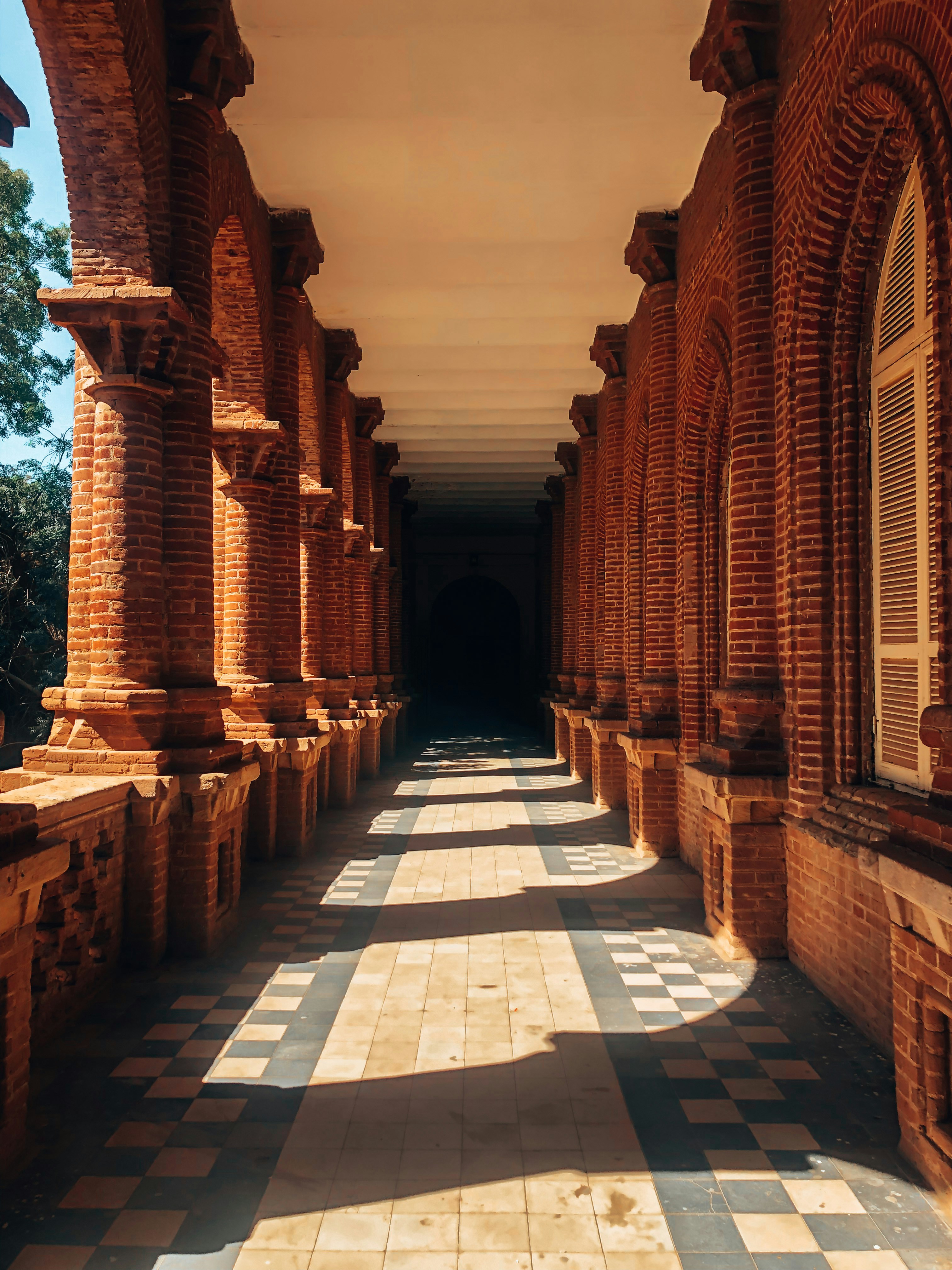
7. Khartoum, Sudan — 6.8 million


Khartoum’s urban agglomeration, which includes Khartoum, Omdurman, and Khartoum North, is the largest capital area in sub-Saharan Africa within the OIC. Its population estimate should be treated cautiously because Sudan’s conflict has likely altered settlement patterns and displacement flows since 2023.

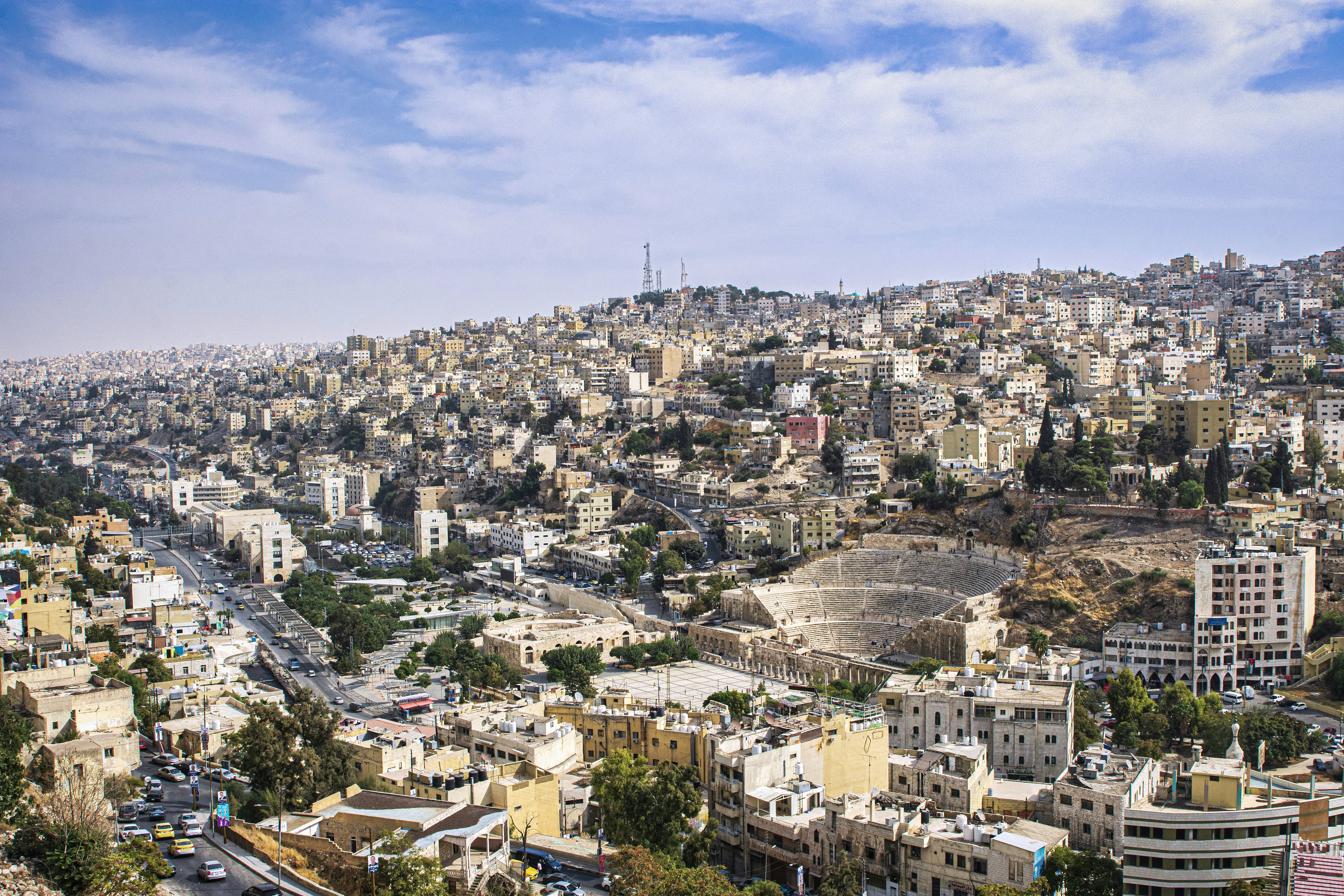
8. Amman, Jordan — 6.4 million


Amman’s growth has been shaped by successive waves of displacement, including Palestinians, Iraqis, and Syrians, alongside natural increase. The city’s size is unusually large relative to Jordan’s overall population, giving the country a strong concentration of people and services in the capital.

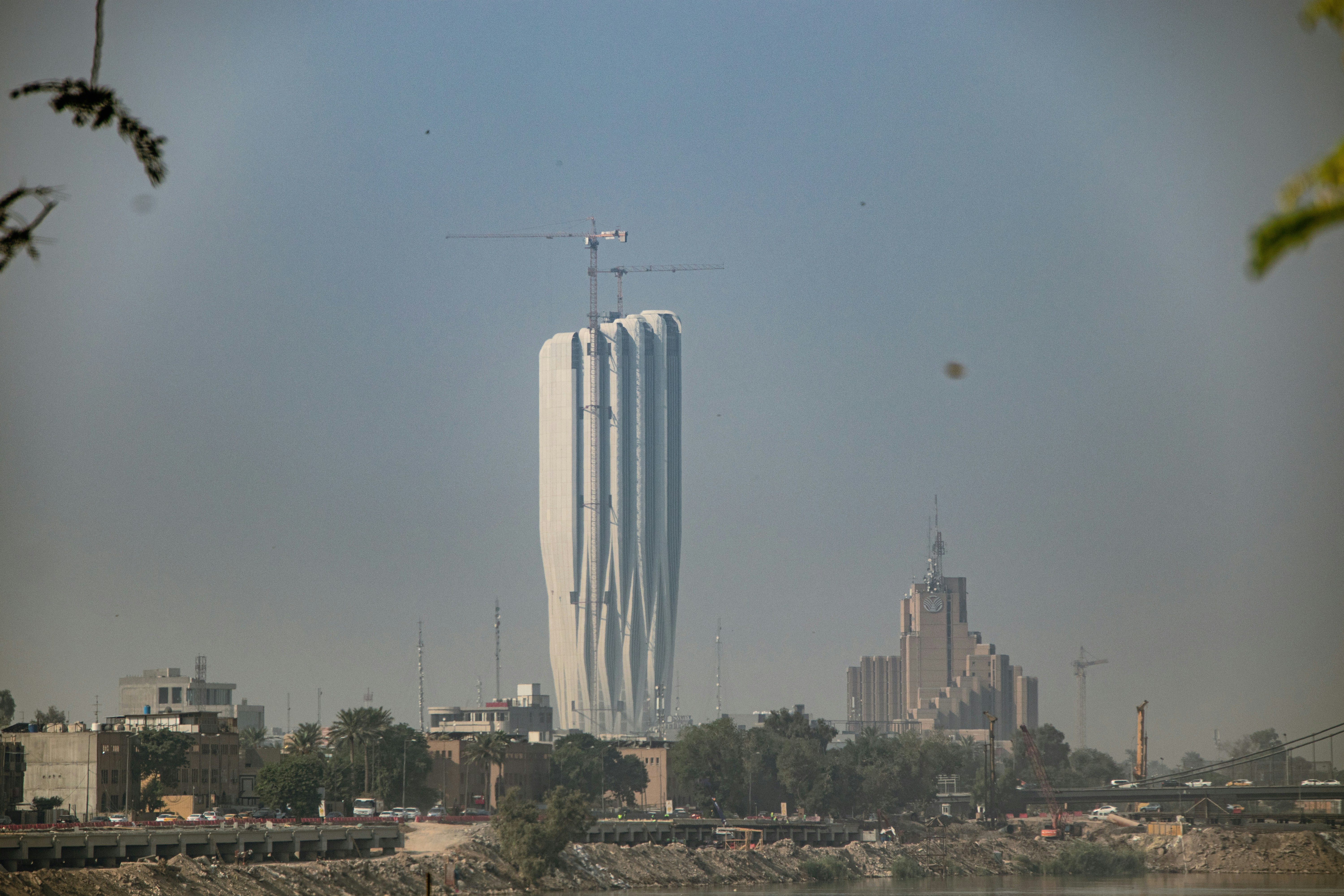
9. Baghdad, Iraq — 6.4 million


Baghdad remains one of the largest Arab capitals in the UN dataset and has long been a major center of political power and urban settlement. Its current size reflects historic centrality, post-2003 migration, and ongoing reconstruction and demographic pressure.

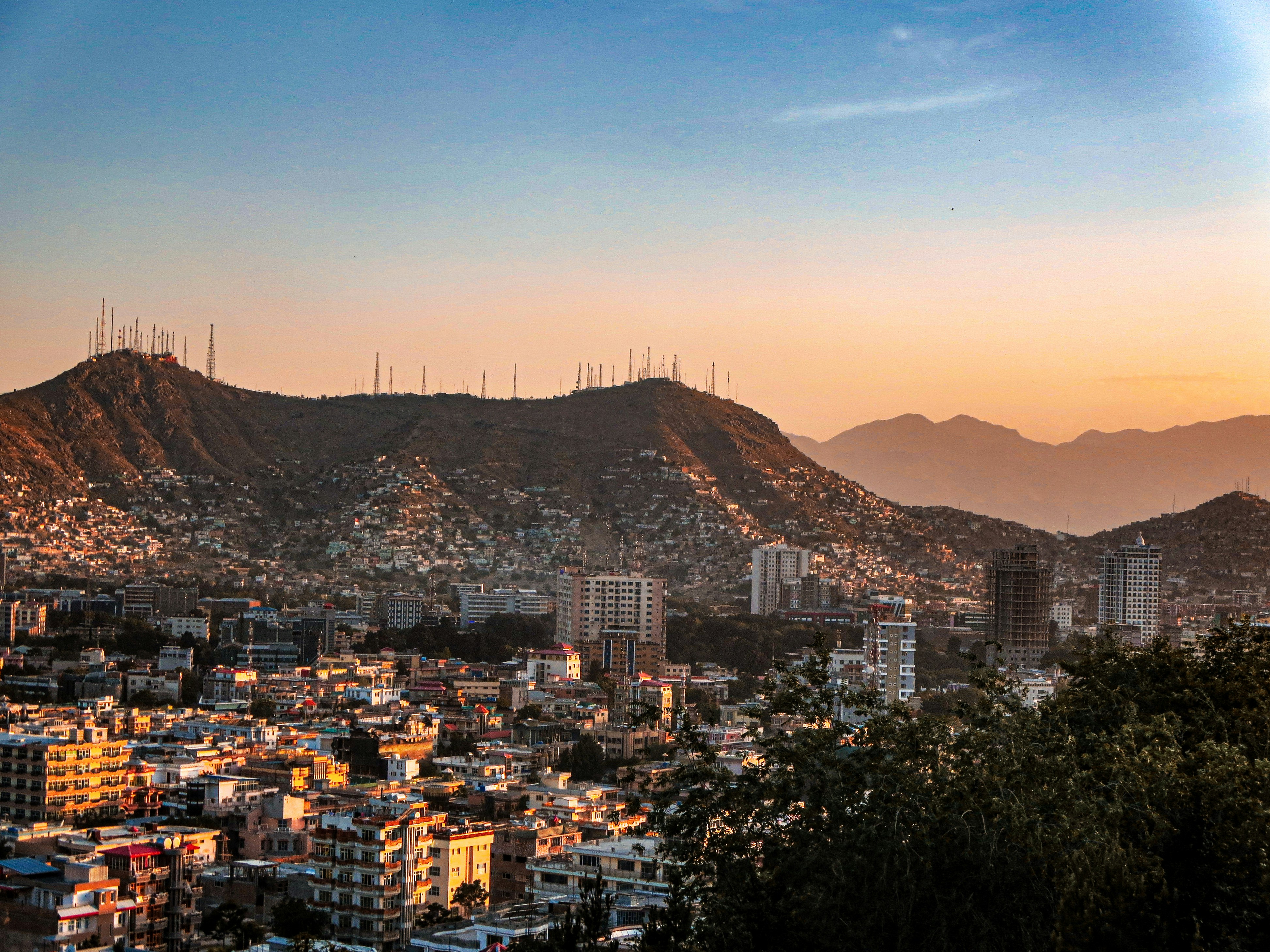
10. Kabul, Afghanistan — 5.6 million


Kabul’s rise into the upper tier of large capitals has been driven largely by internal displacement and the concentration of opportunity and services in the capital. Despite political uncertainty, the UN’s 2025 estimate still places Kabul among the largest OIC capitals.

Methodology
This ranking uses the United Nations World Urbanization Prospects 2025 capital-city file, which reports mid-2025 population estimates for capital cities defined by the Degree of Urbanization. That means the figures describe densely populated urban areas and are not limited to administrative city boundaries.

For consistency, the list includes capitals of all 57 OIC member states and uses the UN’s capital-city designation as the basis for comparison. In conflict-affected cases such as Khartoum and Kabul, the figures should be treated as modelled estimates rather than precise counts because population movement and damage to administrative systems can affect accuracy.

Why it matters
The list underscores a central fact about the OIC world: political capitals are often also giant demographic magnets. In South Asia and parts of the Middle East, capital-city growth is tied not only to national governance but also to labor migration, regional inequality, displacement, and the concentration of infrastructure and services.

It also shows that the Islamic world’s largest urban centers are overwhelmingly Asian, with Cairo standing out as the only African capital in the global top ten. That pattern matters for understanding everything from housing pressure and transport demand to labor markets and urban policy.

Source note
This article is based on the UN World Urbanization Prospects 2025 capital-city dataset and the UN’s summary release on the 2025 revision. The ranking should be cited as: United Nations, Department of Economic and Social Affairs, Population Division, World Urbanization Prospects: The 2025 Revision, Online Edition.

21 Jul 2026
Insight
OIC Economies
How a Türkiye–Saudi rail corridor could redraw the Islamic world’s economic map 

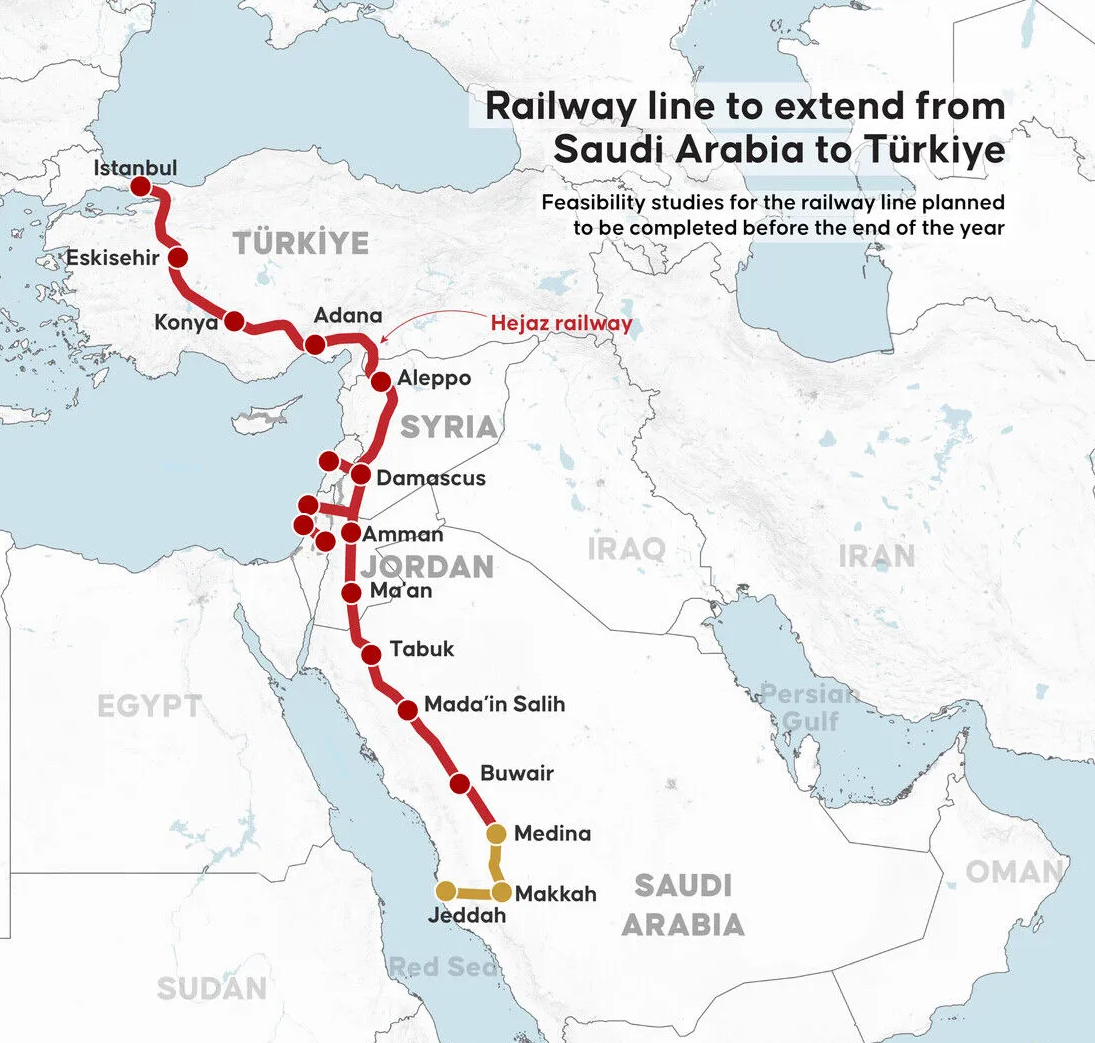
Since the early 20th century, the Ottoman-built Hejaz Railway has stood as a monument of Middle Eastern history and a symbol of imperial reach. What was once a vital pilgrimage route from Damascus to Madinah is now inspiring a vastly different modern vision.

The newly signed railway cooperation agreement between Türkiye and Saudi Arabia could pave the way for one of the most ambitious geo-economic corridors in the Islamic world. Designed to connect the two countries via Jordan and Syria over the next three to four years, the architecture promises to secure regional supply chains and reduce dependence on volatile maritime chokepoints by ultimately establishing an overland trade route linking the Gulf to Europe.

While the memorandum of understanding is still in its early stages, analysts agree that the project's significance extends far beyond transportation. It reflects a changing Middle East where infrastructure is increasingly seen as a source of geopolitical influence, strategic resilience, and regional integration.

Source: Anadolu Agency

This rail pact is part of a larger trend of growing collaboration between the two nations, arriving on the heels of a recent MoU between the Saudi Food and Drug Authority and the Turkish Halal Accreditation Agency to advance joint research, training, and development in the halal sector.

Born from geopolitical shifts, morphed into economic resilience 

The timing of the initiative is no accident. Years of conflict across Middle Eastern countries, coupled with repeated disruptions to global shipping and growing anxieties over the Strait of Hormuz, have accelerated interest in alternative overland trade routes.

According to Turkish Transport Minister Abdulkadir Uraloğlu, the proposed network is designed to create a flexible logistics web capable of adapting to regional instability, rather than relying on a single, vulnerable trade artery. 

Geopolitical analyst James M. Dorsey notes that this announcement reflects a broad Middle Eastern transformation: "A Turkish-Saudi agreement to revive the Ottoman-era Hijaz Railway tells the story of geopolitical realignment in the wake of the wars in Gaza, Lebanon and Iran."

However, despite comparisons to the original Hejaz Railway, experts argue that the similarities end with geography. While the Ottoman system primarily transported pilgrims along a north-south axis, the new corridor is designed to move manufactured goods, industrial inputs, agricultural products, and investment capital across Europe, the Middle East, and Asia.

Majed Elmedawar, a strategic adviser specializing in Middle Eastern economic integration, emphasizes that modern railways should be viewed as economic institutions. 

He stresses that the bilateral initiative is part of a sweeping regional infrastructure push that includes the planned 2,177-kilometer GCC Railway, Iraq's $17 billion Development Road project connecting the Gulf to Türkiye, and the India-Middle East-Europe Economic Corridor (IMEC) announced in 2023.

"The Türkiye-GCC railway should be understood not as a revival of the historic Hejaz Railway but as a fundamentally different category of infrastructure,” Elmedawar notes. 

“Infrastructure does not only connect economies; it creates economies. A railway corridor generates industrial clusters, logistics hubs, manufacturing links, labor mobility, investment concentration, and urban growth."

What does it mean for OIC countries & the broader Islamic economy 

Perhaps the project's greatest promise lies in what analysts call cooperative sovereignty. Rather than diluting national independence, shared infrastructure can strengthen it. By managing transnational flows of goods and capital, states can participate in the global economy from a position of strength.

For members of the Organization of Islamic Cooperation (OIC), this means replacing reliance on vulnerable shipping routes with robust, localized supply chains. Countries located directly along the corridor - including Türkiye, Saudi Arabia, Jordan, and eventually Syria - would likely see the greatest immediate benefits through expanded logistics industries, manufacturing investment, and tourism, according to Elmedawar.

Longer-term, the network could extend commercial opportunities to Egypt, Pakistan, Central Asia, and Southeast Asian nations through wider Eurasian transport links.

One of the most transformative impacts of the corridor could be on the rapidly expanding halal economy, which now encompasses pharmaceuticals, cosmetics, finance, and tourism. Currently, fragmented transport systems inflate costs and bottleneck trade between OIC markets.

A modernized rail network has the potential to change this by offering reduced transit times for perishable halal goods, providing temperature-controlled freight movement combined with digital tracking, and encouraging harmonized certification systems across borders.

"A halal-certified product is only as competitive as its ability to reach consumers at a reasonable price and in a timely manner," Elmedawar notes. 

Integrated rail would turn isolated national markets into a massive, interconnected halal industrial cluster. Beyond trade, the project carries significant cultural and diplomatic implications. Ahmet Akalin, assistant director at the Iran-based Economic Cooperation Organization Cultural Institute, sees transportation as a crucial tool for international influence.

By reducing logistical barriers, Akalin argues, the corridor would reinforce Türkiye's role as a strategic bridge between Europe, Asia, and the Arab world while bolstering regional cooperation. Furthermore, he believes the railway may become the backbone of a trusted halal logistics network.

Drawing on insights from his book, The Appeal of Nations - International Cultural Institutes in Türkiye in the Context of Soft Power, he notes that the halal industry extends beyond mere religious compliance. “Halal also represents hygiene, quality, traceability and consumer confidence. Hygiene itself is a source of soft power because it builds trust.”

Reconnecting pilgrims at its core 

The original Hejaz Railway was built chiefly to serve Muslim pilgrims traveling to Islam's holiest sites. Although freight and logistics dominate today's discussions, experts believe the passenger dimension could eventually become equally significant.

As Elmedawar notes, expanded connectivity could make Hajj and Umrah substantially more affordable, accessible, and environmentally sustainable. 

"Easier rail travel would enable millions of Muslims from different countries to meet more frequently during Hajj and Umrah. In this way, the railway would connect not only cities but also people, cultures and shared values.”

Stumbling blocks 

For all the optimism surrounding the initiative, the project faces enormous practical challenges. Bringing this vision to life requires synchronizing cross-border customs, digital freight systems, regulatory frameworks, and technical standards across multiple sovereign nations. The physical and financial obstacles are formidable. In Syria, rebuilding costs exceed $200 billion, with reconstruction focused on basic utilities rather than international rail, alongside ongoing security concerns. 

Additionally, significant infrastructure gaps remain, including a missing 400-kilometer segment between Syria and Jordan that requires construction, and a $100 million restoration project needed to link Türkiye to Aleppo and Damascus, according to Elmedawar.

Financing these gaps presents another major hurdle. The total investment is estimated at $5.5 billion. While the Asian Infrastructure Investment Bank has committed $750 million to Turkish rail lines, a comprehensive cross-border funding model is still lacking.

As Elmedawar observes: "The principal constraint is no longer engineering. It is institutional coordination."

He suggests the Islamic Development Bank (IsDB) - a consistent backer of regional transport projects across the OIC - could provide the institutional framework necessary to unlock the corridor's full potential through direct financing, technical assistance, or institutional support.

Whether the project can be completed within the optimistic timeframe suggested by Turkish officials remains to be seen. But even at the memorandum stage, the railway signals an important change in regional thinking. 

Governments increasingly view mobility projects as instruments for expanding geopolitical influence, fostering regional integration, and strengthening economic resilience. If political will and financial backing align, the Türkiye - Saudi corridor could catalyze a newly connected, economically resilient Islamic world.

15 Jul 2026
Insight
OIC Economies
How Gazans are navigating the tech shortage crisis with creative solutions

A staggering 745,000 students in the Gaza enclave have been deprived of formal schooling since the outbreak of the conflict in October 2023. 

Among them are 88,000 higher education pupils who have been forced to put their academic degrees on indefinite hold, according to UN agency UNESCO. Furthermore, north of 95% school buildings either require extensive rehabilitation or total reconstruction, according to the agency’s satellite damage assessments. 


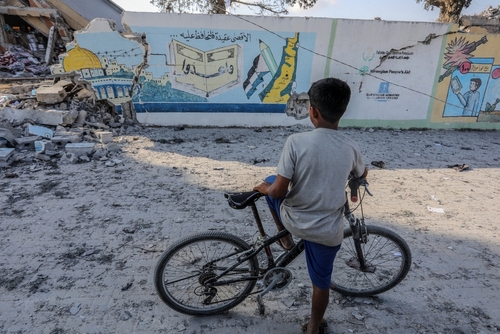
But beyond the shattered infrastructure, the tipped over desks, the dangling wood beams and broken glass, another crisis has unfolded: a catastrophic shortage of digital equipment.

The conflict has decimated institutions, disrupted logistics, and triggered a strict blockade that predicates on the harsh understanding of labelling laptops, smartphones, and their spare parts as ‘dual-use’ military items. Securing tech in this new reality has become virtually impossible.

The context is both instructive and overwhelming: For millions around the world, a broken laptop is an inconvenience. In Gaza, it can mean the sudden demise of a university education, the loss of a family's primary income, or complete isolation from the outside world.

By cutting off access to technology, the blockade has suffocated daily life, disproportionately impacting students, remote workers, and a broader workforce desperate to link up with and serve the global economy.

“Gaza is facing an extreme, system-wide shortage of digital devices,” Maha Alfarra, managing director at the Galilee Foundation, a UK-registered charity focused on Palestinian education and humanitarian initiatives, tells Salaam Gateway. 

Image Courtesy: Shutterstock 

“Most laptops, tablets, and smartphones were destroyed during the war, and no new electronics have been allowed into Gaza since October 2023.”

The few devices that survive or slip through the blockade are priced astronomically. A basic laptop that once cost $400 now commands $1,000 or more. If a student's laptop breaks, they face an impossible choice: purchase a replacement at a hyper-inflated price or drop out entirely.

“Prices for the few remaining devices have risen to more than five times their original cost, far beyond the reach of most families and institutions,” Alfarra adds. 

“At Al-Azhar University-Gaza, a recent $10,000 support fund was only enough to purchase five laptops, illustrating the scale of scarcity.”

Human capital, skillset at risk

The hardware shortage is triggering a much broader crisis: the erosion of Gaza's talent base and the demise of entire livelihoods. 

Before the escalation, Gaza had fostered a resilient digital workforce. Through local incubators and university programs, young Palestinians built careers in software development, graphic design, and digital marketing, bypassing physical borders through the Internet. Today, those professionals are struggling to remain visible to global employers.

“Losing a laptop means losing an immediate economic lifeline or halting university progress entirely,” Wisam Elswerki, a Gaza-based content developer who works with humanitarian organizations, tells Salaam Gateway.

After losing his own equipment, Elswerki was forced to manage his workload entirely from a mobile phone. “Trying to handle professional documentation, join virtual meetings, and review files on a small screen - while dealing with erratic power and network coverage - turns standard work into a daily test of endurance.”

“A simple task takes four times longer than it should.”

Without the ability to work consistently, client relationships wither, and hard-earned technical skills inevitably decline.

“The greatest long-term risk is not the loss of laptops or smartphones - it’s the gradual loss of the human capital that took years to build,” Mohammed Abu Hassira, a development professional based in Gaza, tells Salaam Gateway.

Abu Hassira notes that before October 2023, remote work was one of the few accessible pathways to financial independence, particularly for women.

“Digital work depends on continuity,” he explains. “One of Gaza's greatest strengths has always been its people. Preserving digital talent and reconnecting professionals with global markets should therefore be viewed not only as humanitarian support, but as a strategic investment in Gaza's long-term economic recovery.”

In the face of these extreme restrictions, Palestinians are engineering makeshift solutions using damaged equipment and pre-digital adaptations.

When laptops and computers are unavailable, students use mobile phones to access course materials on platforms like Moodle or Google Classroom, relying on WhatsApp as their primary tool for peer-led engagement.

Families frequently pool their resources, sharing a single rented laptop among multiple siblings just to keep their education alive. Tech workers and freelancers travel through destroyed neighborhoods to reach makeshift, solar-powered co-working hubs. There, they share access to electricity to charge devices, rotating in shifts to maintain their income streams.

“Despite severe logistical restrictions, several organizations have launched creative initiatives to restore digital access,” Elswerki notes. 

He highlights entities like Gaza Sky Geeks and Taqat Gaza, which have been instrumental in setting up community tech spaces, as well as Academic Solidarity with Palestine, an initiative distributing free e-SIMs to help Gazan students and professors re-establish basic connectivity.

“While the gap between supply and demand remains massive, these efforts keep Gaza's workforce and student body connected,” he says.

Integrated ecosystems are the sole way forward

Standard charity models are no longer viable in an environment stripped of basic power and connectivity.

“Companies can play a meaningful role, but only if support goes beyond simply donating devices,” warns Alfarra. “In Gaza’s current conditions, digital access depends on three things simultaneously: devices, power, and connectivity. Effective programs therefore need to be integrated and resilient.”

To build these ecosystems, international bodies are shifting their focus from individual distribution to shared resources. Rather than dropping single laptops into an infrastructural vacuum, they are now equipping collective workspaces.

Investing in decentralized, solar-powered computer labs and coworking spaces allows hundreds of people to use reliable equipment through shift schedules. UN agencies such as UNESCO and the UNDP have already piloted similar approaches.

“UNESCO has provided laptops through Temporary Learning Spaces, supporting more than 10,000 students, while UNICEF continues to procure ICT equipment for Palestinian education systems," Alfarra says.

 "Furthermore, a major initiative led by Education Above All and UNDP distributed 10,000 tablets and built 100 digital learning centres equipped with reliable power and internet access.”

Other NGOs - including US-registered HEAL Palestine, West Bank-headquartered Teach for Palestine and US-based GiveInternet - have contributed crucial hardware, connectivity tools, and remote learning assistance. These initiatives prove that progress is possible when device distribution is paired with infrastructure and training.

Preserving the future

The Galilee Foundation raised around £106,000 in a campaign to fund laptops and tablets for Gaza. However, with electronics barred from entering the Strip, the charity is pivoting toward high-impact, locally informed strategies.

“We’re now assessing where our support can be most effective within this ecosystem,” says Alfarra. “We’re comparing three interventions: device handouts, shared access hubs, and digital classroom platforms. Early evidence suggests that shared hubs combined with digital platforms offer the greatest impact under current constraints.”

To truly unlock online access, Alfarra asserts that stakeholders must coordinate hardware grants alongside low-cost rental models. This framework should offer communities flexible ways to secure refurbished computers from the secondary market, such as borrow-and-return schemes or installment plans.

Citing mechanisms outlined by Al-Azhar University, she argues that organizers must keep distribution targeted, prioritizing financially disadvantaged students and professionals whose specialized fields - such as engineering or software development - simply cannot be managed on mobile devices.

Meanwhile, international clients and academic institutions must adapt to the constraints facing these professionals, adds Elswerki. This requires optimizing platforms to be low-bandwidth and mobile-first, ensuring essential web tools run smoothly on basic mobile browsers. 

Ultimately, overcoming the technological blockade is less a logistical challenge than a humanitarian imperative to preserve an entire generation’s future.

“Rebuilding Gaza's digital economy goes beyond replacing damaged devices,” notes Abu Hassira. 

“It’s about protecting decades of human capital and empowering skilled individuals to reconnect with education, employment, entrepreneurship, and global markets. Investing in digital access today is an investment in Gaza's most valuable asset - its people.”
 

07 Jul 2026
Insight
OIC Economies
China's 15th Five-Year Plan: What it means for OIC countries

Against a backdrop of heightened geopolitical tensions and supply-chain uncertainty, China's 15th Five-Year Plan (2026–2030) signals continuity with earlier policy priorities while sharpening its focus on industrial strength, technological self-reliance, energy security, and high-standard opening up.

For the 57 member states of the Organisation of Islamic Cooperation, the plan matters because it points to where China is likely to buy, build, and compete through 2030. That makes it relevant not only as a domestic policy blueprint, but also as a guide to China’s external economic behaviour.
 

What the plan prioritises

Compared with its predecessor, China’s 15th Five-Year Plan appears to place even greater emphasis on advanced manufacturing, innovation, domestic demand, green transition, and high-quality ‘Belt and Road’ cooperation. It also highlights emerging technologies such as semiconductors, artificial intelligence, biotechnology, and energy-related innovation, while reinforcing the importance of technological self-reliance and supply-chain resilience.

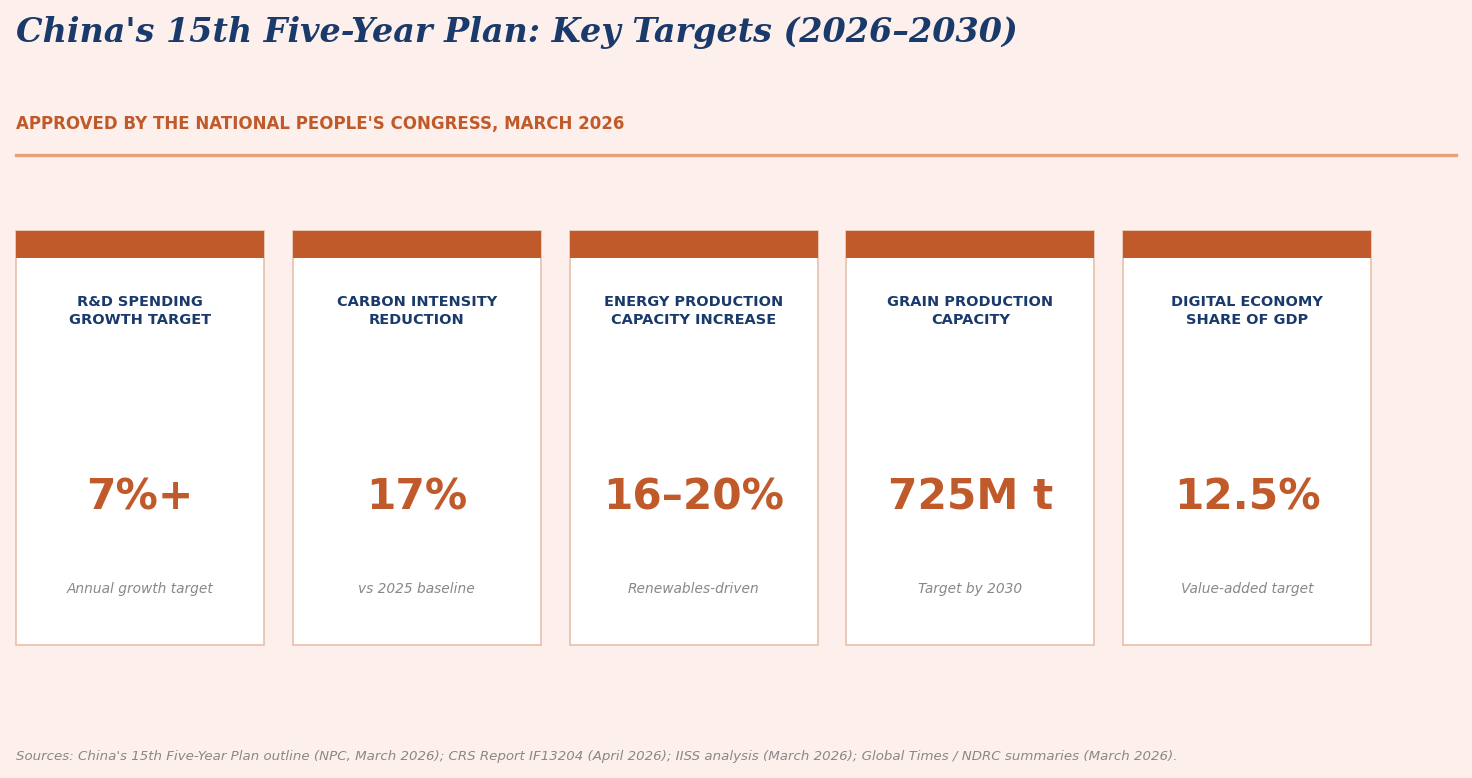
The plan sets several specific measurable targets. On technology and innovation, it targets R&D spending growth of at least 7% annually. On energy, it targets a 17% reduction in carbon intensity relative to the 2025 baseline, and a 16 to 20% increase in energy production capacity, driven mainly by renewables. 

On agriculture, the plan targets grain production capacity of 725 million tonnes by 2030, alongside greater seed self-sufficiency and more integrated digital farming systems. On the digital economy, it targets value-added output reaching 12.5% of GDP by 2030, with AI given significantly greater prominence than in the previous plan.

This resilience push also reflects broader geopolitical and supply-chain instability. As Dr Yu Jie, Senior Research Fellow on China at Chatham House, observed: “Conflicts, geopolitical rivalry and the COVID-19 pandemic have exposed the fragility of global supply networks. And intensifying technology restrictions by advanced economies have underscored how dependence on foreign inputs can constrain national development.”

She added that the turmoil in the Gulf would only reinforce Beijing’s conviction. “Instability in several of the world’s most important energy suppliers illustrates how quickly geopolitical crises can ripple through global markets. For a country like China, which remains the world’s largest energy importer and a central hub in global manufacturing networks, the war is a stark reminder of the risks inherent in overreliance on external conditions beyond its control.”

The plan also reflects China’s effort to align economic development with national security. In practical terms, that means reducing vulnerability to external shocks, strengthening industrial chains, and ensuring that energy, technology, and manufacturing policy are more tightly integrated.

This has implications for OIC countries. China’s push for resilience and self-sufficiency may sustain demand for energy, minerals, and industrial inputs, but it will also increase competition for countries that are trying to move up the manufacturing ladder themselves.

The OIC foundation that already exists

The ‘Belt and Road Initiative’ has already created a substantial infrastructure footprint across several Muslim-majority economies. Chinese-linked economic zones, agricultural cooperation centres, transport corridors, ports, and industrial parks already exist in parts of Africa, the Middle East, South Asia, and Southeast Asia.

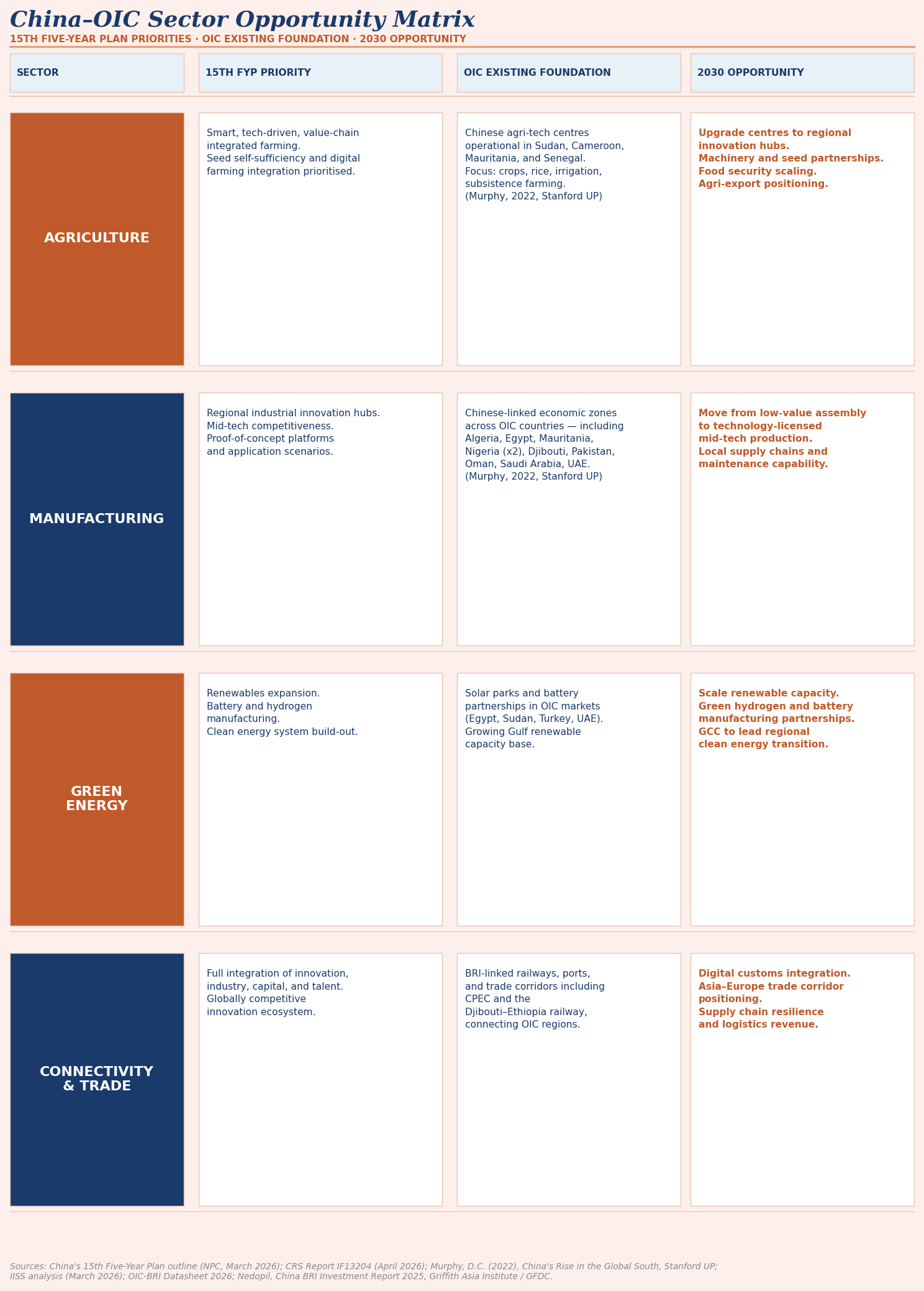
The scale of this existing base is documented. Ten Chinese-linked economic zones are recorded across OIC countries — in Algeria, Egypt, Mauritania, Nigeria (two zones), Djibouti, Pakistan, Oman, Saudi Arabia, and the UAE — covering industries from textiles and automotive assembly to petrochemicals and clean energy.

Four Chinese agricultural technology centres are operational in OIC member states in Africa: Sudan, Cameroon, Mauritania, and Senegal, covering crop cultivation, rice, irrigation, and subsistence farming. Cumulative BRI engagement since 2013 has reached $1.399 trillion, comprising roughly $837 billion in construction contracts and $561 billion in non-financial investments. In 2025, the Middle East was the second-largest recipient of BRI engagement globally, receiving $39.4 billion.

That existing base matters because the 15th Five-Year Plan does not start from zero. Its emphasis on quality, integration, and innovation can be read as an attempt to upgrade and better coordinate the infrastructure and partnerships China has already built.

This creates both opportunity and risk for OIC states. Countries that can align their industrial strategies with China’s priorities may attract more investment, technology transfer, and market access. Countries that remain passive may find themselves more deeply embedded in Chinese supply chains without gaining enough value-added production in return. 

Identifying where the opportunities are

Agriculture: China’s focus on food security, smart agriculture, and seed innovation creates room for agricultural cooperation, machinery exports, and value-chain integration. OIC countries with strong agricultural sectors could position themselves as suppliers of food, inputs, and processing capacity.

Manufacturing: China’s continued industrial upgrading will intensify competition in labour-intensive and mid-tech manufacturing. OIC economies seeking industrialisation will need to specialise, improve productivity, and target niches where they can compete effectively.

Green energy: The plan’s green transition agenda supports new opportunities in renewables, batteries, green hydrogen, grid infrastructure, and energy-efficient manufacturing. This is especially relevant for OIC countries with solar, wind, or critical mineral potential.

Connectivity and trade: High-quality Belt and Road cooperation may continue to support ports, railways, logistics corridors, and digital trade systems across OIC regions. That could improve trade efficiency, but only if projects are commercially viable and fiscally sustainable.

The risks to manage

The biggest structural risk for many OIC countries is increased competition from Chinese firms in manufacturing and exports. As China moves further up the value chain, it may become harder for emerging industrial economies to build export capacity in sectors where Chinese firms already have scale, efficiency, and policy backing.

A second risk is technological dependence. Chinese firms may expand exports of digital infrastructure, automation, and industrial software, but these partnerships can also create dependence on Chinese standards, platforms, and data governance systems.

For oil- and gas-exporting OIC states, the energy transition is another medium-term challenge. China will continue to need hydrocarbons, but its demand mix may gradually shift toward cleaner energy, strategic minerals, and inputs linked to electrification and advanced manufacturing.

Hong Kong’s possible role

Hong Kong may also become a more important bridge between China’s industrial base and OIC markets. Its strengths in finance, legal services, trading, and international connectivity could make it a useful platform for firms trying to reach Muslim-majority markets.

That said, the halal and certification gap should not be overstated. Hong Kong can help facilitate market access and trust-building, but any claim that it can single-handedly solve the challenge would be too strong. The more realistic view is that it can support a wider ecosystem of trade, certification, and service provision.

This view was echoed by Sharifa Leung, Managing Director, 3 Hani Enterprises Ltd when speaking to Salaam Gateway. She said: “By bridging rigid regulatory frameworks with modern ecosystem safety, Hong Kong and Macau can translate China’s Belt and Road vision into tangible economic trust, unlocking multi-trillion-dollar OIC markets through standardised, premium halal and tourism experiences.”

How OIC countries should respond

China’s 15th Five-Year Plan is best understood as a framework for selective engagement, and not automatic alignment. For OIC countries, it creates opportunities in trade, investment, energy transition, infrastructure, and industrial upgrading — but only if they negotiate carefully and build stronger domestic capabilities.

OIC governments are likely to do best if they engage China selectively rather than passively. That means negotiating sector by sector, insisting on local value addition, and ensuring that projects include technology transfer, maintenance capacity, and realistic financing terms.

It also means coordinating more regionally where possible. States with complementary strengths — in energy, logistics, agriculture, or manufacturing — can improve their bargaining position if they act with greater coherence.

The central point is simple: China is moving up the ladder, and OIC countries will benefit most if they do the same. Those that focus only on commodity exports or debt-heavy infrastructure risk becoming more dependent on Chinese supply chains without capturing enough of the value.

05 Jul 2026
Insight
OIC Economies
Gulf nations bet big on post-Assad Syria  

The Gulf nations have pledged tens of billions of dollars in partnership and investment deals in post-war Syria as they seek to become primary financial anchors, helping rebuild a country battered by economic disparities, political upheaval and social unrest. 

The GCC nations, particularly the UAE, Saudi Arabia and Qatar, were the among the first countries to endorse the new Syrian president Ahmad Al Shara when he succeeded Bashar Al Assad in December 2024. These same countries are now primary capital providers that partook in approximately $28 billion in capital inflows in the first six months of 2025 to seek early-mover advantages in a country characterized by extensive development and infrastructure needs. 

Saudi Arabia has inherently focused on Syria’s macro stability and strategic infrastructure development. In February, the two countries signed a slew of agreements valued at roughly $5.3 billion, covering investments across aviation, telecommunications and utilities.

The financial commitments will cover the development and operation of airports in Aleppo, establish a low-cost national carrier and launch a telecommunications initiative to build a 4,500-kilometre fiber-optic network, positioning Syria as an inter-continental digital corridor. The new agreements add to previously signed memorandums and deals between the two countries worth about $10.66 billion, bringing total Saudi investments in Syria to about $16 billion.

Saudi Arabia, alongside Qatar, also paid off approximately $15.5 million in arrears to the World Bank Group last May, enabling the lender to extend a $146 million grant to Syria for the reconstruction of the national grid infrastructure. Jean-Christophe Carret, World Bank Middle East division director stated that this project represented the first step in a planned increase in World Bank support to Syria. Saudi Crown Prince Mohammed bin Salman also played a widely appreciated role in US President Donald Trump’s decision to lift Syrian sanctions last May. 

Qatar has focused on reviving and developing Syria’s utility and aviation landscape. Last year, Syria signed a $7 billion deal with Qatar's UCC Holding-led consortium to add 5,000 megawatts to the national grid. The United Nations Development Programme estimates that Syria’s energy production has fallen by more than 80% from pre-war levels and that more than 70% of plants and transmission lines are damaged. Syria also inked a $4 billion deal with a consortium of companies led by UCC Holding to redevelop Damascus International Airport. 

The UAE is also viewing Syria strategically to strengthen trade networks beyond the Strait of Hormuz and secure a greater regional role. Mohamed Alabbar, the co-founder of e-commerce platform Noon, is planning to invest up to $18 billion in Syria in addition to launching an e-commerce platform, he announced in May.

Local port authorities are increasing their investment and operational footprint to support enhanced trade flows and long-term economic growth. Dubai’s DP World signed an $800-million preliminary agreement to develop the port of Tartous, while Abu Dhabi's AD Ports Group purchased a $22 million stake in a container terminal in Syria's main commercial port, responsible for 95% of the country’s container volumes. 

From January 2025 through February 2026, the GCC used a calibrated program of financial and political support that helped stabilize the Levant, writes Middle Eastern expert Norman Roule. 

“Saudi Arabia actively shaped the political and economic architecture of Syria’s reintegration into the Arab world; the UAE’s investment will enhance the Levant’s future as a strategic shipping center; Qatar combined solvency support with energy-centric statecraft.” 

However, despite all the money pouring in, the country’s reconstruction costs are disproportionately high, tenfold the size of its 2024 nominal GDP, according to World Bank’s last October estimates.

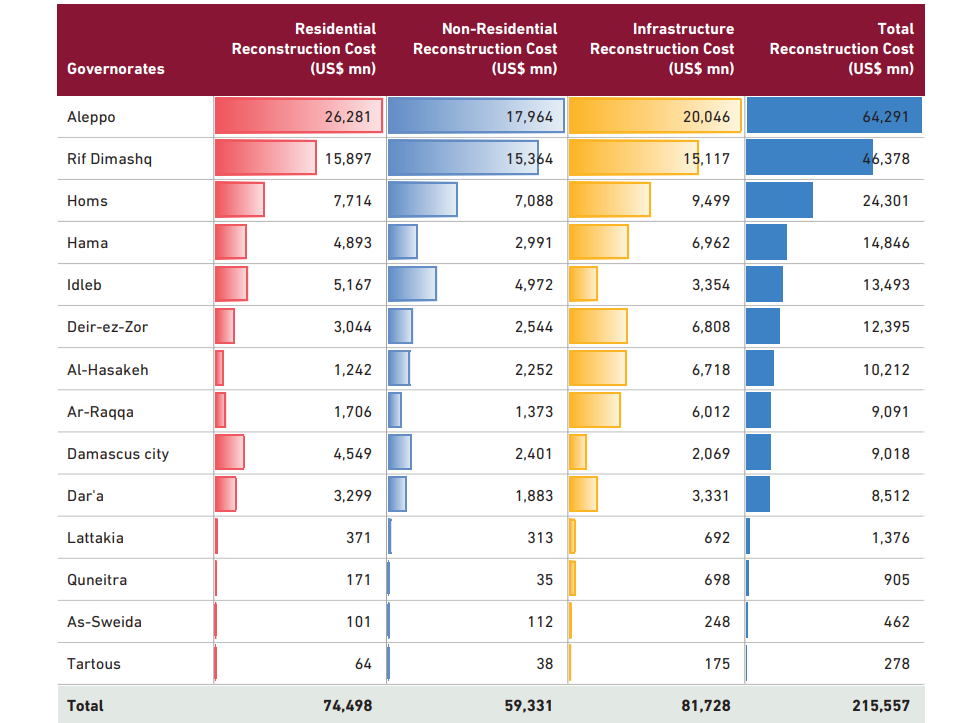
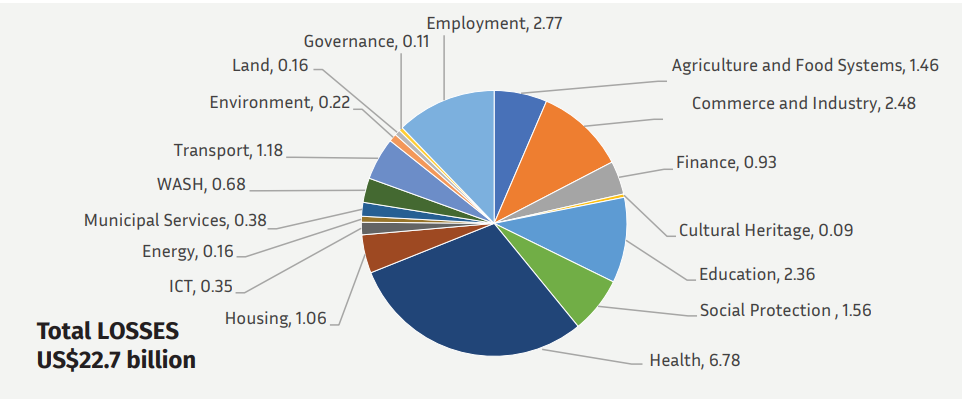
Moreso, the country will need $215 billion to reconstruct what thirteen years of conflict have destroyed, including $75 billion for residential buildings, $59 billion for non-residential structures, and $82 billion for infrastructure, according to the World Bank's Syria Physical Damage and Reconstruction Assessment 2011-2024 report. 

Best estimate for reconstruction costs by governorate as of December 31, 2024 (US$m)
Source: Syria Physical Damage and Reconstruction Assessment 2011-2024 report

Real GDP declined nearly 53% between 2010 and 2022 while nominal GDP contracted from $67.5 billion in 2011 to an estimated $21.4 billion in 2024. 

“The estimates of reconstruction costs are about 10 times nominal 2024 GDP, reflecting both the extensive damage caused by the conflict as well as the years of massive economic contraction. The disruptions due to the conflict and to economic sanctions have also led to a reliance on imports, depletion of foreign reserves, and heavily constrained fiscal resources,” the World Bank report read. 

Furthermore, despite the surge in investment interest, regional and international investors agree that the investment and regulatory regime need to be improved, Beth Morrissey, managing partner at Kleiman International Consultants, Inc., tells Salaam Gateway.  

“At the moment, investors note lack of transparency and predictability, and Syria's neighbours are well-placed to help the country. We understand the existing legal/regulatory environment, judicial system and current investment laws were key discussions at the May UAE-Syrian business forum. Already, Saudi is assisting with a foreign investment protection framework and has indicated investment will begin to flow. Gulf investors have noted that decision-making is still centralized at the top of the government due to lack of existing institutions.” 

“There is also some concern about last June's Investment Law 114, which amended but did not replace an earlier law, as it grants permanent concessions to investors, preserves the centralized system and could, in the future, imperil Syria's finances as, for example, export-oriented industries receive income tax reductions of up to 80 percent.”

15 Jun 2026
Insight
OIC Economies
Can Iran economically sustain a protracted war? 

Iran’s fragile economy is under siege and at risk of significant economic deteoriation in case of a protracted conflict.  

The country’s projected growth for this year - which the International Monetary Fund placed at 1.1% last October - has now plunged into the red territory. According to the fund's latest regional economic outlook published in April, Iran’s GDP is expected to contract by 6.1% this year, together with an upward inflation revision of over 13 percentage points. 

Grim estimates and prophecies are pouring in from multiple quarters. Official figures suggest that the country has suffered around $270 billion in direct and indirect losses in the first few weeks of the conflict with the US and Israel – more than half of its 2024 GDP. Iran’s central bank has reportedly estimated that reconstructing the war-ravaged economy could take more than a decade.

Internet blackouts, which have continued since the start of the war, entered their 62nd day on April 30, according to NetBlocks, a digital governance and connectivity tracker. Back in January, Sattar Hashemi, Iran's Information and Communication Technology Minister, estimated that internet outages carry a daily cost of $38 million (50 trillion rials). By that measure, the shutdown alone has costed the economy at least $2.2 billion. 

Iranian rial has experience significant depreciation, declining from 1.35 million to $1 on January 1 to 1.72 million to $1 on February 28, the first day of the war, before rising to 1.46 million to $1 on March 12, according to Bonbast.com, a website that tracks live exchange rates in Iran’s free market.  

“The Iranian economy is under immense pressure. The conflict has heavily impacted productive capacity and Iran’s latest offer to open the strait and defer the conversation over the nuclear programme suggests that the US blockade is also causing real economic pain,” Vladimir Gorshkov, a macro policy strategist at State Street Investment Management told Salaam Gateway. 

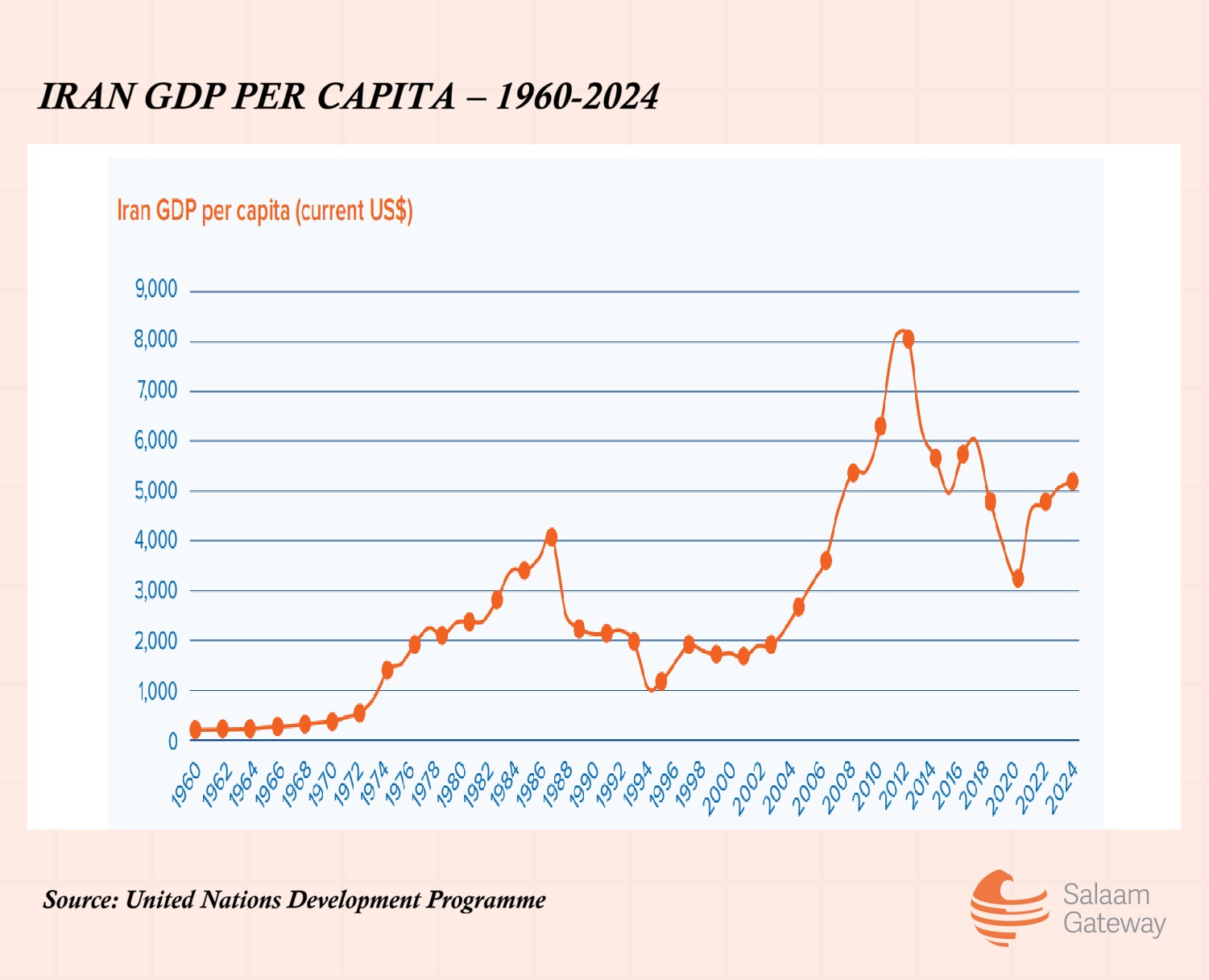
The Muslim-majority country with around 90 million residents has been contending with grave economic challenges since before the conflict. Economic sanctions, political instability and fiscal deficit have exacerbated the country’s plight over several years. Prior to the conflict, the IMF had forecasted Iran’s gross government debt to spike to 36.4% of its GDP in 2026 and to 39.3% by the end of the decade. Meanwhile, inflation more than doubled from 20.6% in 1980 to 42.4% in 2025. 

“Iran entered this war after years of sustained economic pressure. Sanctions, isolation, and structural weaknesses have already produced a fragile economy. The war has intensified these pressures, but it has not represented a fundamentally new shock,” writes Alex Vatanka, a senior fellow at the Middle East Institute.

But Iran is now in unchartered economic territory, he adds. “Each additional month that the war continues could set the Iranian economy back by more than five years, reflecting the compounding impact on capital stock and productivity.” 

Mass layoffs have complicated Iran’s socio-economic landscape further with one million people having reportedly lost their jobs. Threat of privations linger as the war could push an additional 3.5 million to 4.1 million people below the poverty threshold, burgeoning the pool of 32.7 million people already surviving below the $8.3 poverty level per day, according to the United Nations development programme (UNDP). 

“Iran entered the crisis from a relatively narrow position within the upper-middle-income country category, with income levels only marginally above the World Bank threshold,” the UNDP said. 

“The additional impact of the current crisis is expected to intensify this downward trajectory and raise the likelihood that Iran could transition into lower-middle-income country status in the near-term.”

Iran war may cost Arab countries up to $200 billion, says UN

Iran declares US tech giants, American, Israeli banks in region as targets

The ‘toll’ reality 
An economically redeeming feature for Iran would be to gain control of and monetize the Strait of Hormuz, a reality which has begun to shape up, with Iranian officials confirming the receipt of the first toll revenue earlier this month. All ships transiting the route must pay the fee in Iranian rial, Iran’s Tasnim news agency cited Hamidreza Hajibabaei, the parliament’s deputy speaker, as saying. 

Global bodies have not validated Iran’s right to securing payment from transiting vessels. Arsenio Dominguez, secretary-general of the International Maritime Organization said that there was no legal basis for any country to introduce payments or impose tolls, fees or any discriminatory conditions on international straits. 

The Strait of Hormuz is a natural waterway which operates under the directives established by the United Nations Convention on the Law of the Sea, which prohibits charging vessels for passage. Article 26 of the convention suggests that charges may be levied upon a foreign ship passing through territorial sea as payment only for “specific services rendered to the ship”.

Gorshkov suggests that the transit toll would only work if there were an institutionalised system for collection in place as it could not operate on an ad hoc basis in peacetime. 

“A toll on ships transiting the Strait of Hormuz would be a new source of revenue but it doesn’t automatically follow that the overall government revenue would increase. Moreover, it’s likely to be the case that much of that flow will be captured by very narrow interests so it is hard to see how the economy at large would significantly benefit.”

The snag of storage 
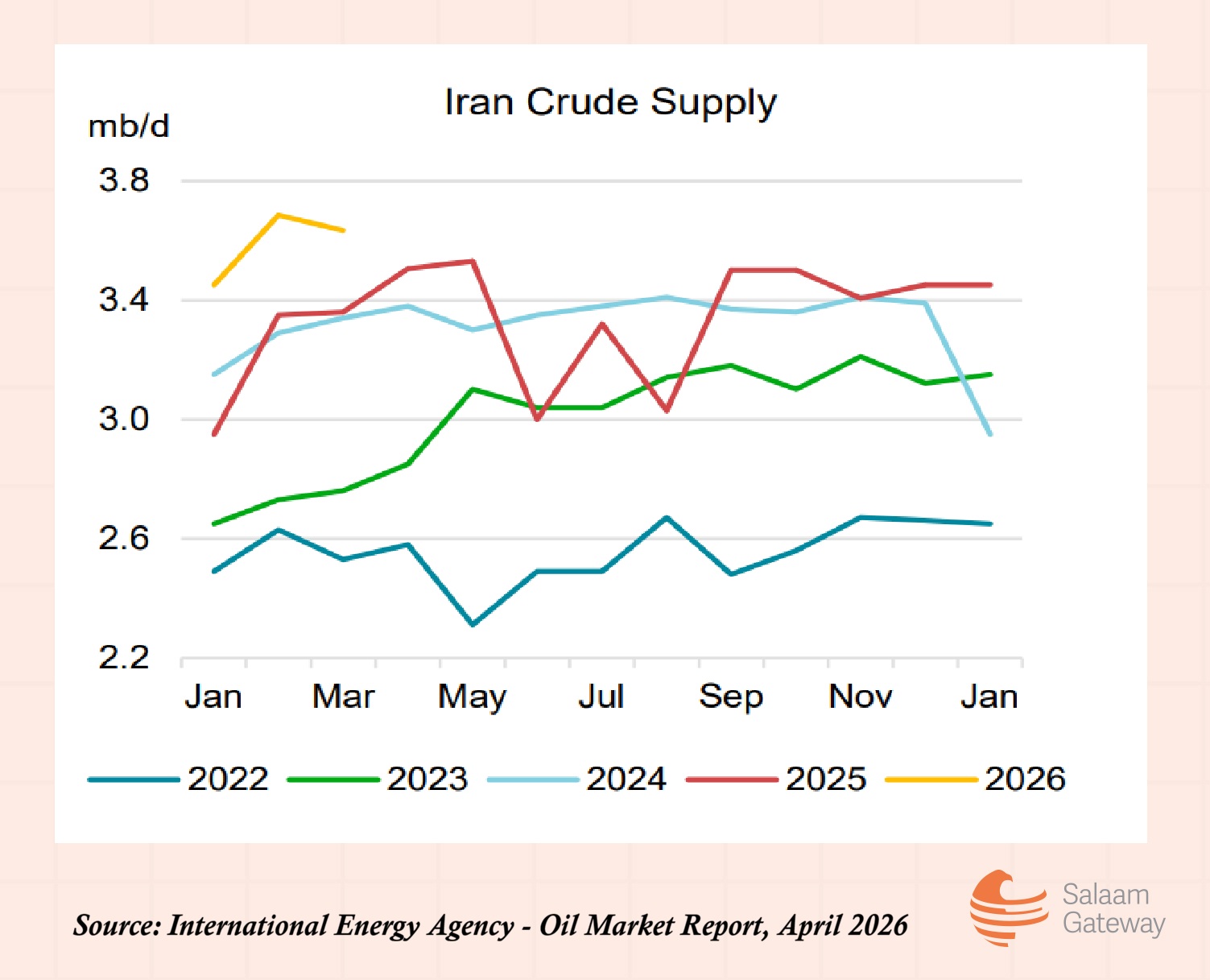
Iran’s oil production and subsequent exports are also in the balance given the United Nation’s naval blockade. The country churned out approximately 3.68 million and 3.63 million barrels per day of crude oil in February and March, respectively, according to an International Energy Agency report published this month.

Iranian exports were also on a par with pre-war levels in March, accounting for over 70% of an average 2.3 million barrels of daily flows that transited the strait last month. However, the naval blockade enforced mid-April means that most of Iranian exports will now need to be stored. 

Scott Bessent, US Treasury Secretary, claimed in a post on X on April 21 that the storage capacity at Kharg Island would be full “in a matter of days” and that the “fragile Iranian oil wells will be shut in”. 

“Constraining Iran’s maritime trade directly targets the regime’s primary revenue lifelines,” he added.

Kharg Island is a small island northwest of the port of Bushehr and serves as a terminal for nearly all of Iran’s oil exports.  

Iran has also sustained significant damage to its petrochemical facilities, notably at Shiraz and Mahshahr. Israel struck Iran’s South Pars field, a critical energy asset that supplies 80% of Iran’s natural gas. Natural gas generates 79% of the country's electricity, primarily used for heating, cooking, lighting and other uses, according to IEA. 

“Israel’s attack on the South Pars Gas Field damaged infrastructure indispensable for the survival of Iranians,” said Joey Shea, senior Saudi Arabia and UAE researcher at Human Rights Watch.  

“Attacks on key oil and energy infrastructure have foreseeable knock-on economic impacts that could prove harmful to millions of people.” 

30 Apr 2026
Insight
OIC Economies
Iran conflict should accelerate renewable transition in the Middle East 

The US-Iran conflict has once again laid bare the vulnerability of global energy markets. Oil prices have touched historical highs in sustained rallies, touching highs of $120 per barrel as concerns regarding the situation grew. 

Major concerns swirl around the fate of the Strait of Hormuz; an important waterway for about 20% of the world's oil and liquefied natural gas. Any disruptions on this route in the past have historically caused huge oil price spikes, demonstrating how important Middle Eastern energy exports continue to be for the global economy. 

As governments throughout the Gulf and North Africa continue to grapple with what appears to be an evolving situation, one thing that the conflict has reinforced undoubtedly is the strategic consideration to reduce reliance on oil and gas for energy generation. Not only would that protect export revenues but also improve long-term energy security. 

Why renewables make economic sense

Solar energy generation makes a compelling economic case in the Middle East, home to some of the most abundant and consistent solar irradiation (over 2000 kw-h per m2 per year), according to the Middle East Solar Industry Association. 

Due to the success of large-scale renewable energy projects, electricity prices have reached all-time lows. The Al Dhafra photovoltaic solar project in Abu Dhabi, which became operational in 2023, was able to obtain a tariff of 1.35 cents per kilowatt-hour, making it one of the lowest prices for solar power recorded in history. Furthermore, the International Renewable Energy Agency (IRENA) suggests that 91% of new renewable energy projects commissioned in 2024 were most cost effective than fossil fuel alternatives.

The demand for electricity is on the rise, necessitating increased production from renewable sources. The International Energy Agency (IEA) forecasts electricity demand in the Middle East to soar by about 50% by 2035 due to population growth, industrial development, and the increased need for air conditioning - which already accounts for around 25% of annual electricity usage and almost 50% of peak electricity usage.

At present, a large part of this demand is satisfied through local heavy fuel oil (HFO) and liquefied natural gas (LNG) use. By way of example, Saudi Arabia uses an average of about 1.1 million barrels per day for electricity generation and desalinated water production; however, this consumption can exceed 1.4 million barrels per day during the hottest summer months, which diverts a considerable amount of liquids away from export markets.

If small amounts of local oil and gas consumption deployed for energy production were to be replaced with solar and wind energy, it would result in greater quantities of hydrocarbons available for export, boost state coffers and reduce the region's exposure to volatile fuel prices.

Financing the transition
The growth of renewable energy capacity throughout the region is happening at a rapid pace: Saudi Arabia's National Renewable Energy Programme aims to generate 59GW of renewable energy capacity by 2030, while the UAE is developing the 5GW Mohammed bin Rashid Al Maktoum Solar Park, and Egypt has joined the pack with its 1.6GW Benban Solar Park.

According to the Middle East Solar Industry Association's Solar Outlook Report, the total solar capacity of the Middle East and North Africa region will exceed 180GW by 2030. This expansion is increasingly relying upon Islamic capital markets for financing. Global ESG sukuk issuances surpassed $18.5 billion in 2025, increasing by over 60% over the previous 12-month period, according to Fitch Ratings. 

What still stands in the way

Electric grids throughout the Middle East were created based on large fossil-fuel power plants, and the rising use of solar and wind energy will require upgrades to existing electrical transmission networks, energy storage systems and electricity pricing and market rules.

While there is still a relatively low percentage of total electric generation using renewable energy in many Gulf countries, it is likely that fossil fuels will remain part of the Gulf region's energy mix for many more years; at least, until renewable sources replace them.

Nonetheless, there is no doubt that the current geopolitical crisis emphasizes how critical it is for countries to diversify their sources of energy supply. Countries that rely primarily on renewable sources are at lower risk of being impacted by sudden changes in energy prices given disruption of oil supply routes resulting from continuing tensions with Iran.

As Middle Eastern economies wean their infrastructure away from fossil fuels and towards renewables, energy will be used as an asset, not only to help the country deal with any geopolitical issues, but also to retain their position as important global suppliers of energy. 

15 Apr 2026
Insight
OIC Economies
How Zakat is bridging the Middle East’s $1 billion-a-day crisis 

As Ramadan 2026 draws to a close, the Middle East is confronting a stark reality. While the region’s ongoing conflicts are estimated to cost a staggering $1 billion a day, humanitarian organizations are grappling with shrinking budgets and record-breaking displacement. 

According to the International Organization for Migration (IOM), more than 19 million people are currently internally displaced across the Middle East. 

Amid these overlapping and incessant crises, Zakat has transformed from a religious obligation into a sophisticated, multi-million-dollar engine of survival.

“Zakat provides a structured system of support that can quickly reach those most affected,” Annabel Turner, communications officer at IOM tells Salaam Gateway.

“Across the region, these funds are helping sustain refugees, widows, and families struggling to survive.”

Faith-based giving meets humanitarian response

This Ramadan, humanitarian organizations are expanding efforts to channel Zakat into emergency relief programs across multiple conflict zones.

IOM recently launched the second edition of its annual Share the Blessings campaign through its Islamic Philanthropy Fund (IPF).

The initiative builds on last year’s pilot project focused on Sudan, expanding its reach this year across multiple humanitarian emergencies, including Afghanistan, Bangladesh, Gaza Strip, Sudan, Syria, and Yemen.

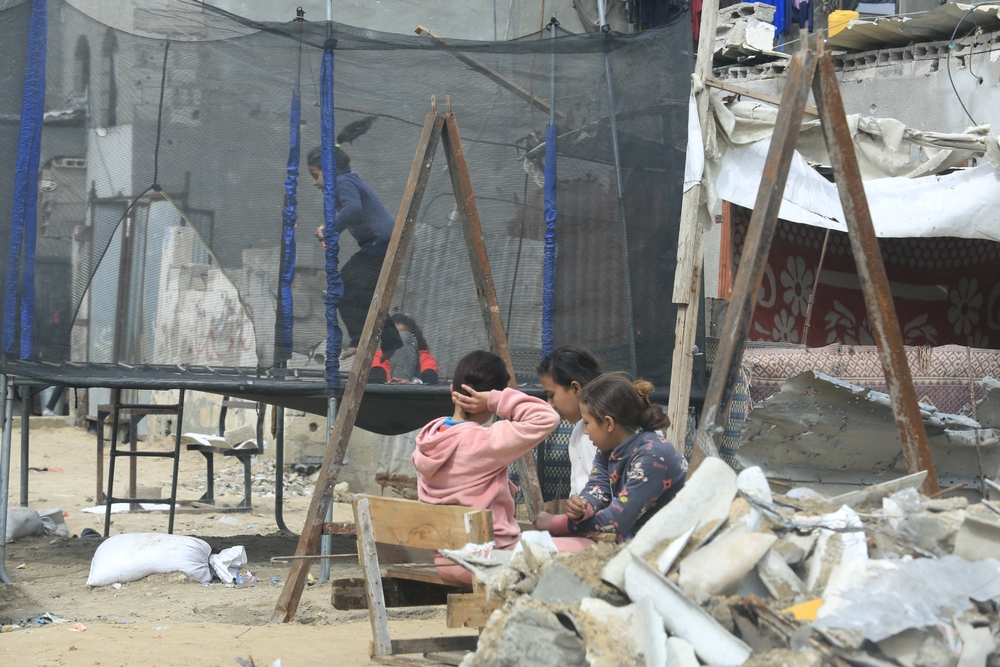
Palestinians inspect a destroyed building after an Israeli air strike in the city of Rafah, southern Gaza Strip, on April 25, 2024. (Source: Shutterstock)

“This year’s campaign combines faith-aligned giving, broader reach, and a transparent digital platform to make Zakat a tool for immediate relief and longer-term resilience,” says Turner. 

Since launching in 2025, the IPF has secured more than $20 million in pledges and commitments, which will enable it to support over 30,000 people affected by humanitarian crises, according to Turner.

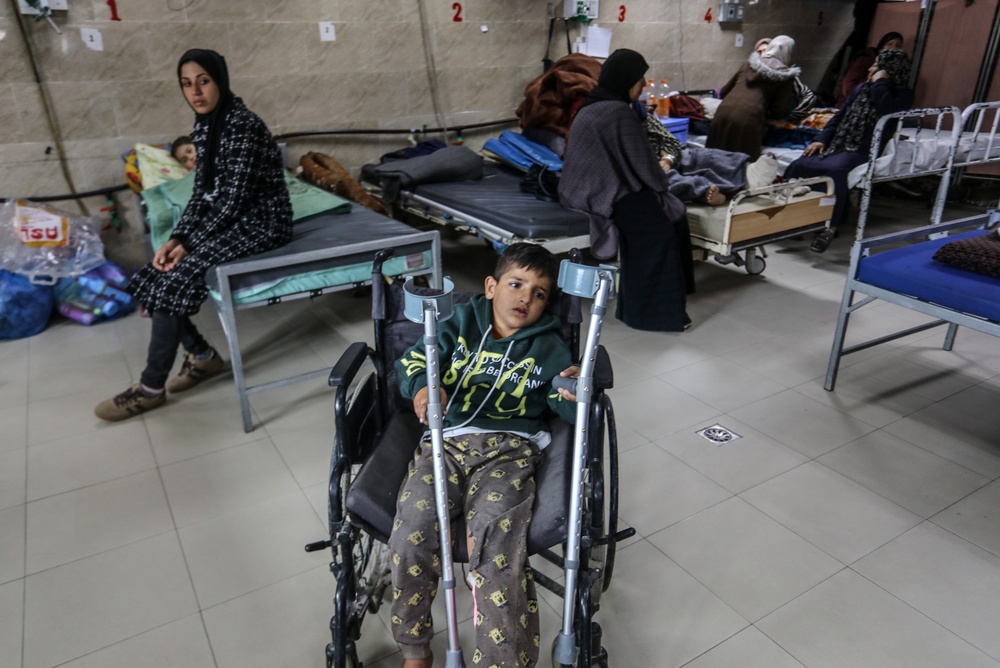
For Islamic Relief Canada, a major focus of this year’s Zakat program is emergency support for Gaza, where funds will help provide food assistance, clean water, medical services, and cash support to families affected by the ongoing crisis.

“The program aims to support over 600,000 people, including children, elderly individuals, and people with disabilities,” Houda Kerkadi, media and press relations specialist at Islamic Relief Canada tells Salaam Gateway.

The UN estimates $4.06 billion is required to deliver life-saving support to 3 million people across the Occupied Palestinian Territory in 2026

In 2025, Islamic Relief Canada raised 33.87 million Canadian dollars in Zakat funds, an increase from 31.25 million Canadian dollars in 2024 and 22.06 million Canadian dollars in 2023, reflecting continued growth in Zakat giving. Combined with other charitable contributions such as Sadaqah, the funds enabled the NGO to support more than 4.4 million people worldwide in 2025.

At the same time, local organizations are scaling up their own Zakat initiatives. Amman-based NGO Tkiyet Um Ali directed its 2026 Ramadan Zakat funds to vulnerable families in both Jordan and Gaza, where it delivered food parcels and rehabilitated shelter facilities for 6,000 displaced people.

Elsewhere, Egypt’s Tahya Misr Fund recently partnered with the House of Zakat to send 780 tonnes of food and essential supplies to the Gaza Strip, providing crucial support to displaced families during the holy month.

Rebuilding healthcare infrastructure

While many organizations focus on immediate relief, the Syrian American Medical Society (SAMS) is using Zakat to solve a different crisis: the collapse of healthcare. After more than a decade of conflict, Syria’s healthcare system remains severely damaged, with many hospitals destroyed or left without the resources needed to function.

Dr. Abdulfatah Elshaar, SAMS Foundation chairman, says the financial burden of healthcare often pushes already vulnerable families into complete financial collapse.

"Access to free healthcare removes one of the largest financial burdens vulnerable families face," Dr. Elshaar tells Salaam Gateway. "It means parents do not have to choose between paying for treatment and providing food or shelter for their children."

To sustain these lifelines, SAMS is investing heavily in rebuilding healthcare infrastructure, including $12 million for the Idlib Specialty Hospital and $6 million for the Idlib Maternity & Children’s Hospital.

“This Ramadan, our focus is sustaining life-saving medical services while continuing to contribute to rebuilding healthcare systems for communities that have endured years of conflict and displacement,” says Dr. Elshaar. 

Today, SAMS supports more than 65 healthcare facilities across Syria, offering services ranging from maternity care and cancer treatment to mental health support. In 2025 alone, the organization delivered more than three million medical services to over one million patients.

The impact of these services is reflected in individual stories like that of Fatima, a displaced mother from rural Aleppo who recently delivered her baby safely at a SAMS-supported maternity hospital after months without access to medical care.

"Stories like Fatima’s reflect the vital role these facilities play in protecting the lives of mothers and children," says Dr. Elshaar. 

The widening gap between need and funding

Despite the growing scale of Zakat-funded initiatives, the humanitarian needs across the region continue to outpace available resources. 

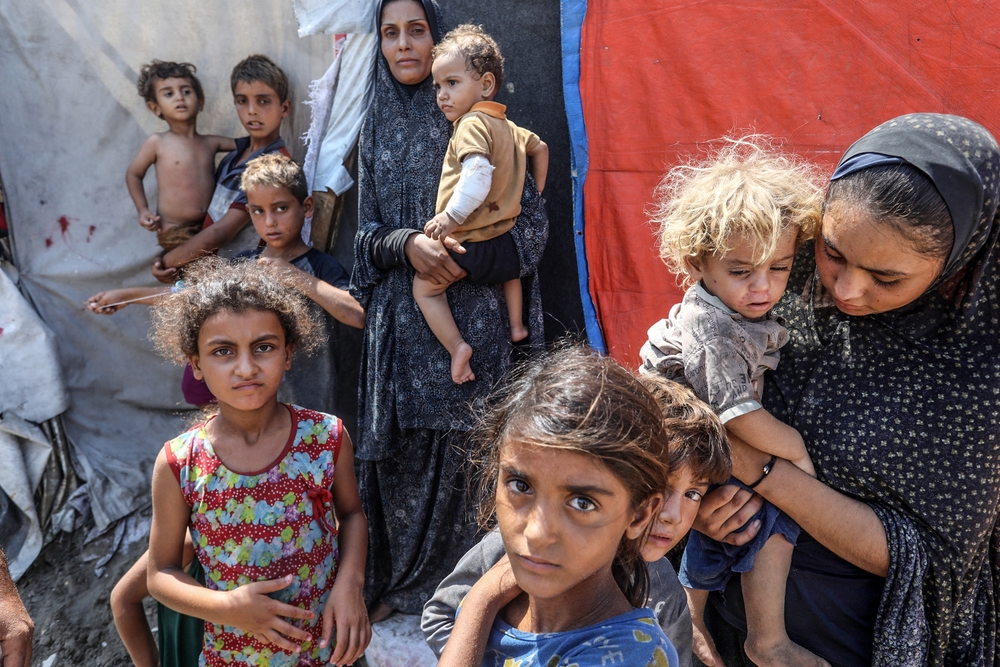
Across the region, wars, economic collapse, and climate shocks are pushing new populations into poverty each year. In places like Gaza and Sudan, repeated displacement has stripped many families of their homes and livelihoods.

“The biggest challenge is the scale of need,” Karim Amer, UNRWA's director of partnerships tells Salaam Gateway. “The gap between what Zakat can do and the level of funding needed to meet the growing humanitarian needs remains enormous.”

Long-term recovery poses another hurdle.

“Critical gaps remain in underfunded and protracted crises, as well as longer-term recovery and livelihoods support,” says Turner.

While Zakat is highly effective in delivering immediate relief, rebuilding entire communities requires sustained investment over many years.

Organizations like SAMS are increasingly pairing emergency support with longer-term development initiatives. Through its Syria Health 2030 campaign, the group is investing in major projects designed to restore the country’s healthcare capacity. 

Similarly, Islamic Relief Canada is expanding programs that combine emergency aid with longer-term recovery.  

“While much Zakat funding understandably supports immediate humanitarian needs, expanding its use in areas such as livelihoods, education, and economic empowerment can help create more sustainable pathways out of poverty,” explains Kerkadi. 

“Strengthening the connection between short-term assistance and longer-term resilience could help maximize the overall impact of Zakat.”

Zakat contributions are doing far more than fulfilling a religious obligation across conflict zones - this steady stream of funding is keep hospitals accessible, preventing families from being evicted, and delivering a fragile sense of stability to a people who perhaps have very little left to lose.


16 Mar 2026
Insight
View all Insights

Reports
PLUS State of the Global Islamic Economy (SGIE) 2025/26 Report
28 Jun 2026

Building Payment Rails for 2 Billion People
06 May 2026

PLUS Global Islamic Fintech Report 2025/26
18 Feb 2026

View all reports

Announcements
UAE embeds AI literacy into national strategy to drive workforce development and economic competitiveness: Coursera report

20 Jul 2026


Aramex, Saudi-based Netzero partner to launch smart tree sustainability initiative in Saudi Arabia

20 May 2026


Alshaya Group marks 20 years in Egypt and announces the grand opening of its first offshoring global talent centre in the country

23 Apr 2026


View all announcements

Subscribe to our newsletter

Get Islamic economy and Halal Industry updates in your inbox

By submitting this form you are acknowledging that you have read and agree to our privacy statement


Infographics
Islamic Finance
Top 10 Islamic fintech markets by size
29 Apr 2026

View all

Events & Courses
View all

Special Coverage

Top 30 Business Schools of the Islamic Economy 2026

View all

30 Notable Islamic Fintechs - 2026

View all

30 Notable Islamic Fintechs - 2025

View all

Global Islamic Fintech Report 2025/26

View all

15 Most Active VCs in the Islamic Digital Economy

View all

State of the Global Islamic Economy (SGIE) 2024/25 Report

View all

Global Islamic Fintech Report 2024/25

View all

Top 30 Digital Islamic Economy Startups 2024

View all

Top 30 OIC Halal Products Companies 2023

View all

Gaza Crisis

View all

Global Islamic Fintech Report 2023/24

View all

The State of the Global Islamic Economy 2023/24 Report

View all

Global Islamic Fintech Report 2022

View all

State of the Global Islamic Economy 2022

View all

Food Security

View all

Women in the Islamic Economy

View all

COVID-19 and the Global Islamic Economy

View all

E-book: Impacts of the COVID-19 outbreak on Islamic finance in OIC countries

View all

State of the Global Islamic Economy 2020/21

View all

Global Islamic Fintech Report 2021

View all
A note from Salaam Gateway

We're growing — and want you to be part of our journey

Salaam Gateway has always been your home for independent, in-depth coverage of the global Islamic economy. To help us go deeper and do more, we're introducing a membership tier for our premium reports and insights — so we can produce more of everything you've come to love.
With your free account, you get:
  • 5 full articles every month
  • Full access to our Lists & Rankings
  • Executive summaries of our premium reports
  • Our weekly Islamic-economy newsletter
No card required. No catch. Just good journalism.
Explore membership
List Your Company

Create your company profile on Salaam Gateway to reach a global Islamic audience.

Create
Publish Your Announcement

Share your company's latest updates.

Submit
Share Your Event or Course

Reach thousands of Islamic economy businesses and professionals.

Add
Logo
Follow
  • Halal Industry
  • Islamic Finance
  • Islamic Lifestyle
  • OIC Economies
  • Market Reports
  • News
  • Insights
  • Companies
  • Infographics
  • Announcements
  • Cookies Policy
  • Privacy Statement
  • Terms of Use
  • About us
  • Contact us

© 2026 Salaam Gateway