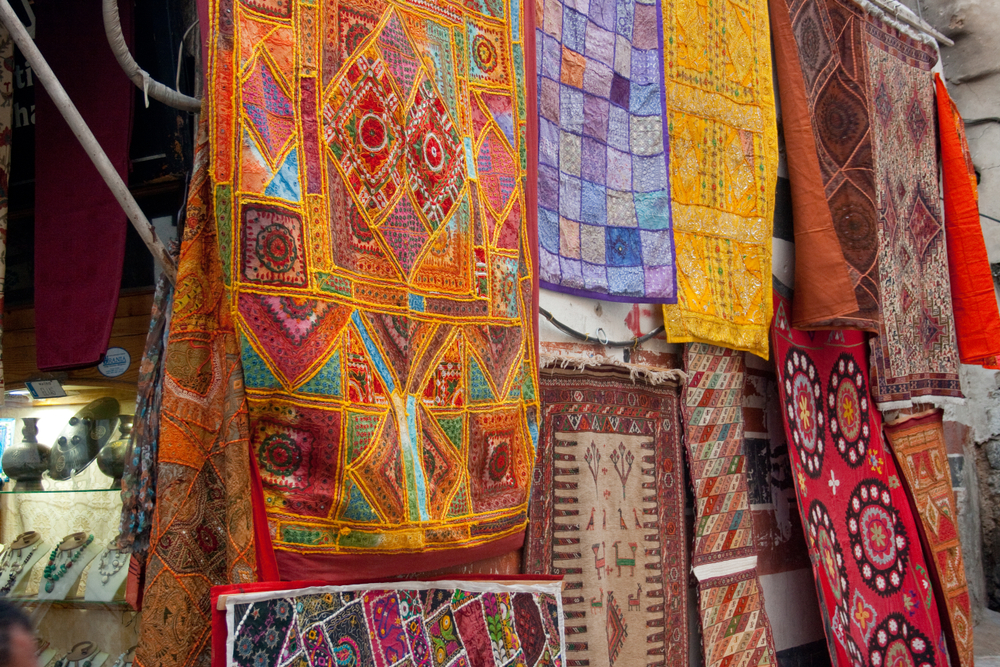
Fabric with multiple patterns sold in the Old City of Damascus, Syria (Source: Shutterstock)
This raises a bigger question: could the Levant, covering Jordan, Syria, Lebanon, Cyprus and Palestine, become a manufacturing base for international modest fashion brands?
The region already has much of the creative and technical talent that fashion manufacturing requires. Lebanon is particularly renowned for high-end craftsmanship. Designers such as Elie Saab and Zuhair Murad have built globally recognised couture houses, demonstrating the depth of specialised skills available in the country.
Lebanon has also produced successful modest fashion businesses such as Bokitta, known internationally for its pin less hijabs. In neighbouring Jordan, Shukr has built a long-standing business serving Muslim consumers with modest clothing.
These examples matter because modest fashion does not require a completely separate manufacturing ecosystem. The same capabilities needed to produce mainstream garments - pattern-making, sewing, embroidery, fabric sourcing and quality control - can be applied to long dresses, abayas, modest workwear, occasion wear and hijabs.
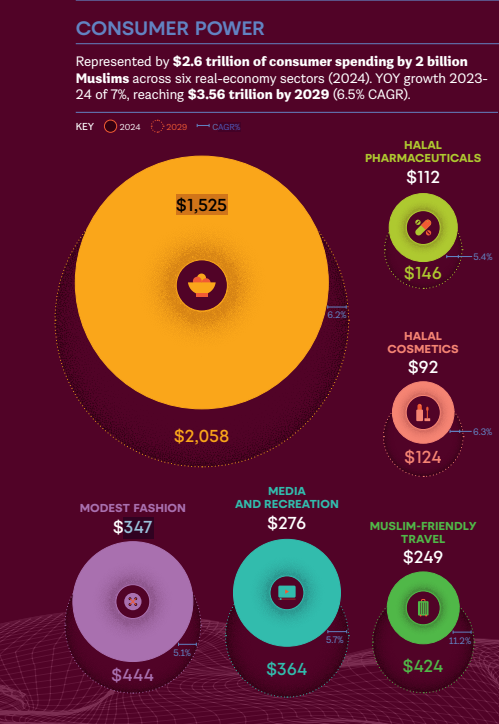
The commercial opportunity is significant. DinarStandard has estimated that Muslim spending on modest fashion reached $347 billion in 2024, with spending projected to reach $444 billion by 2029. For brands operating in this market, a Levantine production base could offer proximity to the Middle East and Europe while drawing on a longstanding regional fashion tradition.
The Global Islamic Economy 2024/25 Overview (Source: SGIE Report)
Syria, however, is not yet ready to compete directly with established Asian manufacturing giants on scale. Infrastructure, financing, supply chains and political and economic risks remain significant obstacles. The opportunity may therefore lie in starting with smaller, higher-value production, where craftsmanship, flexibility and proximity matter more than sheer volume.
For Syria, this could make garment manufacturing more than an export opportunity. It could become part of the country’s economic recovery - rebuilding factories, creating employment and reconnecting skilled workers with global markets.
For modest fashion brands, the Levant could offer something equally valuable: a new manufacturing destination built on skills that already exists.
The International Monetary Fund estimated that Qatar undertook a decade-long infrastructure program of $200–300 billion ahead of the 2022 World Cup. The eight stadiums reportedly cost about $6.5 billion. The wider program included hotels, the metro and rail system, roads, utilities, port and airport development, and other projects linked to Qatar’s national development plans.
Qatar has continued to create demand around that investment. The FIFA Arab Cup in December 2025 used six World Cup stadiums and attracted 1,220,063 spectators, a quarter of them being foreigners. The country is also hosting the FIFA U-17 World Cup annually from 2025 through 2029, drawing on the stadium, accommodation and transport capacity developed for the 2022 event.
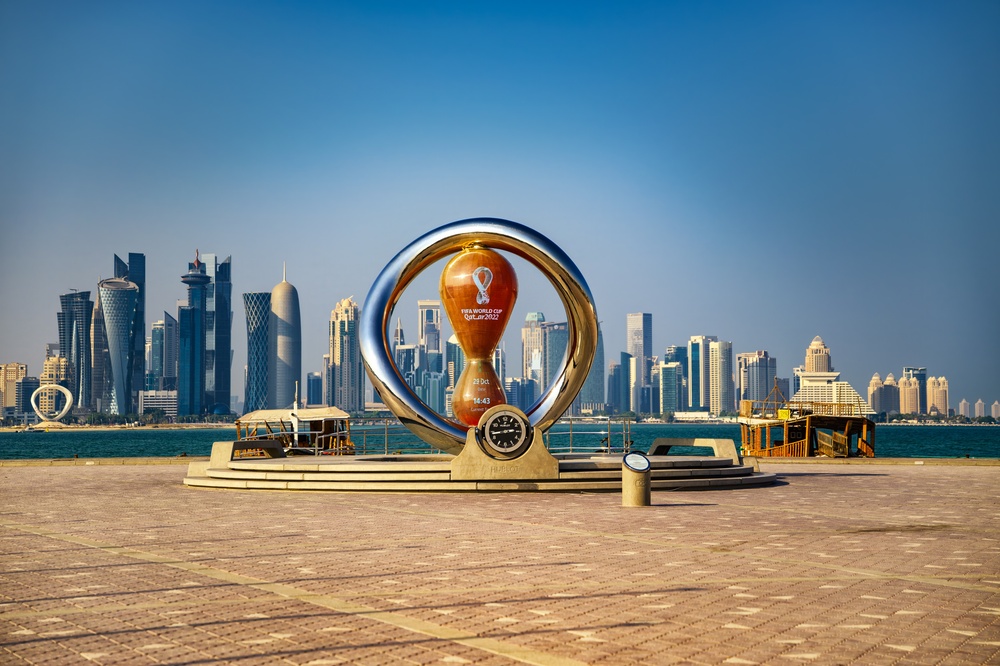
Image courtesy: Shutterstock
Qatar also carried the Hayya platform beyond the event. Introduced for World Cup entry and identification, it now serves as the country’s central platform for tourist and event visas. Qatar welcomed 5.1 million international visitors in 2025, growing 3.7% on the previous year, while room nights sold rose 8.6%.
Attributing this growth to the World Cup alone would overstate the evidence. What can be observed is a sustainable long-term strategy of repurposing and utilizing assets built for the 2022 FIFA Cup.
While drafting the State of the Global Islamic Economy 2025/26 report, one of the signals identified was that OIC destinations were moving towards multi-year event pipelines instead of competing for one tournament at a time.
Qatar illustrates the logic. A sequence of sporting, cultural and business events can keep a destination visible and spread demand across venues, hotels and transport networks long after the original event. However, maintaining an event pipeline is only part of the equation.
The events must also be connected to a broader strategy that encourages visitors to stay longer, explore more and ultimately return.
Dr. Kamilla Swart-Arries, an associate professor at Hamad Bin Khalifa University, said that Qatar’s next phase must extend beyond attracting additional events.
“Qatar needs to move from an event-hosting model to an integrated destination-development model. Major events can generate international visibility and concentrated visitor demand, but sustained tourism depends on what happens before, during and after the event.”
Incoming: Morocco, Saudi Arabia
Morocco will co-host the 2030 FIFA World Cup with Spain and Portugal. It is investing approximately $20 billion in rail, roads, airports, stadiums and other urban infrastructure.
The country also plans to add 60,000 hotel beds by 2030, about one-fifth of its current capacity, while working towards the 26-million-annual-visitors goal. Morocco welcomed 19.8 million tourists in 2025.
For Morocco, return on investments will come down to what happens after 2030: whether the additional accommodation, transport capacity and stadiums continue to attract enough demand after the tournament.
While Morocco has an edge with its established cultural destinations and strong tourism demand, the World Cup could help spread interest beyond the usual hubs, connect football with food, heritage, coastal and mountain experiences, and direct more spending to small hotels, guides and local businesses.
A post-2030 domestic and global tourism calendar must become a priority once the tournament frenzy recedes.
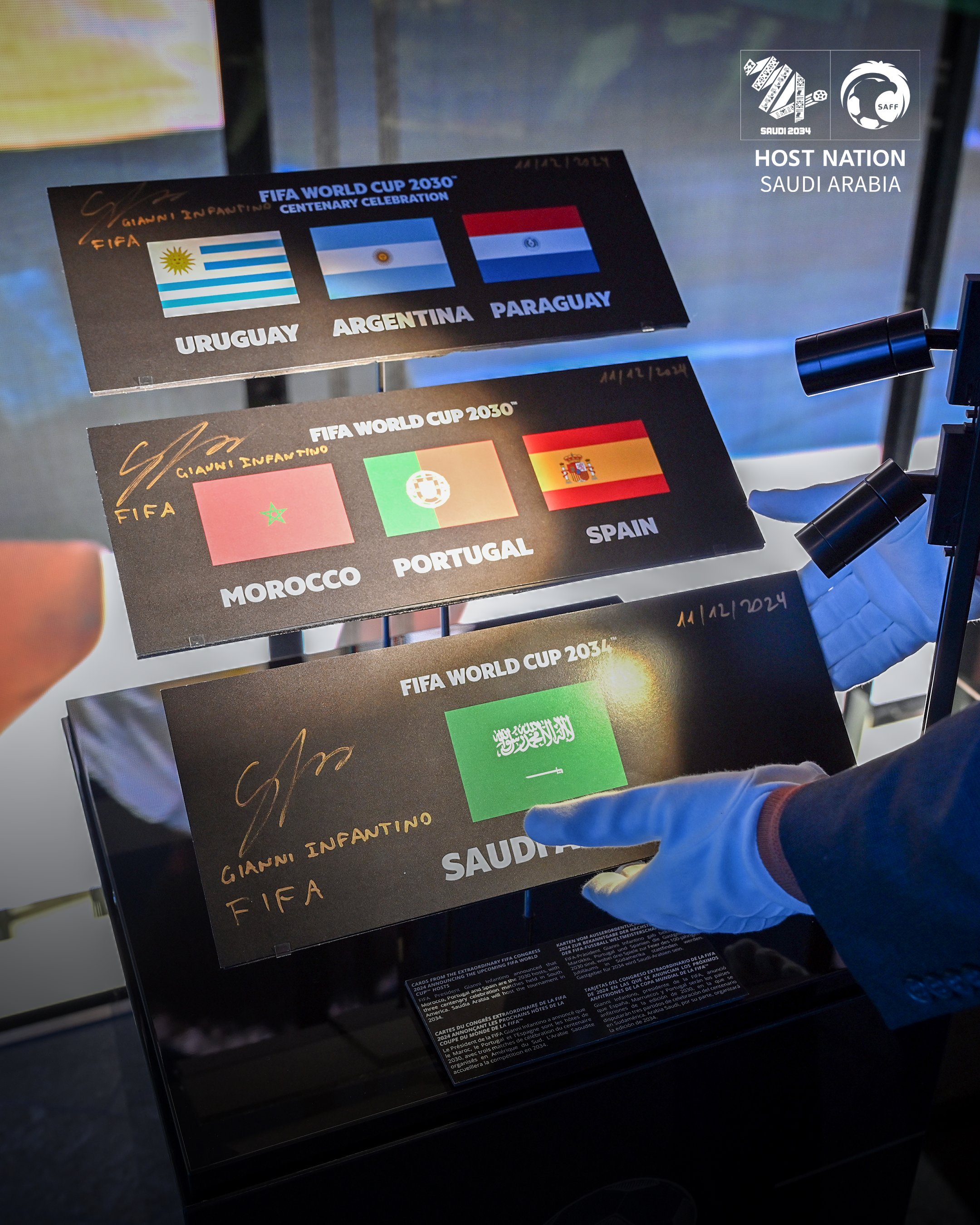
Similarly, Saudi Arabia will host the 2034 FIFA World Cup, the first 48-team tournament held in a single country. Its official bid includes 15 stadiums in five locations: Riyadh, Jeddah, Al Khobar, Abha and NEOM.
Image courtesy: Official X account of Saudi Arabia FIFA World Cup 2034
Four existing stadiums are scheduled for refurbishment, three were under construction when the bid was submitted and eight are new builds. Several sit within wider tourism, entertainment and urban developments, including Qiddiya City, Jeddah Central and NEOM.
Saudi Arabia has given thought to post-tournament use at the planning stage. The bid identifies an operator and a primary legacy use for each stadium. Several venues are intended to become home grounds for professional clubs; others combine sporting, entertainment, exhibition, university or community uses.
The upper tier at the Qiddiya Coast Stadium will be redacted after the World Cup, reducing capacity to around 25,000, while a removable pitch and internal partitions would allow the venue to host e-sports, exhibitions, concerts, conferences and other sports.
The Prince Mohammed bin Salman Stadium is also planned with a retractable roof and pitch so it can operate both as an outdoor stadium and an indoor arena.
The revised approach to Saudi Arabia’s winter-sports program offers another useful example. After Almaty was selected to host the 2029 Asian Winter Games, the Saudi Olympic and Paralympic Committee and the Olympic Council of Asia agreed that the kingdom would first host a series of standalone winter-sports events.
The competitions are intended to broaden participation and develop athletes, technical officials and operational experience before future Asian Winter Games. The revised sequence uses smaller events to build the market and capability in stages.
Setting out legacy uses at the bid stage gives Saudi Arabia the opportunity to let post-tournament needs shape venue capacity, design and operating budgets. The next step is to support those plans with firm commitments from operators, tenants and event organizers before key construction decisions are finalized.
Swart-Arries believes Saudi Arabia and Morocco should begin with the post-event visitor journey.
“They should ask not only, ‘How will people attend the World Cup?’ but also, ‘Why will they return five years later, where will they travel, how long will they stay, and who within the local economy will benefit?’”
Lessons from Brazil and London
Brazil and London illustrate how much of a venue’s future is decided before the opening day.
Brazil built or renovated 12 stadiums for the 2014 World Cup, including four in cities with lower-level football clubs and limited recurring demand. The stadium program finished 50% over budget, and only six of the 35 promised public-transport projects were completed on time.
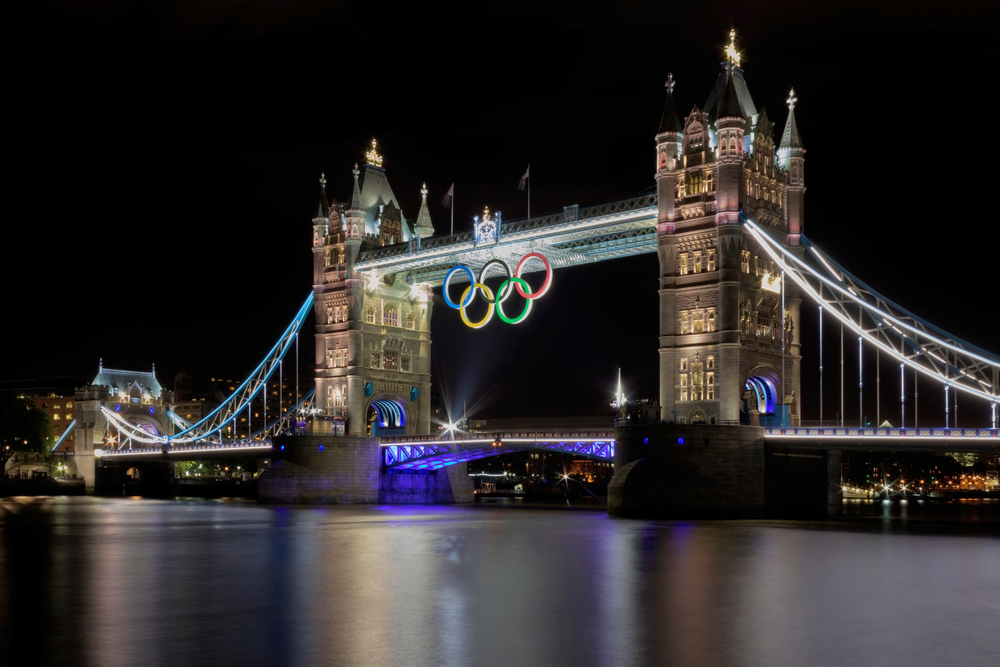
London approached the 2012 Olympic Games with a legacy organization, plans for the future design and operation of the park, and long-term operators for most venues in place before the Games.
The Queen Elizabeth Olympic Park now combines sporting venues with housing, cultural institutions, public space and community use. The model has not covered all public costs, but post-event governance and reuse were part of the plan from the outset.
Image courtesy: Shutterstock
Barcelona’s 1992 Olympics show what a strong tourism legacy can achieve. The city used the Games to accelerate improvements to its waterfront, public spaces, transport and tourism infrastructure.
Meanwhile, hotel tourists increased from 1.87 million in 1992 to 3.14 million in 2000, while overnight stays rose from 4.33 million to 7.78 million, according to research published by the Centre d’Estudis Olímpics at the Autonomous University of Barcelona.
The city also established Turisme de Barcelona in 1993 to continue marketing the destination after the Games.
What comes after
Planning also needs to connect different investments being made for the event.
Stadiums, hotels, airports and rail lines may be developed through separate workstreams, but they will rely on the same pool of visitors.
Hosts could bring these plans together in a five- to ten-year post-event demand plan showcasing future events being pursued, expected visitor traffic, cities and assets they will use, and organizations responsible for delivering them.
Bringing this information together would help reveal gaps, periods of excess capacity and cases where different projects are relying on the same projected demand.
Not all legacy infrastructure is physical. Qatar’s continued use of Hayya shows how a platform created for one tournament can continue supporting the visitor journey after the event.
More so, these platforms can help travellers discover future events, plan new itineraries and return. Host countries invest heavily in attracting and processing an international audience but often lose that connection once the event ends.
Mega sporting events propel a destination into the spotlight - a level of international exposure that would be costly or difficult to achieve through tourism marketing alone. For OIC nations to convert hefty investments into sustained tourism growth, key long-term strategies must shape planning from the outset.
In our previous article, we established the need to approach business (and work in general) from an inherently moral perspective.
Rather than zeroing in on the bottom line, we need to take a step back and assess how each line of the P&L affects everyone - from people to the planet and everything in between.
In short, business is not a neutral activity. As Muslims, each and every one of us is mukallaf, or legally and morally responsible to deliver benefits, avoid harm, and uphold the welfare of all stakeholders in our business activities.
As Muslims, we have the benefit of looking up to the example of our Prophet Muhammad (peace be upon him) for guidance and inspiration.
According to a hadith narrated by the second caliph Umar ibn Al-Khattab (may Allah be pleased with him), the Prophet (PBUH) said that whoever, whether they be the seller or the buyer, before entering the market, recited a prayer declaring Allah's oneness and greatness, “God will record for him a million good deeds, obliterate from him a million evil deeds, raise him a million degrees, and build him a house in paradise.”
The recitation of this prayer is set to induce a particular state of consciousness when people enter a marketplace. It’s meant to put people in a ‘zone’. The reward promised is for whoever recites this prayer, with no additional conditions mentioned. In the Prophet’s Madinah, over 1,400 years ago, when the whole community was built around the concept of helping each other, entering and staying in the ‘zone’ was simple as there was already a natural environment that enjoined good and forbade evil in commerce and in all aspects of life.
The “market” today
Things have changed over the past 1,400 years, and markets don't conform to physical boundaries. Consequently, the limits of the zone, too, need to be shelved or expanded in accordance with the market which surrounds us today.
Smartphones have, unwittingly and perhaps unwillingly, become the major conduit for most, if not all, our dealings and purchases. We are no longer zoned in consciously or by design. We function in a constant state.
This all-encompassing condition exponentially compounds the difficulties Muslim entrepreneurs and businesspeople face today.
The dhimmah (ذمة) we all have to our stakeholders becomes that much more difficult to fulfill. Dhimmah, responsibility in plain English, is a much more nuanced concept in Islam, consisting of several layers, including responsibility, inviolability, conscience, and security.
Responsibility in our tradition
Dhimmah is the connective tissue between legal conditions of a valid sale or exchange. It operates at a deeper, moral layer as a receptacle of obligation.
Classical jurists often define it like this:
الذمة وصف شرعي يصير به الإنسان أهلاً للإلزام والالتزام
This definition reads, “Dhimmah is a legal-moral attribute by which a person becomes fit to incur and undertake obligations.”
In other words, while a contract does not create dhimmah, dhimmah allows a contract to generate a binding obligation.
The idea of dhimmah is relevant in wide contexts, including:
Contracts and obligations (e.g., commercial debt, delivery, partnerships)
Protection (e.g., ahl al-dhimmah under Muslim governance)
Moral liability - where breaking one’s promise incurs not just social, but divine consequence
Related terms in the Holy Qur’an are Ahd, Mīthāq, and Amānah.
The market as the locus of Dhimmah
In a hadith in the collection of Al-Tirmidhi, narrated by Isma'il bin 'Ubaid bin Rifa'ah: From his father, from his grandfather, that he went with the Messenger of Allah (ﷺ) to the Musalla, and he saw the people doing business so he said: 'O people of trade!' and they replied to the Messenger of Allah (ﷺ) turning their necks and their gazes towards him, and he said: Indeed the merchants will be resurrected on the Day of judgement with the wicked, except the one who has Taqwa of Allah, who acts righteously and is truthful.'"
This hadith is important for us to reflect on, especially for those selling a commodity, be it a product or a service. Let’s recall that the Prophet’s instructions when entering the market are for everyone - buyer and seller. But in this hadith, the Prophet (PBUH) addressed sellers directly, placing the burden of disclosure, honesty, delivery, and quality on them. This is dhimmah.
Reviving the spirit of covenant today
Since today’s market is everywhere, our dhimmah stays with us wherever we go. If you’re operating in e-commerce, every click means you are serving this dhimmah.
If you’re running a shop, every time someone checks out, you are accountable for this dhimmah. Each handshake to align on a B2B deal is a dhimmah. Serving our dhimmah means we are aware that every agreement is witnessed by God, whether these be supplier contracts, fairness of compensation of employees, serving as fiduciary with investors, and tech and data companies honoring agreements of consent, usage, and data privacy.
And this is not restricted to individuals. Institutions and corporations are also morally accountable for fulfilling promises in marketing, not creating dependencies (e.g., addictive apps, exploitative lending), and honoring commitments to the environment and community. When one sells or hires, they enter into a covenant that includes fairness (ʿadl), goodwill (iḥsān), truthfulness (ṣidq), and transparency (bayān).
From contracts to covenant
Our current milieu, contractual capitalism, divides interests rather than unifying them. Our worldview demands covenantal ethics. In other words, we have transitioned from a transactional mindset towards transformative relationships.
When Muslims revive dhimmah in commerce, we stand to achieve deeper trust in markets, institutions with moral credibility, and a revival of God-consciousness (taqwā) in business dealings. We must reaffirm that the believer does not escape responsibility by “hiding behind legalese.”
The reality is that every invoice, every sale, every agreement and handshake is an entry in our book of deeds. The Prophet (s) said, “The truthful and trustworthy merchant will be with the Prophets, the truthful, and the martyrs.” (Tirmidhī)
The one who fails to honor their dhimmah becomes worthy of dhamm. That is the moral architecture built into our sacred language.
Sajjad Chowdhry is an entrepreneur and C-level executive with over two decades of global experience across venture building, strategy, investment, and strategic finance. A Columbia and Hartford Seminary graduate, he is also a co-founder of DinarStandard
The Top 30 Business Schools of the Islamic Economy ranking is a milestone moment. The ranking both recognizes efforts made by higher education institutions across the globe and highlights the importance of developing human capital with specialized knowledge of the Islamic economy.
Three aspects of the rankings are particularly striking – diversity, complementarity, and momentum.
Diversity
The business schools span 13 countries, including nations in the ASEAN, MENA, and EU regions. Institutions in four G20 countries – Saudi Arabia, the UK, Indonesia, and Türkiye – are featured. The schools include both longstanding leaders in higher education and relatively new institutions.
This diversity is a testament to the fact that the Islamic economy has been recognized as relevant across regions, countries, and stages of institutional development. The eagerness with which a diverse group of institutions have pursued the opportunity is a signal that it resonates with students, employers, and educators.
If the Islamic economy were not a global phenomenon, the top 30 list would look very different.
Complementarity
The composition of the list reflects the crucial complementarity of institutions. INCEIF University, which topped the list was specifically established by Bank Negara Malaysia in 2005 to develop human capital for the Islamic finance industry.
Most other institutions on the list are broad-based ones (either business schools or universities) that have added curricula, research, and ecosystem support related to the Islamic economy.
They have done so based on demand from students and employers, interest from faculty and researchers, and support from a wide range of stakeholders.
As the sector evolves, each category of institution has an important role to play. Specialized institutions bring a unique level of focus and concentrated expertise.
Broad-based institutions link emerging Islamic economy topics with traditional business disciplines and curricula. A robust system requires both categories and fruitful exchange between the two.
Momentum
Malaysia’s strong leadership in the rankings (home to nine of the listed 30) is a result of the country’s longstanding strategic commitment to Shariah-compliant finance and the larger Islamic economy. Sustained efforts in institution-building have borne fruit.
In the future, I expect to see Africa-based institutions appear in the Top 30. As many as 27 of the 57 countries that comprise the OIC are in Africa, and the continent plays a vital role in intra-OIC trade and investment flows.
I likewise expect to see North American institutions make the list in the years ahead - the Islamic economy opportunity in North America has been estimated at $186 billion - business schools are a US invention, and many of the world’s leading business schools are in North America.
I foresee further development being supported by ongoing expansion of the Islamic economy (and thus opportunities for employment and entrepreneurship) and increased appreciation for specialized education and research on the topic.
A third source of momentum will be expanding alumni networks of both specialized institutions and programs at broad-based institutions. As we have long seen in business education, the success of alumni practitioners plays a central role in the advancement of institutions that trained them.
Dr Aamir A. Rehman is the chair of Innate Capital Partners, a New Jersey-headquartered investment vehicle, a professor at Columbia Business School and a board member of INCEIF University. The views expressed here are entirely his own and do not represent those of his affiliated institutions.
To view the Top 30 Business Schools of the Islamic Economy ranking, click here
According to the Global Islamic Fintech Report 2025/26, published by DinarStandard and Elipses, Indonesia ranks as the world’s fourth most robust Islamic fintech ecosystem, down one position from the report's previous edition. In terms of market size, Indonesia is the world’s fifth-largest fintech market, valued at $10 billion in 2024/25 and projected to reach $17 billion by 2029.
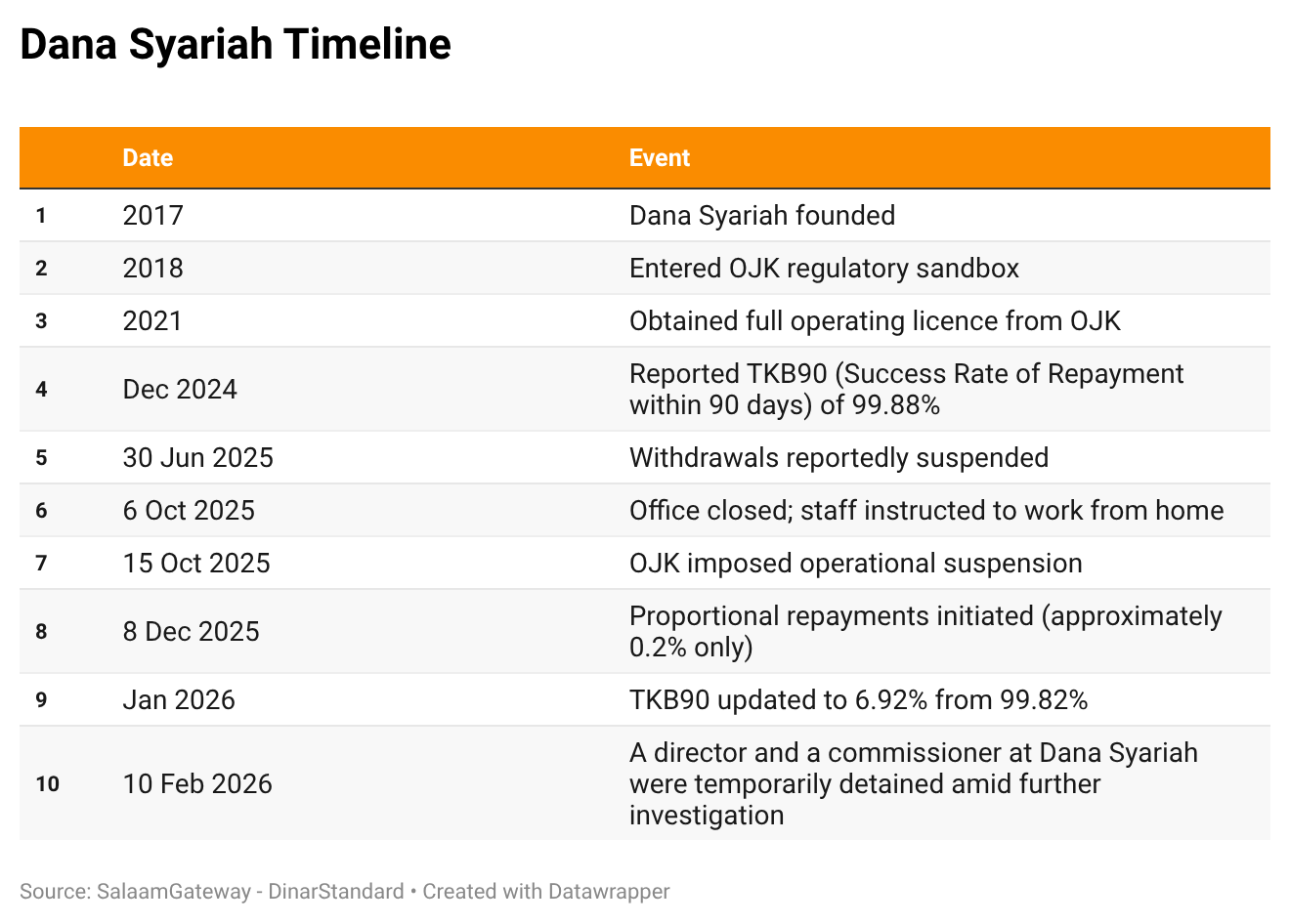
The case is not just about cooked books or fictitious prospects, but a stark reminder of how weak governance can erode public trust, denting the credibility of the wider ecosystem.
Ali AlGhofiqi is a research analyst at DinarStandard, a growth strategy and execution management firm
We're growing — and want you to be part of our journey
Salaam Gateway has always been your home for independent, in-depth coverage of the global
Islamic economy. To help us go deeper and do more, we're introducing a membership tier for
our premium reports and insights — so we can produce more of everything you've come to love.