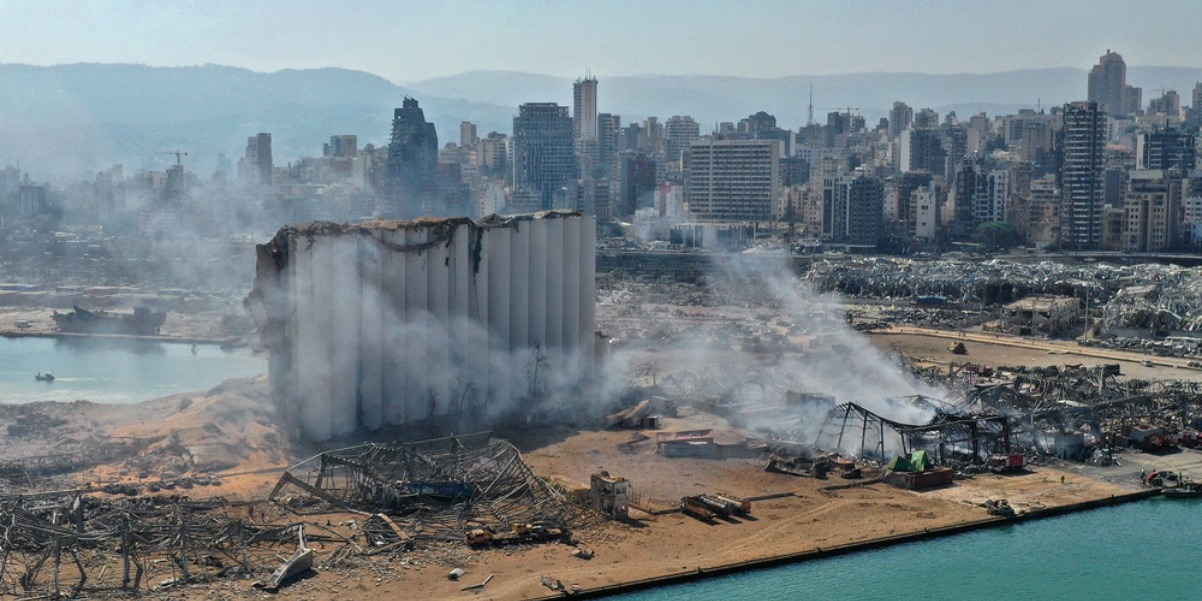
After Lebanon's government resigns, Beirut left with few resources for recovery and almost no import capacity
The explosion in Beirut followed a prolonged financial crisis and will further deepen the recession, with the economy forecast to contract by a quarter this year.
The blast at the capital’s port on August 4 destroyed Lebanon’s key logistics hub, which handled 75% of imports. Over 160 people were killed, 6,000 wounded and 300,000 displaced from their homes. Damages are estimated at over $7 billion, equivalent to 14% of GDP in 2019, according to the Institute of International Finance (IIF), while the country’s short- and medium-term food security has been imperiled.
Lebanon had been going through economic dire straits prior to the disaster. In October 2019, nationwide demonstrations against the government led to a financial crisis, with banks restricting customer withdrawals through imposing informal capital controls. The Lebanese lira (LL), which is officially pegged to the U.S. dollar at LL1,507, started to depreciate, dropping by 80%, to reach over LL8,000 to the greenback in July. In March this year, the government defaulted on debt repayments for the first time, and is expected to default on $31 billion in outstanding Eurobonds. Debt has skyrocketed to $92 billion, equivalent to over 170% of GDP.
Free, in under 30 seconds
Join thousands of professionals reading Salaam Gateway — the Global Islamic Economy Gateway.
Already a member? Sign in
- 5 free articles every month
- Weekly Islamic-economy newsletter
- Save articles to read later