Analysis: Malaysia leads Islamic Economy business schools
DinarStandard and SalaamGateway have released their latest ranking, featuring the most eminent business schools offering top Islamic business and finance education.
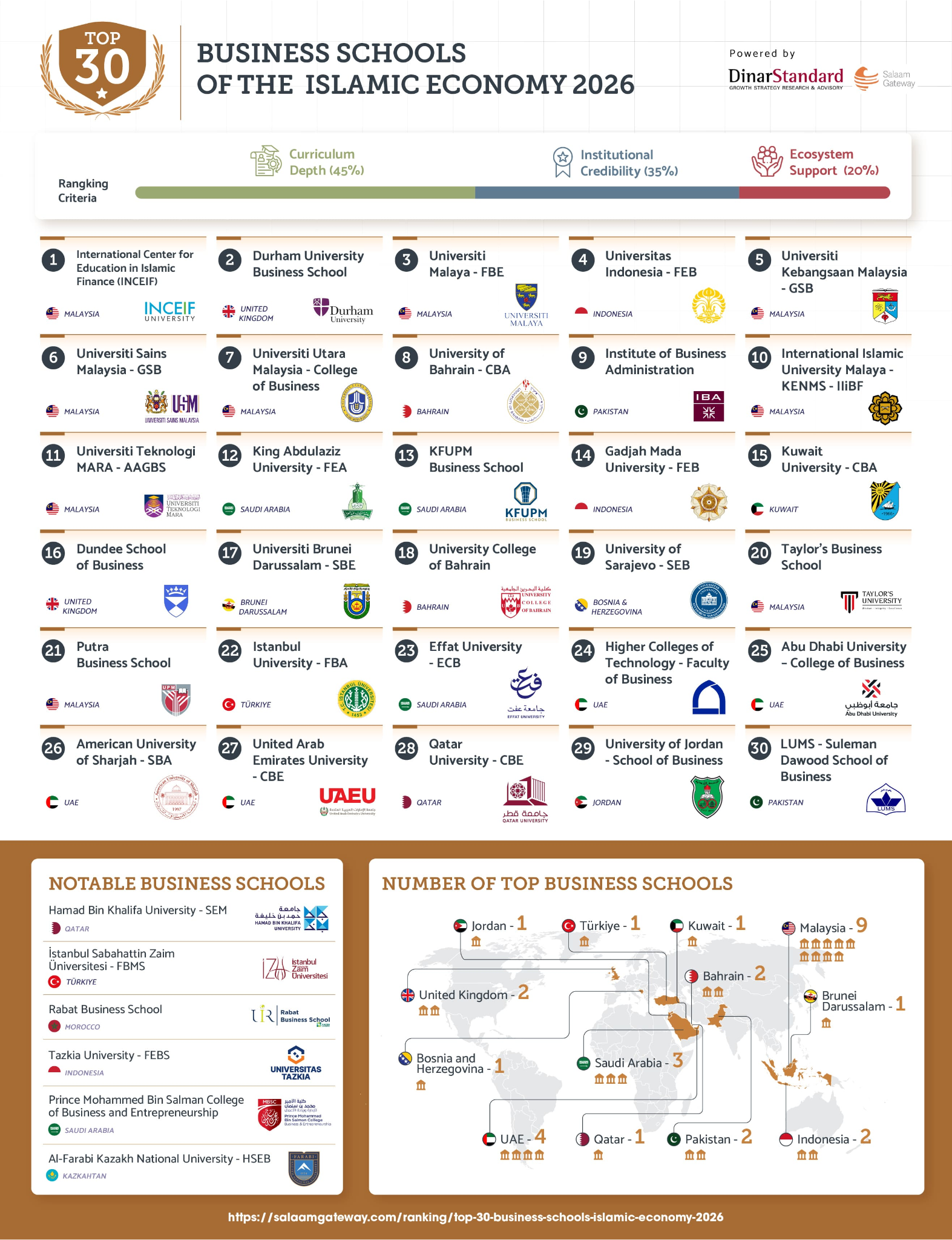
The Top 30 Business Schools in the Islamic Economy ranking evaluates business schools based on three key criteria: Curriculum (45%) - assessing the depth of Islamic business and finance programs;- Institutional Credibility (35%) - reflecting global academic standing and accreditation; and Ecosystem (20%) - measuring the strength of the surrounding Islamic economy environment and institutional partnerships.
Malaysia anchors global Islamic Economy education landscape
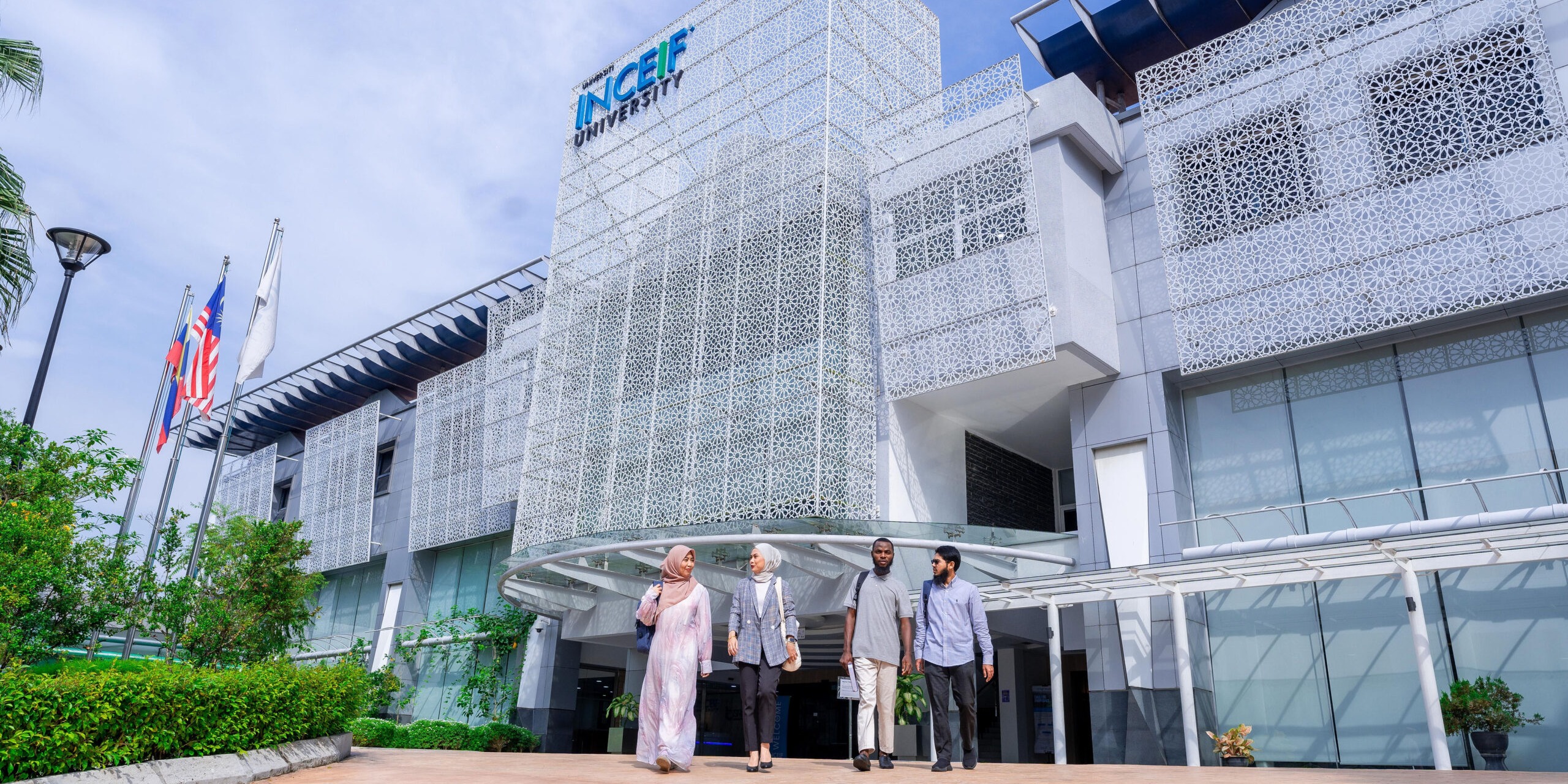
Malaysia dominates the ranking, hosting nine of the 30 listed institutions. The Kuala Lumpur-based International Centre for Education in Islamic Finance (INCEIF) leads the pack with 86 points, reflecting its specialization in Islamic finance education, strong ecosystem support and deep industry integration.
The UK-based Durham University Business School ranked second, with a score of 84.75, maintaining its reputation as a leading Western academic institution in Islamic finance research and education. Malaysia’s Universiti Malaya Faculty of Business and Economics ranked third with a score of 78.75, further reinforcing the country’s comprehensive and strong business programs related to the Islamic economy.
Gulf investing in business education
In terms of country representation, the United Arab Emirates ranked second with four institutions, while three Saudi-based institutions found space on the ranking. Although Islamic finance curricula across the Gulf nations may not be as extensive as in countries such as Malaysia, the UAE hosts several prestigious business schools and benefits from its position as a global hub for talent and business, helping produce influential leaders in the Islamic economy.
Saudi Arabia has also been investing in strengthening its education ecosystem, with key institutions such as King Abdulaziz University and King Fahd University of Petroleum and Minerals (KFUPM) represented in the ranking. Business education is becoming an increasingly important pillar of Saudi Vision 2030, supporting the kingdom’s broader economic diversification ambitions.
Free, in under 30 seconds
Join thousands of professionals reading Salaam Gateway — the Global Islamic Economy Gateway.
Already a member? Sign in
- 5 free articles every month
- Weekly Islamic-economy newsletter
- Save articles to read later
Salaam Gateway