
When a shipment of halal-certified beef is sent from one part of the world to the next, there’s a lot riding on its success that has less to do with the shipment and more with the receiving country’s standards. A shipment that satisfies Indonesia's requirements may still face problems entering Saudi Arabia if its certificate was not issued by a body recognised by the Saudi Halal Center. It’s not because the meat itself has changed, but because the importing authority may require different evidence, an approved certifier, or additional documentation before it clears.
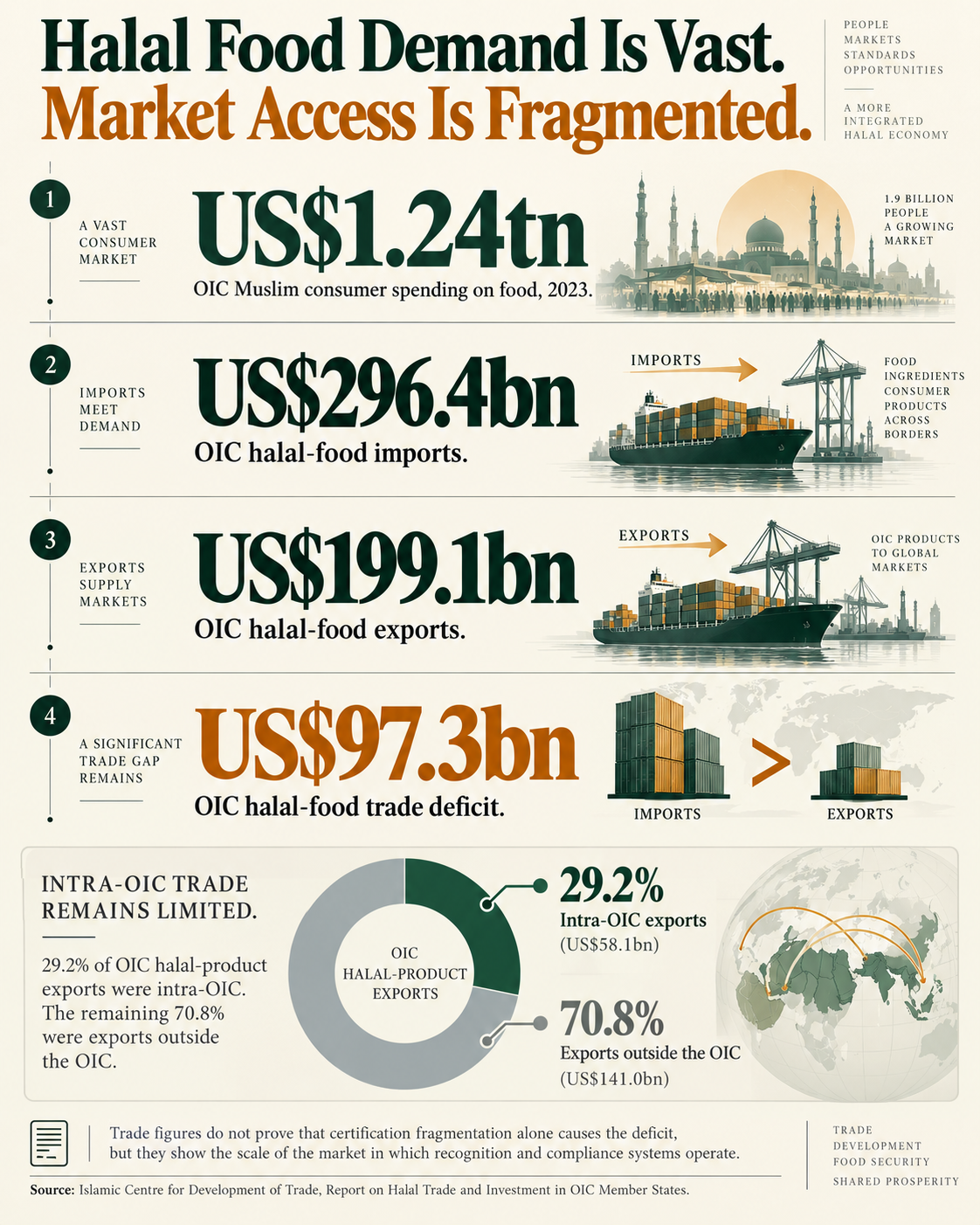
That gap is the central problem in global halal trade. In the absence of a single worldwide halal standard, exporters face a patchwork of national rules, private certifiers, and regional frameworks that do not always recognize each other's paperwork. That fragmentation can raise costs, slow market entry, and open the door to mislabeling, adulteration, and cross-contamination that may invalidate a product's halal status after the fact.
Free, in under 30 seconds
Join thousands of professionals reading Salaam Gateway — the Global Islamic Economy Gateway.
Already a member? Sign in
- 5 free articles every month
- Weekly Islamic-economy newsletter
- Save articles to read later

Muhammad Ali Bandial