Gulf capital markets slump as Iran conflict roils region
Stock markets across the Gulf region opened to a jittery start on Sunday in the first signs that the Iran-US conflict has impacted the region’s financial markets.
Saudi’s Tadawul All Share Index (TASI) plunged roughly 4.8% at the open on Sunday, hitting a 35-month low before paring more than half of its loss, closing 2.18% lower.
The benchmark index of Muscat Exchange fell 103.18 points from its previous day's close of 7393.37, amid a regional sell-off triggered by mounting tensions.
Boursa Kuwait suspended trading on Sunday, citing exceptional circumstances facing the country.
“Based on the decision of the Board of Commissioners of the Capital Markets Authority, and due to the exceptional circumstances, the country is currently experiencing Boursa Kuwait announces the suspension of trading effective 01-03-2026, until further notice”, a notice on Boursa Kuwait’s website read.
The UAE’s financial regulatory authority also announced the closure of both its bourses - Abu Dhabi Securities Exchange and Dubai Financial Market – on March 2 and 3. The country has faced a blitz of drone and missile attacks over the weekend.
The UAE Capital Markets Authority said that it would continue to assess the situation on an ongoing basis, taking any further measures as necessary.
Brent crude prices surged from Friday's close of $72.48 a barrel to $78.36 a barrel on Sunday, with the overall price having risen 16% over the past month.
Felipe Elink Schuurman, CEO and co-founder at Sparta Commodities said that a softer oil price hike than the one anticipated over the weekend indicates a mere logistical disruption, not a supply one.
“It is indeed surprising that most polls over the weekend were expecting a rise in flat price of $80 to $90 (a barrel]. It started off [Monday] morning at $81 but then it came down,” Schuurman said during a Gulf Intelligence podcast,.
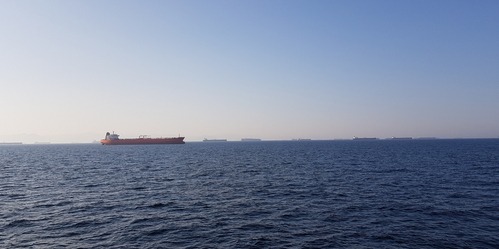
“For the time being, there is a sort of de facto closure of the Strait of Hormuz, mostly because of insurance companies putting in barriers or increasing their insurance coverage or trading companies not willing to take their vehicles through the Strait. So, it basically means that it is a logistical disruption but we have not yet seen any kind of supply disruption.”
The Strait of Hormuz, one of the world’s most strategically vital chokepoints, is a narrow waterway that connects the Persian Gulf and the Gulf of Oman to the Indian Ocean for maritime traffic. Roughly 30 miles wide at its narrowest point, oil tankers carry approximately 20 million barrels of oil each day through the Strait.
“Oil markets have been the most visible expression of markets pricing in geopolitical conditions with Brent opening 12.5% higher,” wrote Edward Bell, acting group head of research and chief economist at Emirates NBD.
“Markets have since pared those moves as there is a renewed focus on diplomatic avenues but in the meantime, oil will be highly subject to headlines and in particular, the status of the Strait of Hormuz.”
Salaam Gateway