How Iraq is laying the groundwork for a new wellness tourism industry
At its height in the ninth and tenth centuries, Baghdad was arguably the wellness capital of the world. The historian Hilal al-Sabi' (969-1056) put the number of bathhouses in the city at its height at 60,000, a figure most historians now treat as inflated but one that still captures how central bathing culture was to Abbasid life.
The Bimaristan al-Adudi, built on the banks of the Tigris in 981, employed dozens of physicians and doubled as a teaching hospital. It treated patients of any background free of charge and ranked among the most advanced medical institutions anywhere in the medieval world.
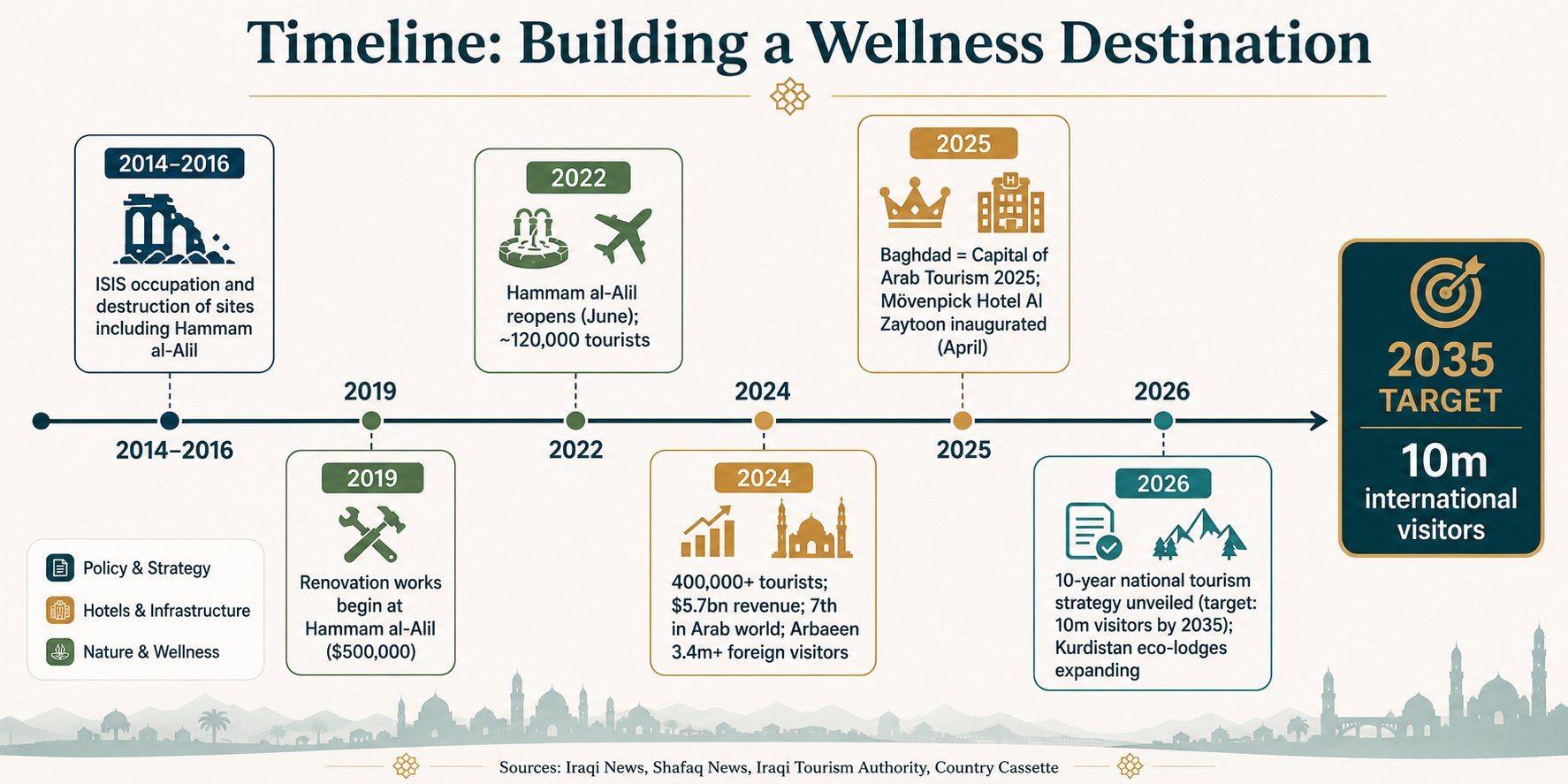
That was a thousand years ago. Ask most travellers today to name the Middle East's next wellness destination, and they are unlikely to say Iraq, let alone connect it to that history. For most of the past two decades, the idea would have sounded absurd. The 2003 invasion and the sectarian violence that followed left Iraq associated with survival, not well-being. Then came the ISIS occupation of the country's north from 2014 to 2017, which set any such ambitions back further still. That a wellness sector is now emerging, however modestly, is a turnaround few would have predicted ten years ago.
Free, in under 30 seconds
Join thousands of professionals reading Salaam Gateway — the Global Islamic Economy Gateway.
Already a member? Sign in
- 5 free articles every month
- Weekly Islamic-economy newsletter
- Save articles to read later
Muhammad Ali Bandial