Image credit: Shutterstock

OIC Economies

Iran conflict should accelerate renewable transition in the Middle East 


The US-Iran conflict has once again laid bare the vulnerability of global energy markets. Oil prices have touched historical highs in sustained rallies, touching highs of $120 per barrel as concerns regarding the situation grew. 

Major concerns swirl around the fate of the Strait of Hormuz; an important waterway for about 20% of the world's oil and liquefied natural gas. Any disruptions on this route in the past have historically caused huge oil price spikes, demonstrating how important Middle Eastern energy exports continue to be for the global economy. 

As governments throughout the Gulf and North Africa continue to grapple with what appears to be an evolving situation, one thing that the conflict has reinforced undoubtedly is the strategic consideration to reduce reliance on oil and gas for energy generation. Not only would that protect export revenues but also improve long-term energy security. 

Why renewables make economic sense

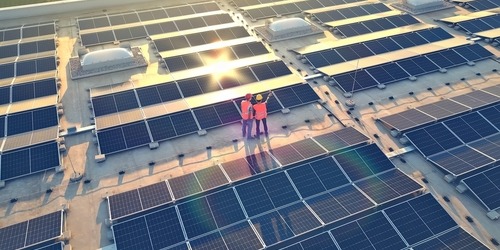
Solar energy generation makes a compelling economic case in the Middle East, home to some of the most abundant and consistent solar irradiation (over 2000 kw-h per m2 per year), according to the Middle East Solar Industry Association. 

Due to the success of large-scale renewable energy projects, electricity prices have reached all-time lows. The Al Dhafra photovoltaic solar project in Abu Dhabi, which became operational in 2023, was able to obtain a tariff of 1.35 cents per kilowatt-hour, making it one of the lowest prices for solar power recorded in history. Furthermore, the International Renewable Energy Agency (IRENA) suggests that 91% of new renewable energy projects commissioned in 2024 were most cost effective than fossil fuel alternatives.

The demand for electricity is on the rise, necessitating increased production from renewable sources. The International Energy Agency (IEA) forecasts electricity demand in the Middle East to soar by about 50% by 2035 due to population growth, industrial development, and the increased need for air conditioning - which already accounts for around 25% of annual electricity usage and almost 50% of peak electricity usage.

At present, a large part of this demand is satisfied through local heavy fuel oil (HFO) and liquefied natural gas (LNG) use. By way of example, Saudi Arabia uses an average of about 1.1 million barrels per day for electricity generation and desalinated water production; however, this consumption can exceed 1.4 million barrels per day during the hottest summer months, which diverts a considerable amount of liquids away from export markets.

If small amounts of local oil and gas consumption deployed for energy production were to be replaced with solar and wind energy, it would result in greater quantities of hydrocarbons available for export, boost state coffers and reduce the region's exposure to volatile fuel prices.

Financing the transition
The growth of renewable energy capacity throughout the region is happening at a rapid pace: Saudi Arabia's National Renewable Energy Programme aims to generate 59GW of renewable energy capacity by 2030, while the UAE is developing the 5GW Mohammed bin Rashid Al Maktoum Solar Park, and Egypt has joined the pack with its 1.6GW Benban Solar Park.

According to the Middle East Solar Industry Association's Solar Outlook Report, the total solar capacity of the Middle East and North Africa region will exceed 180GW by 2030. This expansion is increasingly relying upon Islamic capital markets for financing. Global ESG sukuk issuances surpassed $18.5 billion in 2025, increasing by over 60% over the previous 12-month period, according to Fitch Ratings. 

What still stands in the way

Electric grids throughout the Middle East were created based on large fossil-fuel power plants, and the rising use of solar and wind energy will require upgrades to existing electrical transmission networks, energy storage systems and electricity pricing and market rules.

While there is still a relatively low percentage of total electric generation using renewable energy in many Gulf countries, it is likely that fossil fuels will remain part of the Gulf region's energy mix for many more years; at least, until renewable sources replace them.

Nonetheless, there is no doubt that the current geopolitical crisis emphasizes how critical it is for countries to diversify their sources of energy supply. Countries that rely primarily on renewable sources are at lower risk of being impacted by sudden changes in energy prices given disruption of oil supply routes resulting from continuing tensions with Iran.

As Middle Eastern economies wean their infrastructure away from fossil fuels and towards renewables, energy will be used as an asset, not only to help the country deal with any geopolitical issues, but also to retain their position as important global suppliers of energy. 


Author Profile Image
Youshey Zakiuddin