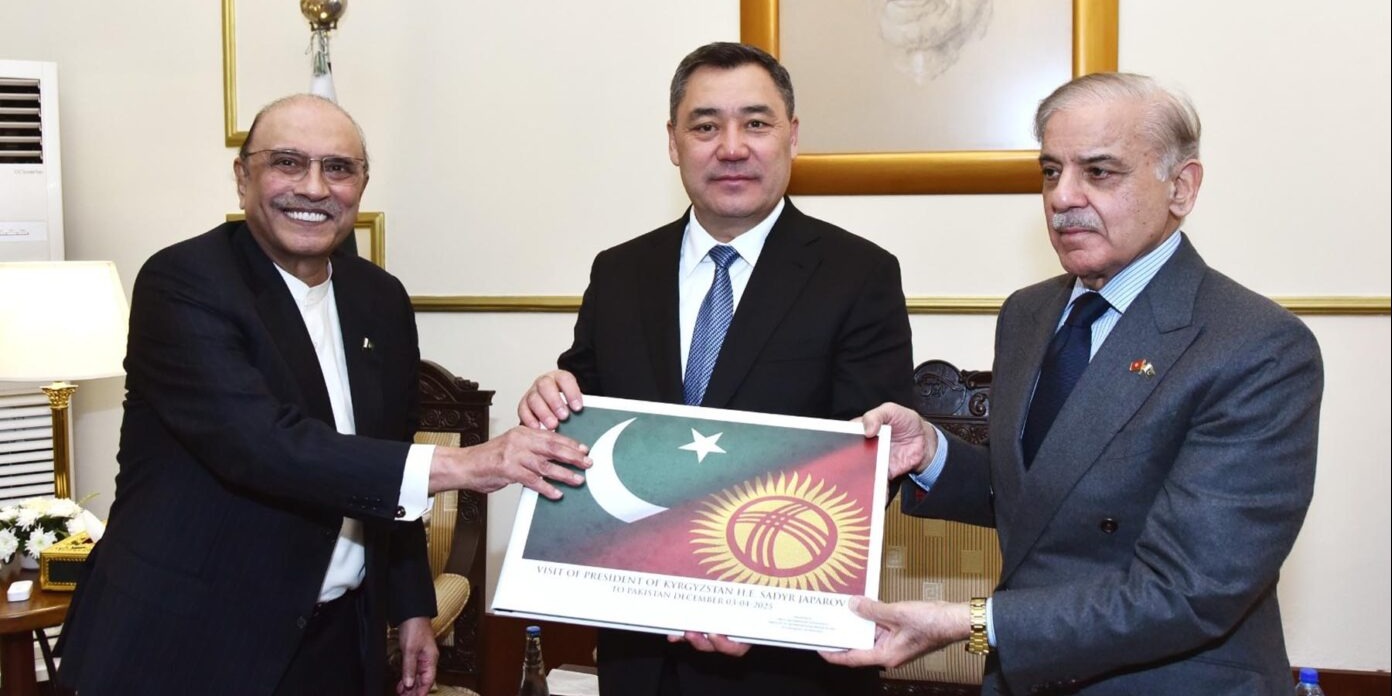
Pakistan, Kyrgyzstan set $200mn trade target for 2027 following high-level talks
Pakistan and Kyrgyzstan have agreed to raise their bilateral trade volume to $200 million by 2027, setting a clear target to expand economic cooperation following talks in Islamabad between Prime Minister Shehbaz Sharif and President Sadyr Zhaparov.
The two leaders discussed strengthening ties across trade, energy, connectivity, and security, with both sides expressing commitment to building a more structured economic partnership. “Pakistan offers a strategic gateway to global markets through Karachi, Gwadar and Port Qasim,” Prime Minister Sharif told the visiting delegation as he encouraged Kyrgyz businesses to pursue joint ventures in sectors including trade, education and health.
President Zhaparov underscored the importance of the partnership given Kyrgyzstan’s location in the heart of Eurasia. He said the country’s membership in the Eurasian Economic Union and its GSP+ status could help provide Pakistan with broader access to European and regional markets.
The current trade volume stands at roughly*$5 million, but the two sides said they expect to scale this up significantly through improved market access, transport links and investment opportunities. The meeting also reviewed progress on the CASA-1000 electricity project, which would transmit surplus power from Central Asia to Pakistan. Kyrgyzstan has completed its section of the line, while Pakistan’s portion is under way.
Connectivity featured prominently in the discussions, including steps to operationalize the Quadrilateral Traffic in Transit Agreement (QTTA), intended to provide road access between Pakistan and Kyrgyzstan through China. Both sides highlighted the importance of transport corridors and regional infrastructure for supporting trade and supply chains.
Educational cooperation was also addressed. Around 8,500 Pakistani students currently study medicine in Kyrgyzstan, and the two governments agreed to create a joint certification mechanism for medical graduates seeking employment in either country.
Zhaparov invited Pakistani investors to explore opportunities in Kyrgyzstan’s hydropower, logistics, agriculture, tourism and halal sectors. He also noted recent developments in the country’s digital economy, including the launch of Kyrgyzstan’s national stablecoin, and signalled openness to collaboration on virtual assets.
The visit concluded with the signing of 15 agreements and MoUs spanning energy, agriculture, education, culture and tourism. One of the key outcomes was the establishment of sister-city relations between Islamabad and Bishkek.
Muhammad Ali Bandial