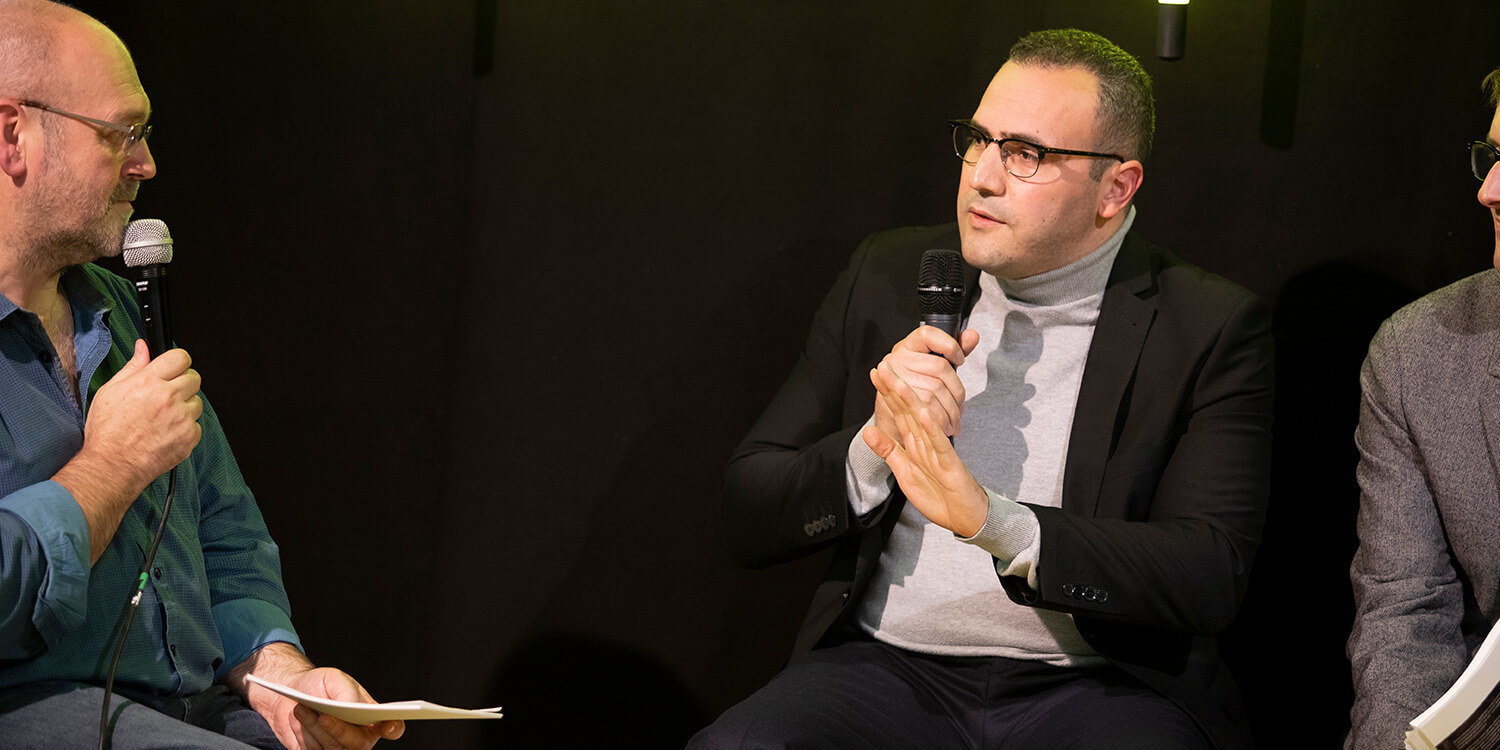
Q&A with Rachid Lamrabat, co-founder of communication agency Tiqah and halal food brand By Oummi
Antwerp: Rachid Lamrabat, a Belgian national of Moroccan descent, is a man with many hats. He co-founded communication agency Tiqah and halal food brand By Oummi, and authored two books, ‘Food For All’ and ‘Etnomarketing’, voted marketing book of the year in 2018.
Salaam Gateway (SG): Rachid, it seems you have managed to turn your personal conviction into your work?
Rachid Lamrabat: Yes, and that is both a blessing and a curse. A curse because I live in Europe where my conviction is not always reality [laughs]. But it is more of a blessing. My work is about me as a person. About my identity. I am Muslim, Belgian, Flemish, European. I grew up in St. Niklaas, a small town near Antwerp, where I attended a Christian school, complete with morning prayer and Bible lessons. The latter was my favourite, as I also had twice a week Quran lessons. As many of those stories overlap, I was first in class. I remember how the teacher once asked what is the main lesson of the Bible. No one answered, so I said: ‘To turn the other cheek.’ Then my teacher shouted that it was embarrassing that only Rachid knew the answer. I was the only non-Belgian in class.”
SG: Born in Morocco, raised in Belgium, there must have been difficult moments too?
Lamrabat: Of course. I understand very well that many youngsters, people of my age and younger still suffer from an identity crisis. You live in the West, everything around you is white – media, organisations, businesses. And we live next to each other, not with each other. If I want to buy halal meat, I have to go to a halal butcher. I’ve been lucky that I had the right guidance at the right moments. Teachers, mentors, who coached me. I hated it at the time, but now I’m very grateful. For as a teenager I too thought: ‘It’s not for me here. I’m only a second-rate citizen.’ That was partly due to my upbringing. I was brought up with the idea: ‘We’re guests.’ And that affects you. You start behaving like that. You ‘may’ do something. Don’t have a too big a mouth. Things like that. Thankfully, my parents did change in that sense. They also listened to us, the children, and embraced society. I find it beautiful that my parents have grown, have learnt to enjoy, and no longer think: ‘We’re only guest workers.’
SG: You started working for the Flemish government at the Diversity and Integration department. What was that like?
Lamrabat: I started at Human Resources actually. A temporary function to replace someone for a year. Being a civil servant wasn’t really my thing, but I wanted to do it, because it would make my parents happy. They had a son working for the government! I worked in an organisation of thousands of people, in which I was the only immigrant, apart from the technical staff. I enjoyed working there, but at the same time I was happy it was only for a year. However, a month before my contract ended the Secretary General wanted to talk to me. At first I thought I had done something wrong. But, no, he wanted me to work for him for a year. I had to read the parliamentary reports and discuss them with him. Every day he was supposed to pass by for 15 minutes, but he’d always stay for an hour or more. That man helped me enormously by taking off my blinders. When my second year was about to finish, he asked me what my dream job would be. In the reports I had read that a special division on diversity and integration was in the making. I said I would like to be a part. Consider it done, he said.
SG: What came out of that?
Lamrabat: A lot of talking and not doing much. That became my frustration in the end. The only interesting thing I did was helping to develop the civic integration course, which is kind of an introduction to Belgium. That it’s a kingdom, has gay rights, that kind of stuff. It was a nice challenge to help set that up. But after that it was just meetings, meetings, meetings. After five years, I decided it was enough.
SG: Was that frustration part of the reason to start the consultancy and communication agency Tiqah in 2012?
Lamrabat: I’ve always been a builder of bridges. If I look back at my life, that I think is part of my essence. In that sense it not illogical that I do what I do now. I don’t feel part of this group, and not of that. I am neither and both. I’m ‘the new Belgian.’ With Tiqah I wanted to play on that. The government tried to impose things from above. ‘We are a democracy, we have a rule of law, and thus everyone has to accept each other.’ But it doesn’t work like that. You should show people it can exist. The movement should come from below, from companies and consumers. One in five Belgians has a migration background. I wanted to connect them. If people can respect each other in a shop, they can do it elsewhere.
SG: Can you give an example?
Lamrabat: We once worked with a soft drinks manufacturer. It was originally a water company that had branched out into lemonades. They had introduced waters with a taste, but that didn’t really work within the ethnic segment. Many of them prefer something a bit sweeter. And they don’t like bubbles. This really is a totally different consumer behaviour: 98% of them drink flat water and only 2% bubbly water. So, we helped develop healthy lemonades, without sugar, and with mixed tastes like watermelon and strawberry. It was a huge success. The aim was to reach a new target group, but in the end it became a product for everyone.
SG: This is the work Tiqah still does?
Lamrabat: That is the commercial side. We also work for the government. Not only in Belgium, but also France and The Netherlands. We write reports. That really is our core business. We recently did the European Muslim Report and worked with the police in Gent [Belgium]. We work with the media. Nowadays we see more ‘coloured faces’ in the media, but the content and set-up are often still the same. In other words, the media are more diverse, but not more inclusive.
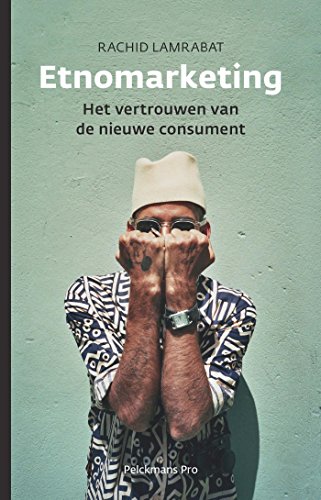
SG: In 2018, you published ‘Etnomarketing’ (Ethno Marketing), which was voted marketing book of the year, followed by ‘Food For All’ last year. Can you tell us a bit more?
Lamrabat: If you do business you, as it were, take a microscope to zoom in. You take a certain product and a certain target group. ‘Etnomarketing’ is such a focus. In 2016, about a fifth of the 28 million inhabitants of Belgium and The Netherlands had a migration background, of whom some 1.5 million were of Turkish and Moroccan descent. Many companies and organisations had not yet an eye for the possibilities that offers. Many still don’t. Hence the book ‘Etnomarketing’, which really is about diversity, about zooming in on a certain group. Diversity is part of inclusivity. You want to be inclusive? Great. But make sure you reach everyone. If not, you’re better to diversify and at least reach that one group that you want to reach.
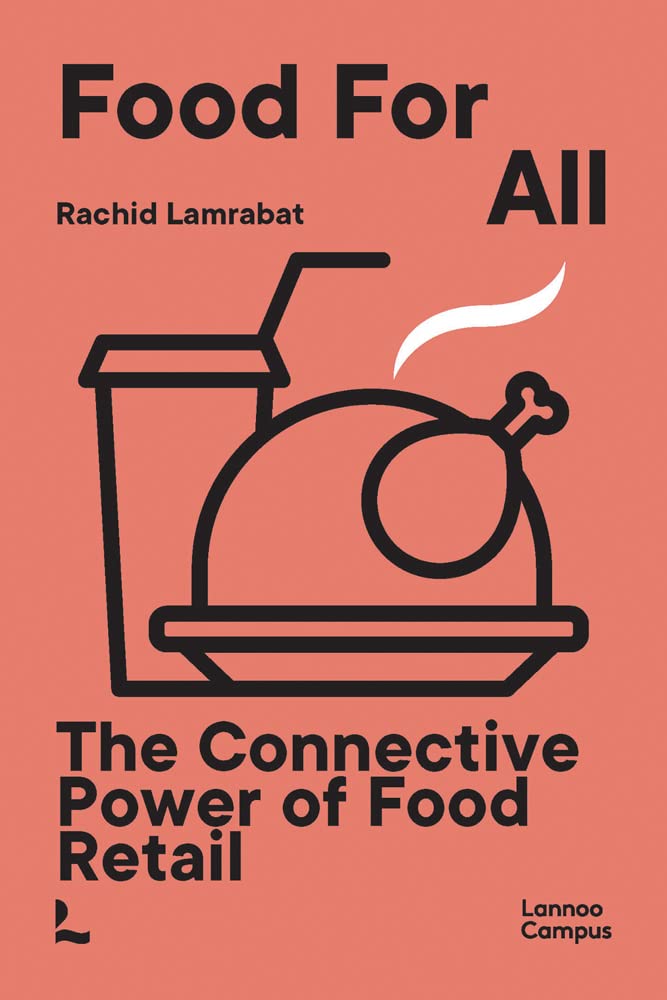
‘Food For All: The Connective Power of Food Retail’ is my vision for the future. If you visit a supermarket today, you will find a wide product range. However, people with a migration background perceive that differently. They feel less represented and thus less ‘at home.’ The book aims to show how retailers can adjust this, how one group can feel more at home, while the other can still experience the ‘exotic.’ That is the notion of ‘common food:’ a range of products that satisfies the wishes of all consumers and allows all of us to sit at the same table.
SG: In 2020, you co-founded By Oummi. Is it the embodiment of the notion ‘common food’?
Lamrabat: You could say that. Oummi means mother in Arabic. Mother keeps the family together. It is mother you call for recipes. The first contact with mother is food. That is universal. It does not matter if you are black, white, thin or fat. By Oummi links the East and West. It offers recipes from Turkey or Morocco, readymade, in a modern packaging. Put this product in a supermarket in the Middle East and it is immediately inclusive. The future, I hope, is to not make distinctions any longer. I mean, I cannot imagine my son going to a supermarket in 10 years time to buy his goods in the Moroccan corner.
SG: What growth has By Oummi achieved?
Lamrabat: By the end of 2020, we started in Dutch supermarket chain Albert Heyn with five products. By June 2021, we had 30 products, which today are also available in France and Belgium. We hope Germany is next.
SG: All By Oummi products are halal certified, but that is not on the packaging. Why not?
Lamrabat: To us, the halal certificate is a quality certificate, of which we have several others. We do not have it for marketing purposes. In that case, the certificate must sell the product. We are not building a product. We’re building a brand. Halal is a part of that brand. What also played a role for our decision is that people in Europe are more and more sceptical about the halal certificate. Why? Because you can also just buy it. Also, most certifiers only look at the way an animal was killed, and if the product contains pork or alcohol. For me halal goes much further than that. I want to know the way an animal lived. There are companies in Belgium that really sell garbage, but it is certified, and thus halal. For us the bar lies much higher. We offer quality food. Fresh, healthy and halal. Last year, our couscous with chicken was voted readymade product of the year. Not by some jury, but by the consumer. That was the first time ever a halal product won. It shows you how boundaries can be overcome.
SG: What role can Dubai play in the global halal story?
Lamrabat: I like to go to Dubai because it is very cosmopolitan. I’m not a foreigner there, because everyone is a foreigner there. Dubai cannot afford to put one group above another. ‘Common’ is just common sense in Dubai. Take [supermarket chain] Carrefour, which celebrates Christmas, Ramadan and Chinese new year. I think Dubai should put all their money on that. Inclusivity should be its showpiece. And halal is part of that.
© SalaamGateway.com 2022. All Rights Reserved