Image Courtesy: Shutterstock

OIC Economies

Shipping disruption amid regional conflict may strain vital sectors  


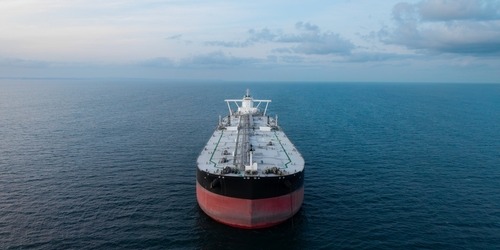
The blockage of the Strait of Hormuz in response to escalating military conflict following US and Israeli air strikes on Iran, is expected to weaken credit quality across Middle East's vital sectors. 

Several areas of activities, including trade and supply routes, energy and capital flow and tourism are expected to come under strain, according to a study published by S&P Global Ratings. 

Oil prices have surged in the wake of the crisis, with Brent crude oil prices having climbed 11% over the past five days, and nearly 30% since the beginning of the year. 

While higher oil prices are expected to bring some short-term relief to GCC government budgets, it is contingent on whether those barrels can be exported. 

“The extent of obstructions to key trade routes or to production have the potential to induce fiscal strain through weakened revenues, which could be particularly relevant for governments with weaker balance sheets, larger banking systems and limited export options,” the credit rating agency added. 

Oman, the UAE, and Saudi Arabia can partially mitigate the impact through alternative export routes for part of their volumes. Despite alternate routes, Qatar relies on the strait as does Jordan, witj 40% of its exports heading to the Middle East, scaling their exposure to regional trade disruption. Meanwhile, Kuwait is highly reliant on the Strait as an export route, according to S&P

The Strait of Hormuz, one of the world’s most strategically vital chokepoints, is a narrow waterway that connects the Persian Gulf and the Gulf of Oman to the Indian Ocean for maritime traffic. Approximately a fifth of the world’s oil passes through the waterway, which is roughly 30 miles wide at its narrowest point.

The conflict has escalated the risk of capital outflows for regional financial institutions, and while the duration of hostilities will determine the volume of the outflows, Bahraini and the Qatari banking systems have the largest net external debt position and may require external or government support.

“We classify four out of the six GCC governments as highly supportive of their private-sector commercial banks. in the unlikely event of a banking crisis, there is a high likelihood of extraordinary government support to these banks,” S&P said in a February report.  

However, the conflict could last for weeks, according to US President Donald Trump. The barrage of Iranian drones and missile strikes have targeted military instalments and well as key digital infrastructure, including three AWS data centres in the UAE and Bahrain, leading to multiple digital services outages. 

Customers in the UAE have faced mobile banking outages as the toll of the protracted crisis widens to impact local lenders. 

Capital markets across the region fell on their first day of trading since the conflict broke out. Saudi’s Tadawul All Share Index plunged between 4.8% at the open on Sunday. Dubai Financial Market fell 4.7% on Wednesday, its first day of trading, while Abu Dhabi Securities Exchange plunged 1.9%, with lenders, property firms and utilities leading the losses. 


Author Profile Image
Salaam Gateway