Image Courtesy: Shutterstock

Ten popular halal snack brands across the world


There’s a particular relief in finding a snack you can eat without checking every ingredient. The growth of halal snack brands reflects that demand. This list focuses on brands where halal is central, not incidental. These are companies built with Muslim consumers in mind, backed by recognised certification or clearly permissible product lines.


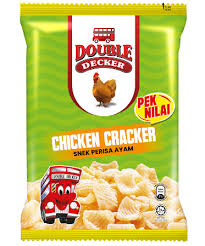
Mamee-Double Decker — Malaysia

Founded in 1971 and headquartered in Melaka, Mamee-Double Decker is among the most widely distributed dedicated halal snack brands in the world.The brand's snack portfolio includes Mister Potato chips, Corntoz corn snacks, and Double Decker biscuits.

Halal certification: JAKIM (Malaysia) — Malaysia's Department of Islamic Development.


Saffron Road (Chickpea snacks line) — United States

Founded in 2009 by Adnan Durrani and based in Connecticut, the brand positioned itself as a premium, ethical, world cuisine snack and frozen food company. The brand appeared on the Inc. 5000 list of fastest-growing private companies in 2015 and 2016.

Halal certification: IFANCA — the Islamic Food and Nutrition Council of America.

Al Rifai — Lebanon

Founded in Beirut in 1948 as a home-based roasted nut operation, the company has grown into what it describes as the largest snacking nut retailer in the Middle East, with around 40 percent market share in Lebanon. 

Halal certification: Products are composed of inherently permissible ingredients (nuts, dried fruits, plant-based snacks); no pork derivatives or alcohol in the core range. 

National Food Industries — UAE 

Founded in 1977 with a single packing machine in Dubai, National Food Industries has grown into one of the leading snack manufacturers in the Middle East. Its brand portfolio includes Mr Krisps, Emirates Pofaki, Mr Pofak, Doodles, Bakeman's, and Sinbad. According to the company's own website, NFI has expanded to over 35 countries. 

Halal certification: HACCP and Halal certified, as confirmed on the brand's own website and its Dubai Exports accreditation.

Ülker — Turkiye

Ülker is Turkiye's dominant biscuit, chocolate, and confectionery brand, founded in 1944 in Istanbul. According to its Wikipedia entry and its parent company Pladis's brand page, Ülker products are exported to 110 countries. 

Halal certification: All production adheres to halal food standards per Pladis/Ülker's own published statements; Turkiye's domestic food production is governed by standards consistent with halal requirements.

Munchy's — Malaysia

Munchy's has been producing biscuits, wafers, and crackers out of Malaysia since 1991. Its core range — butter cookies, cream-filled wafers, chocolate biscuits, and oat-based crackers — fills supermarket shelves across Malaysia, Singapore, Brunei, Indonesia, and Thailand, while export operations extend to the Middle East, the UK, and Australia.

Halal certification: JAKIM (Malaysia).

Hunter Foods — UAE 

Founded in 1985 and headquartered in Dubai's Jebel Ali Free Zone, Hunter Foods exports to over 60 countries. Its brand portfolio spans Hunter's Gourmet, Hunter, Safari, Aladin, and Ali Baba, covering hand-cooked potato chips, vegetable chips, quinoa chips, and organic superfoods. The Hunter's Gourmet premium range — known for its truffle and specialty flavours — is stocked in airline minibars, luxury hotel chains, and premium retailers across its export markets. 

Halal certification: Halal-certified since 2017, alongside HACCP and ISO 22000, as confirmed on the brand's website.

Chips Oman — Oman 

Chips Oman traces its origins to 1989, when Al Jufair Food Industries emerged from the bifurcation of Ali Shaihani Food Industries. Its flagship product — chilli-flavoured potato chips — has become one of the most recognisable snacks across Oman and the wider Gulf, instantly identifiable by its red-and-blue packaging. Distribution spans the GCC, with diaspora reach into international markets through specialist retailers. 

Halal certification: Produced in Oman under GCC food safety regulations, which embed halal compliance as a baseline standard for domestic food manufacturing.
 

Al Rifai Roastery — Kuwait / Saudi Arabia

Not to be confused with Lebanon's Al Rifai, the Al Rifai Roastery is a separate Gulf-based brand — originally Kuwaiti-operated — that has been producing roasted nuts, seeds, and dried fruits for the Gulf market for decades. It operates retail outlets across Saudi Arabia, Kuwait, the UAE, Egypt, and Jordan, and its products are available through international shipping. 

Halal certification: Inherently halal product range (roasted nuts, seeds, dried fruits) produced under GCC food safety regulations.

Ziba Foods — United States

Ziba Foods occupies a specific and increasingly popular corner of the halal snack market: premium, clean-label dried fruit and nut snacks with an Afghan and Central Asian provenance. Founded by a partnership of American and Afghan entrepreneurs, the brand produces dried pomegranate arils, figs, nut mixes, and fruit-and-nut packs sourced from Afghan farms, with no artificial colours, flavours, or preservatives.

Halal certification: Vegan-certified; products are inherently permissible by ingredient composition but do not currently carry a published third-party halal certificate.


Methodology

To build a credible and reproducible list, this article uses a hierarchy of publicly verifiable signals.

  • Countries of retail distribution (primary metric): The clearest available measure of a snack brand's global reach is the number of national markets in which its products physically appear. This is verifiable through brand websites, stockist pages, and distributor announcements, though it is worth noting that companies do not all use the same counting standards. A brand present in 100 countries through one large distributor is not the same as one embedded in 100 national retail networks. The metric is directional, not precise.
     
  • Number of confirmed retail stockist locations (secondary metric): Where publicly confirmed figures are available — for instance, a brand documented as stocking in over 5,000 shops or 20,000 retail locations — this helps differentiate brands with similar geographic spread.
     
  • Credibility and duration of halal certification (tertiary metric): Brands with documented third-party halal certification from recognised bodies rank above brands where certification is self-declared, implicit, or absent. The certification body for each brand is cited from its own public documentation. 
     
  • A small number of entries on this list consist entirely of plant-based ingredients — nuts, dried fruits, seeds — that are inherently permissible under Islamic law regardless of whether a formal certificate has been issued. This is a recognised category in Islamic food jurisprudence and is distinct from vegan certification, which carries no Islamic legal weight on its own. Brands in this sub-category are included only where they are meaningfully embedded in Muslim food culture — through founder background, primary market, or cultural use — not simply because their ingredient list happens to be permissible. Each such entry notes the absence of third-party certification explicitly.

* Note: For this list, “snack brand” is used broadly to include packaged sweet and savoury snacks, crisps, biscuits, crackers, snack bars, nuts, seeds, dried fruit, popcorn, and confectionery. Brands whose relevant halal range is mainly frozen meals, cooking sauces, staples, or pantry ingredients are excluded unless they also have a distinct packaged snack line with meaningful retail distribution.


Author Profile Image
Muhammad Ali Bandial