Sponsored

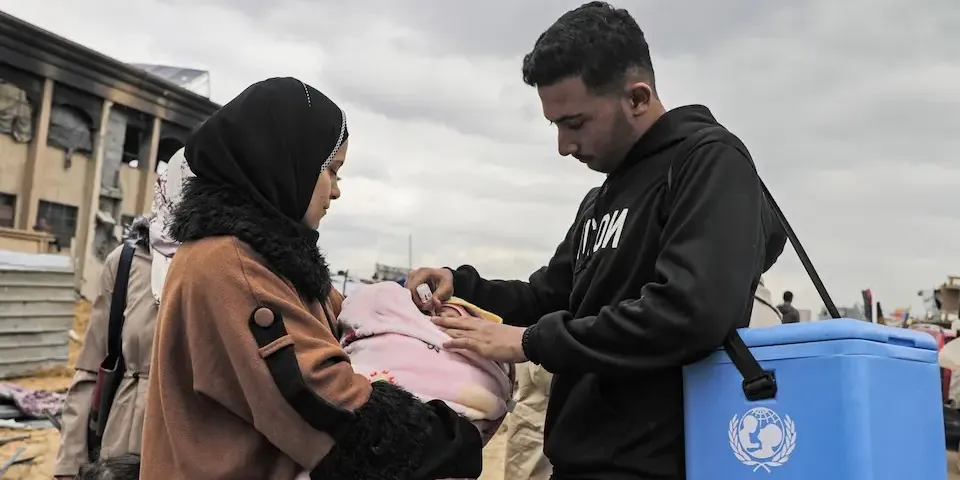
Image Courtesy: UNICEF

What the IFANCA-UNICEF partnership reveals about high-impact giving


The wild poliovirus remains endemic in just two countries: Afghanistan and Pakistan. Eradication is within sight, but the last mile is the most difficult.

UNICEF USA's Michael J. Nyenhuis and IFANCA's Dr. Muhammed Munir Chaudry discuss how philanthropy can help finish the fight to eradicate polio.

Polio eradication is within reach: vaccinating every child requires trust, access and sustained investment

As President and CEO of UNICEF USA, I’ve had the privilege of witnessing what is possible when committed partners come together around the shared mission of safeguarding the future for children everywhere. Today, we are closer than ever to eradicating polio — a once-devastating disease that has been reduced by more than 99 percent globally.

Yet the final mile remains the hardest. Polio persists in just two countries, Afghanistan and Pakistan, areas where reaching every child requires not just vaccines, but trust, access and sustained investment. This is precisely why partnerships like the one between IFANCA (Islamic Food and Nutrition Council of America) and UNICEF are so critical at this moment.

IFANCA’s recently renewed commitment comes at a pivotal time; not only in the fight against polio, but in the ongoing work to strengthen the broader systems that protect children from similar preventable diseases. From nutrition to immunization, as well as global coordination and community-level engagement, this collaboration reflects what it takes to drive lasting and systemic impact.

In a recent conversation, I discussed the intersection of nutrition, immunization and health equity with IFANCA’s President and CEO, Dr. Muhammed Munir Chaudry, who shared insights on the role of cultural integrity and partnership in advancing a healthier, more resilient future for every child.

MICHAEL J. NYENHUIS: IFANCA has announced a significant multi-year commitment to support UNICEF’s polio eradication efforts, building on its earlier investment. What motivated IFANCA to deepen this partnership, and why is this moment so critical in the fight against preventable diseases like polio?

DR. MUHAMMED MUNIR CHAUDRY: IFANCA’s decision to extend our partnership with UNICEF reflects a longstanding commitment to advancing health equity and protecting vulnerable populations. Health equity begins by ensuring that every individual has the opportunity to prevent and overcome preventable diseases like polio. This effort is closely tied to broader health and development outcomes, which remain central to IFANCA’s mission. At this critical stage, when polio is close to eradication but still persists in regions of the world, renewed financial commitments are essential to finish the job and safeguard future generations.

MICHAEL J. NYENHUIS: At UNICEF, we see every day that nutrition is foundational to children’s development, well-being, and survival. From IFANCA’s perspective, how does access to safe, nutritious and culturally appropriate food serve as a cornerstone of health equity — both globally and in the United States?

DR. MUHAMMED MUNIR CHAUDRY: IFANCA understands food security as an essential component of human development and well-being. A lack of access to proper nutrition can have a lifelong adverse impact on children, leading to underdevelopment and diminished potential for the rest of their life. From our perspective, access to safe, nutritious and culturally appropriate food is foundational to health equity, as it directly shapes physical growth, cognitive development and long-term wellbeing. This is true both globally and within the United States — disparity in the availability of proper food exists globally, irrespective of a country being rich or poor. Ensuring access to nutritious food aligns with IFANCA’s core values and remains critical to building healthier, more resilient communities for current and future generations.

MICHAEL J. NYENHUIS: We know that nutrition and immunization are not separate interventions — they reinforce one another. Can you speak to the science behind how malnutrition affects vaccine effectiveness?

DR. MUHAMMED MUNIR CHAUDRY: Science clearly demonstrates that nutrition and immunization are deeply interconnected and must be considered together. Malnutrition, particularly deficiencies in important nutrients such as protein, essential vitamins and minerals, compromises immune function and limits the body’s ability to mount a strong response to vaccines. In undernourished individuals, the immune system may not generate sufficient or lasting protection, thereby reducing vaccine efficacy.

This is why nutrition is not a secondary consideration, but a foundational component of successful immunization programs, ensuring that vaccines can deliver their full protective benefit to target populations. Healthy bodies have the strength to fight disease, but poor nutrition inhibits proper function of immunity in nutritionally compromised individuals.

MICHAEL J. NYENHUIS: UNICEF operates in some of the world’s most challenging contexts — from Gaza to Afghanistan to Pakistan — where nutrition and immunization must be delivered together. Drawing on your experience, including living in Pakistan, what lessons from these efforts are most relevant to strengthening nutrition access and public health systems locally?

DR. MUHAMMED MUNIR CHAUDRY: Growing up in rural Pakistan, I observed many adults affected by the smallpox virus. Their faces were full of small dimples. We were vaccinated at the age of 8 to 10 years with a needle prick in a circular motion at several places on the upper arm, which left a roundish torn mark on the skin that scarred upon healing. I still have several of those marks on my left arm.

In my experience, particularly having been vaccinated myself in Pakistan and observing similar contexts, one key lesson is that nutrition and immunization cannot be approached in isolation. Communities respond best when services are integrated, trusted and locally grounded. Building partnerships with local health workers, religious leaders and community organizations is essential to overcoming misinformation and improving uptake. Additionally, consistency in delivery and ensuring vaccines and nutrition support reach even the most remote areas strengthens public confidence. Ultimately, sustainable progress depends on aligning public health efforts with cultural values, transparency and a shared commitment to human dignity.

Dr. Muhammed Munir Chaudry with Michael J. Nyenhuis
Dr. Muhammed Munir Chaudry (left) with Michael J. Nyenhuis (right).

MICHAEL J. NYENHUIS: Trust is essential in both nutrition and immunization efforts. Why are food integrity and cultural appropriateness so important when working with diverse communities?

DR. MUHAMMED MUNIR CHAUDRY: How do we define trust? Trust is something humanistic. We trust others to do the right thing. Trust is foundational to both nutrition and immunization efforts because communities must have confidence in what they are receiving and who is delivering it. Public health initiatives often falter not due to science, but because of mistrust, fear or misunderstanding. Ensuring food integrity and cultural appropriateness such as halal compliance signals that interventions align with local values and beliefs. When communities see that their ethical and religious standards are respected, they are far more likely to engage, accept services and obtain positive long-term health outcomes.

MICHAEL J. NYENHUIS: From your perspective, how does the partnership between IFANCA and UNICEF demonstrate what’s possible when organizations align around shared values like science, integrity and a commitment to children’s well-being?

DR. MUHAMMED MUNIR CHAUDRY: From my perspective, the partnership between IFANCA and UNICEF demonstrates the power of complementary strengths aligned around shared values. IFANCA brings expertise in food integrity, ethical compliance and community trust, while UNICEF brings global scale, technical capacity and on-the-ground delivery in some of the most challenging environments. There are areas each organization cannot address alone, but together, we create a more robust and credible infrastructure to support children’s well-being. This collaboration reflects how science, integrity and shared moral responsibility can translate into meaningful, sustainable impact for vulnerable populations.

MICHAEL J. NYENHUIS: Looking ahead, what gives you optimism about our ability to protect children from preventable diseases — and what would you say to organizations or individuals considering how they can contribute?

DR. MUHAMMED MUNIR CHAUDRY: What gives me optimism is that we are closer than ever to protecting children from preventable disease, and we are seeing unprecedented alignment between science, institutions and communities. Partnerships between organizations like IFANCA and UNICEF demonstrate that when expertise, trust and shared purpose come together, meaningful progress follows.

Equally important are the individuals working within these organizations and in the field whose daily efforts, integrity and commitment translate vision into action. To those considering contributing, I would say: every role matters. Consistent, values-driven work and individual contribution — no matter how small — creates the collective change needed to safeguard future generations.

Michael J. Nyenhuis is the President and CEO of UNICEF USA.

Disclaimer: This article first appeared in Forbes and UNICEF USA.


Author Profile Image
Michael J. Nyenhuis