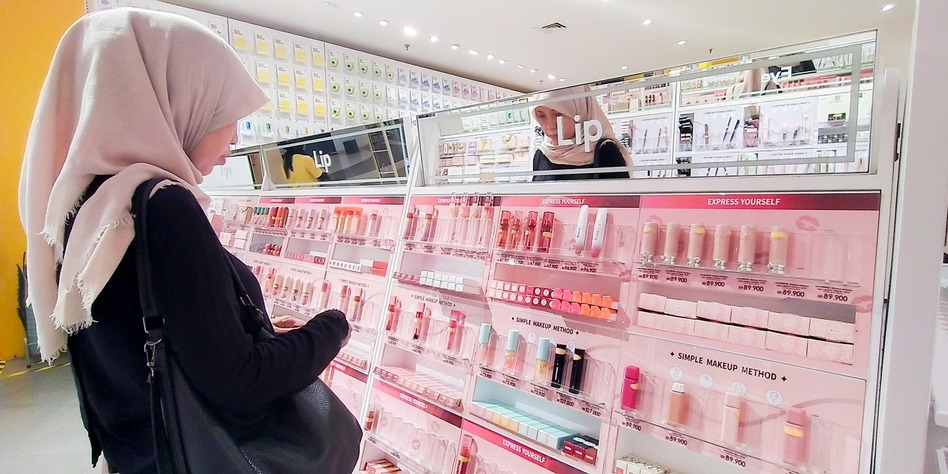
The global beauty industry is undergoing a transformation with consumers becoming more conscious of the ingredients they use, the values they uphold, and the impact of their purchases. As Muslim populations continue to grow and become more economically influential, spending on beauty and personal care products has risen significantly. The State of the Global Islamic Economy (SGIE) Report 2024/25 estimates that Muslim consumer expenditure in this category reached approximately $87 billion in 2023, with forecasts suggesting it could climb to nearly $118 billion by 2028, underscoring the industry's steady momentum.
According to the SGIE Report (2024/25), the halal cosmetics sector, though recently experiencing a dip with only 8 deals in 2023, is expected to see a surge in investment in the coming years, fueled by increasing consumer awareness and demand for ethically sourced, cruelty-free, and halal-certified beauty products.
Key markets such as Southeast Asia, the Middle East, and North Africa are projected to drive demand, supported by government initiatives promoting halal certification standards and offering incentives for local manufacturers.
The rise of social media
This growth has occurred in tandem, in many respects, with the rising influence of social commerce, which has reshaped how consumers discover, evaluate, and purchase beauty products. Platforms such as Instagram, TikTok, and Facebook now serve as virtual storefronts and trust-building ecosystems.
While halal brands like Indonesia's Wardah and Turkiye's Joseph Shining illustrate robust sector growth driven by digital expansion and rising global consumer preference for ethically and halal-certified beauty products, competition from mainstream brands that incorporate halal practices is intensifying and driving innovation.
A new generation of shoppers
Equally important is the influence of younger generations. Millennials and Gen Z consumers increasingly seek products that align with personal values such as sustainability, transparency, and ethical sourcing, qualities that halal certification often embodies. This shift has broadened the appeal of halal cosmetics beyond Muslim communities, attracting non-Muslim consumers who associate halal-labelled products with higher standards of safety, hygiene, and responsible production. Together, these dynamics position halal cosmetics not only as a religiously compliant niche but as a significant and evolving force within the global beauty industry.
Who will come out on top will depend on the level of influence they can wield through their social media presence and how convincingly they can sway a new generation of halal cosmetic consumers who are cognizant of the process and willing to make decisions based on their preferences, irrespective of the costs.
This is a trend that Shakir Ahmed, CEO and Co-founder of Habibi New York, a halal cosmetics brand, has seen firsthand. Speaking to Salaam Gateway, he said: "For halal beauty brands, social media is not a growth hack; it is the 'full funnel' infrastructure. Halal logos alone aren't sufficient for values-oriented, digitally discerning halal consumers. The new generation of Halal consumers reward brands that show restraint, transparency, and coherence between belief and behavior — especially in how products are marketed. How a brand tells its story, who it collaborates with, and what it refuses to amplify matters as much as certification itself. For halal brands, credibility is built in public, and social media is where that credibility compounds."
Role of digital platforms and social media
Digital platforms and social media have played a transformative role in expanding the visibility and adoption of halal beauty brands. Channels such as TikTok and Instagram have become central spaces where beauty and lifestyle creators engage directly with audiences, particularly Muslim consumers seeking products aligned with their values. Through tutorials, honest product reviews, and everyday skincare or makeup routines, influencers help translate halal certification and ethical positioning into relatable, real-life experiences.
Beyond individual content, social media has fostered active communities around halal beauty trends, enabling users to exchange recommendations, discuss ingredients, and share personal journeys in the realm of clean, faith-conscious beauty. For brands, these platforms offer a powerful alternative to traditional advertising by allowing authentic storytelling, direct interaction with followers, and rapid global reach.
"Social media campaigns allow brands to educate in layers: ingredient sourcing, formulation intent, marketing ethics, and why certain compromises are deliberately not made. That depth builds trust in a way traditional retail never could," said Ahmed.
Challenges and strategic considerations
Achieving success in the halal beauty sector requires more than simply obtaining certification or producing high-quality formulations. As the category becomes more visible and competitive, brands must carefully consider how they communicate their values, connect with diverse audiences, and position themselves in a rapidly evolving marketplace. In many ways, the challenge lies in balancing authenticity with innovation — ensuring that halal principles remain central while also appealing to broader ethical and lifestyle-driven consumers.
Marketing and cultural sensitivity
Effective halal beauty marketing depends on a nuanced understanding of culture and identity. Consumers today are quick to recognise when messaging feels superficial or relies on stereotypes, making genuine cultural engagement essential. Brands need to demonstrate an informed awareness of Muslim lifestyles and values, presenting products in ways that feel respectful, relatable, and authentic rather than tokenistic.
At the same time, representation should reflect the diversity within Muslim communities themselves. Halal beauty consumers span different regions, ethnicities, and personal expressions of faith, and campaigns that acknowledge this diversity tend to resonate more strongly. The perceived credibility of creators — especially when their personal values align with those of their audiences — strengthens trust and amplifies brand influence, making social media a critical driver of growth in the halal cosmetics landscape.
Muhammad Ali Bandial